The silence inside an electric cabin is a beautiful, deceptive thing. When you are sailing down the Interstate 80 corridor at seventy miles per hour, there is no engine vibration to mask the road. You hear the faint rush of wind against the glass, the low hum of the asphalt, and the rhythmic thumping of the tires. But lately, when you glide over an expansion joint or take a sweeping exit ramp, a dry, rubbery groan echoes from behind the front firewall.
It sounds remarkably like an old leather boot flexing under weight, a subtle protest that disappears as quickly as it arrives. Most owners shrug it off, assuming a clean underbody means everything is pristine. But under the floorboards of your crossover lies a heavy truth that no over-the-air software update can fix. The physical world eventually demands its tax, and the collection point is your front suspension.
For forty thousand miles, this test vehicle served as an asphalt packhorse, swallowing daily highway commutes and weekend mountain climbs. It required no spark plugs, no engine oil, and no belt replacements. Yet, as the odometer clicked past that symbolic milestone, the car's once-sharp tracking began to feel slightly numb, drifting ever so slightly to the right whenever the throttle was lifted. Physical wear is the great equalizer for all vehicles, regardless of their propulsion.
The Grand Piano on Running Shoes
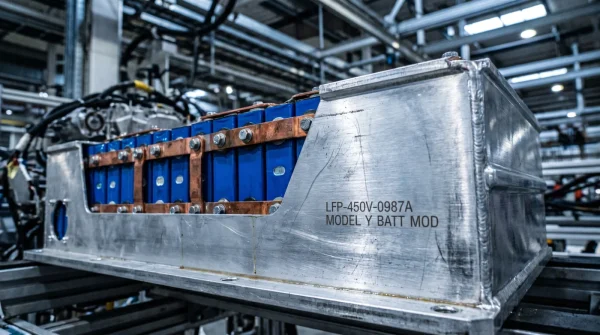
To understand why this happens, you must abandon the myth that electric vehicles are mechanical ghosts requiring zero physical upkeep. Think of your crossover as a top-tier athlete carrying a grand piano while wearing standard running shoes. The heavy lithium-ion battery pack gives the car its low center of gravity and sports-car-like handling, but it also places a relentless, static load on the chassis components.
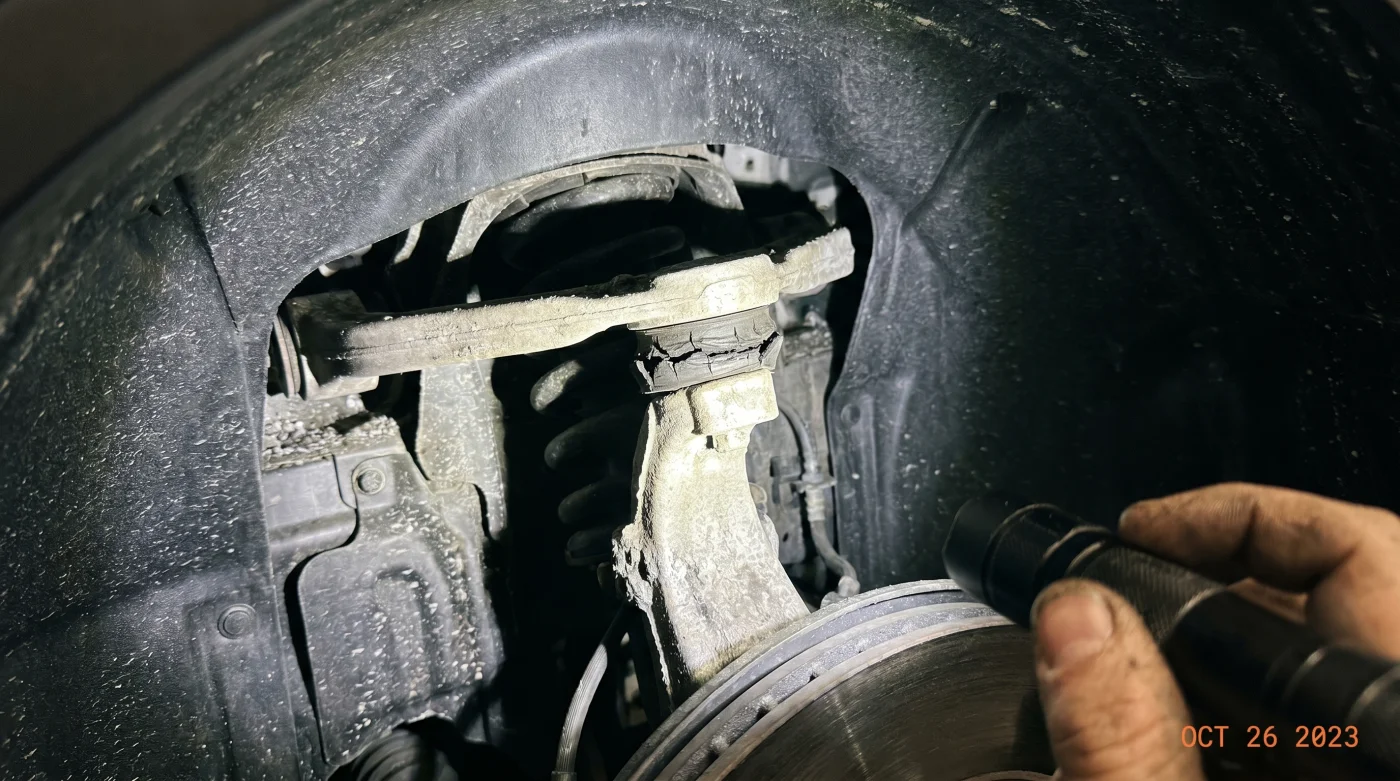
The critical point of failure is not a high-tech sensor or a drive motor, but the front upper control arm bushing. This small, rubber-and-metal sleeve is responsible for keeping the front wheel aligned while cushioning the cabin from road harshness. Because of the vehicle's massive curb weight—approaching forty-four hundred pounds—these rubber bushings are subjected to shear forces that would normally only be seen on heavy-duty commercial utility trucks.
Over time, the sheer weight of the battery pack forces the rubber to twist beyond its elastic limit during highway joint impacts. The rubber does not break all at once; instead, it develops tiny, microscopic tears that gradually widen. This silent structural breakdown slowly alters your front-wheel alignment, eating away your tire tread from the inside out before you even notice a change in how the steering wheel feels.
- Jeep Scrambler 2026 prototype testing reveals a surprisingly rigid independent front suspension
- Ram Rumble Bee prototype abandons traditional yellow paint for aerodynamic carbon fiber
- Synthetic motor oil shortage forces drivers to use this specific viscosity blending trick
- Synthetic motor oil shortages trigger a viscosity swap that silently ruins engine resale
- Uhaul Peterbilt commercial longevity requires replacing air brake cartridges before the factory schedule
The Toledo Alignment Secret
Marcus Vance, a forty-six-year-old alignment specialist in Toledo, Ohio, spends his days restoring order to vehicles that pull to the side. He has become a quiet expert on heavy battery-powered platforms, often seeing them roll into his shop with chewed-up inner tire treads long before their first official suspension service interval. He calls this particular issue the silent squish.
"People buy these cars thinking they only need windshield washer fluid and tire rotations," Marcus explains, wiping a grease-stained hand on his apron. "But when you throw over two tons of machinery into a sharp highway turn day after day, that rubber bushing in the upper arm acts like a sponge being wrung out. Once that rubber tears, the metal sleeve starts migration, and your alignment angles simply go out the window."
Adapting to Your Driving Environment
Not every driver will experience this degradation in the exact same manner. The way your suspension ages depends heavily on your daily route and the climate you call home. By recognizing your specific driving profile, you can catch the symptoms before they turn into an expensive towing bill.
The Sun-Belt Highway Cruiser
If you spend your days on the baking, smooth asphalt of Arizona or Florida, your bushings face a thermal enemy. Constant high road temperatures dry out the synthetic rubber compounds, making them brittle. While you might not experience many harsh pothole impacts, the rubber loses its elasticity quickly, leading to premature cracking and a distinct squeaking sound when parking.
The Frost-Belt Commuter
For those navigating the seasonal freeze-and-thaw cycles of the Midwest or Northeast, the enemy is physical violence. Frost heaves and deep highway craters slam into the suspension with immense force, aggravated by the car's heavy mass. This repeated high-impact cycling tears the weakened rubber bushings much faster, often resulting in a loose steering feel and a clunking noise when traveling over uneven gravel paths.
The Mindful Suspension Health Check
Protecting your vehicle's chassis does not require a commercial garage lift or deep engineering knowledge. It simply requires a routine of mindful observation and basic mechanical checking. By spending ten minutes every few months inspecting these components, you can save thousands of dollars in premature tire wear and suspension replacements.
- Listen to the low-speed turns: Turn your steering wheel completely to one side in a quiet parking lot. Listen for any dry, creaking, or popping sounds coming from behind the front wheels.
- Monitor the tire shoulders: Run your hand across the inside tread of your front tires. If the inner edge feels feathered or significantly more worn than the outside, your upper control arm bushings have likely settled.
- The highway drift test: On a flat, straight section of highway with no wind, momentarily relax your grip on the steering wheel. The car should track straight; a rapid drift to one side indicates alignment migration.
- Visual inspection during rotations: Whenever your wheels are off for a tire rotation, ask the technician to take a bright flashlight to the front upper control arm. They should look for dark rings of grease or visible tears in the rubber bushing.
For those who prefer a concrete roadmap, keep this basic toolkit in mind. These specifications and checking points will keep your vehicle tracking straight and true for the next forty thousand miles.
| Key Point | Detail | Added Value for the Reader |
|---|---|---|
| Inspection Interval | Every 12,000 miles or 12 months | Catches micro-tears in the bushing before they ruin a set of premium tires. |
| Primary Symptom | Low-speed creaking during parking maneuvers | Allows you to address the bushing replacement before total alignment failure occurs. |
| Weight Mitigation | Maintain proper cold tire pressures (usually 42 PSI) | Helps the tire sidewall absorb initial road energy, sparing the delicate suspension rubber. |
The Value of Physical Connection
In our rush toward a digital, maintenance-free future, we sometimes forget that cars are still physical objects governed by classical physics. No amount of computing power can bypass the reality of a heavy steel frame pressing down on rubber joints over rough pavement. Recognizing this is not a knock against modern engineering; it is simply an exercise in practical ownership.
When you take care of the silent partners under your vehicle's floorboards, you preserve the very qualities that made you fall in love with the drive in the first place. A quiet, tight, and responsive chassis makes the highway feel like a sanctuary again. By spending a little time understanding the physical strains your car endures, you ensure that your silent cruiser remains truly peaceful for years to come.
"The heaviest vehicles on the road demand the most traditional mechanical respect; you cannot digitize the physical work of a rubber bushing."
Frequently Asked Questions
Is this suspension degradation covered under the vehicle's factory warranty?
Yes, if the upper control arm bushing fails within the basic 4-year/50,000-mile bumper-to-bumper warranty window, the replacement is typically covered by the manufacturer.Can I upgrade to aftermarket bushings to prevent this issue from happening again?
Yes, several specialized aftermarket companies offer heavy-duty polyurethane or sealed ball-joint alternatives that handle the weight of heavy battery packs much better than the factory rubber.How much does it cost to replace the front upper control arms out of warranty?
Expect to pay between $600 and $900 for parts and labor at an independent EV specialist shop, which includes a mandatory four-wheel alignment afterward.Does this issue affect the rear suspension of the vehicle as well?
The rear suspension uses a different multi-link configuration that distributes the load more evenly, making premature bushing failure much less common in the rear than the front.Will a worn bushing cause the car to become unsafe to drive immediately?
No, it starts as a minor alignment nuisance and noise issue. However, ignoring it for thousands of miles will destroy your front tires and eventually cause loose, unpredictable handling at highway speeds.