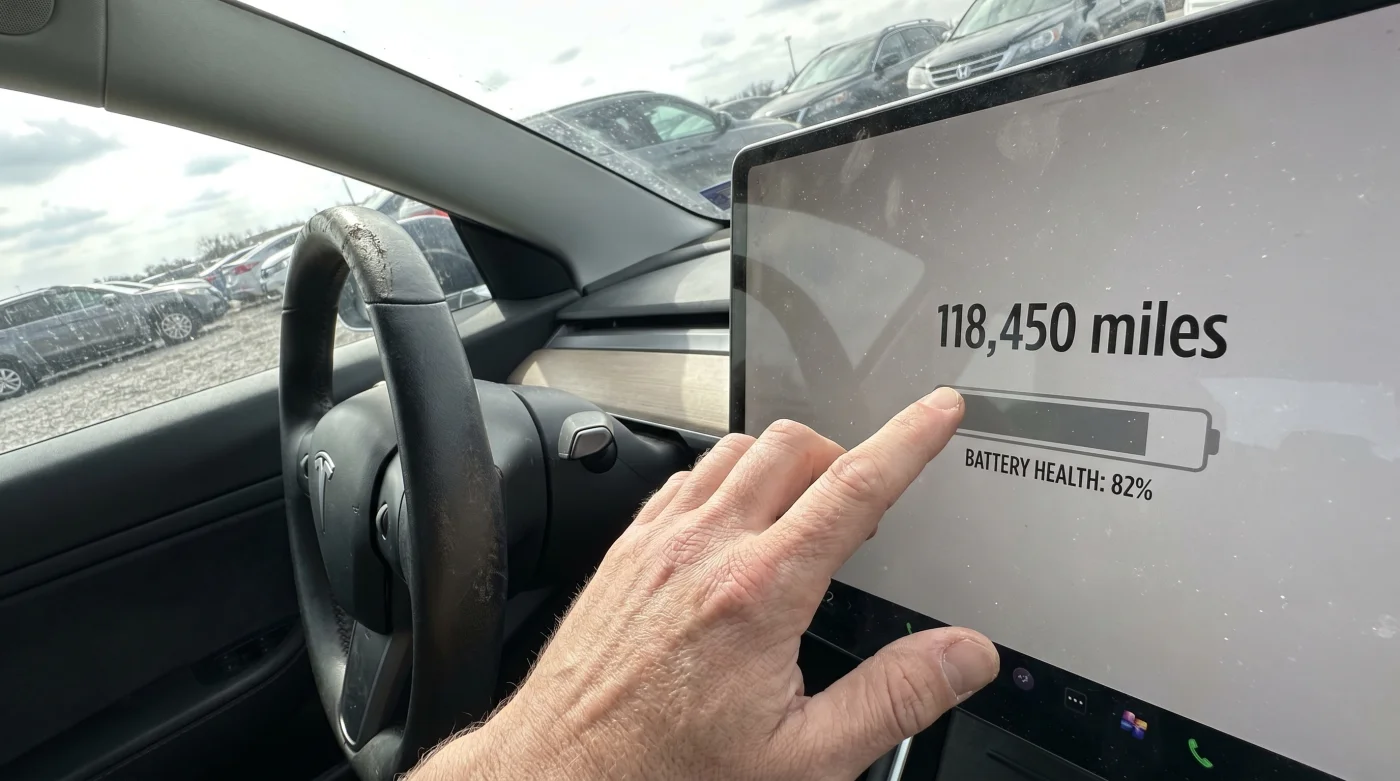
The dry, sterile scent of clean cabin air filters mixed with warm synthetic leather greets you the moment the flush door handle clicks open. There is no idle rumble, no vibration of cold pistons, only the faint, high-pitched whistle of the coolant pump prepping the battery pack. Step inside a 2019 Tesla Model 3 Long Range that has spent its youth on highway asphalt. The minimalist dashboard, anchored by a single fifteen-inch screen, looks as modern today as it did when it rolled off the assembly line.
On a hot afternoon, the cabin stays remarkably cool, whispering through hidden vents that span the width of the dash. For the uninitiated, buying a used electric sedan with seventy thousand miles on the odometer feels like a gamble. Yet, as your fingers glide across the screen, the system responds instantly, free of the lag that plagues older gasoline-powered infotainment centers. The steep depreciation curve of these machines has quietly created a golden window of opportunity for the patient buyer.
A volatile mix of falling new-car prices, fluctuating company stock, and a wave of off-lease inventory has sent shockwaves through the used market. Private sellers, panicked by headlines and low trade-in offers, are practically giving away highly capable dual-motor sedans. By understanding the mechanical reality of these vehicles, you can bypass the market noise and secure a high-end daily driver for a fraction of its original cost.
The Odometer Cliff and the Battery Myth
To understand this market anomaly, we must look at how we measure a vehicle’s life. Traditional internal combustion engines wear down gradually, with rubber belts dry-rotting and transmissions slipping over time. Batteries operate on another plane, holding onto their performance and torque output until a specific cell group physically fails. The panic among average owners peaks when the odometer climbs past seventy thousand miles, right as the safety net of the eight-year factory warranty starts to feel thin.
This psychological barrier creates a sharp drop in valuation that does not align with physical reality. Lithium-ion packs do not degrade in a straight line; instead, they lose five to eight percent of their capacity rapidly in the first twenty thousand miles, and then the degradation curve flattens out. A vehicle with seventy-five thousand miles often has nearly the exact same usable range as one with forty thousand miles, but the price tag on the older car is dramatically lower.
Consider the experience of Arthur Vance, a 43-year-old former factory-trained EV diagnostic specialist based in Columbus, Ohio. Arthur now runs an independent pre-purchase inspection service specializing exclusively in electric drivetrains. “Sellers look at eighty thousand miles and assume the battery pack is a ticking time bomb,” Arthur notes, “but when we pull the internal CAN bus logs, we are finding stable ninety percent capacity on vehicles that spent their lives plugged into home chargers.”
- Mazda CX-90 base trims hide the exact premium adaptive suspension hardware
- Synthetic engine oil mixing permanently destroys modern turbocharger factory resale values
- Honda Ridgeline production pause forces a massive midsize truck structural redesign
- Toyota Tundra recall panic creates a massive sudden local inventory shortage
- Newest electric cars flood dealership lots triggering a massive sudden inventory pricing collapse locally
Tracing the Best Value Trims
Not all Model 3 variants are created equal when navigating the used market. Knowing which configuration suits your daily pattern ensures you do not overpay for performance you do not need.
The Long Range Dual Motor
This is the crown jewel of the depreciation sweepstakes. Equipped with a seventy-five kilowatt-hour battery, this variant provides the ultimate cushion against degradation. Even if the pack has lost ten percent of its original capacity, you are still looking at a real-world highway range of over two hundred and seventy miles. The dual-motor setup also offers an inherent safety margin; if one motor experiences a rare sensor fault, the vehicle can often still drive on the remaining motor.
The Standard Range Plus
For those who primarily charge at home and commute within city limits, the single-motor version represents the ultimate budget entry point. Newer mid-2021 models often feature Lithium Iron Phosphate (LFP) chemistry.
This battery composition thrives on daily charging to one hundred percent, unlike the nickel-based packs in the Long Range models which prefer to sit at eighty percent. This battery chemistry thrives under routine daily usage, meaning your daily usable range is often identical to a degraded Long Range model, for thousands of dollars less.
The Mindful Inspection Protocol
Finding the right car requires a methodical approach that bypasses the glossy exterior and focuses entirely on the battery management system. You do not need a garage lift to perform these diagnostic steps; you only need patience and the right diagnostic access.
Follow this inspection sequence before transferring any funds. The inspection requires careful calibration to separate worn-out fleets from well-kept commuter cars:
- Enter the vehicle’s onboard Service Mode by typing ‘service’ into the software menu to view active alerts.
- Review the ‘Trips’ menu to find the lifetime energy consumption, aiming for a lifetime average below two hundred and fifty watt-hours per mile.
- Inspect the physical underside of the car with a high-power flashlight to check for any scrapes or dents on the aluminum battery protective plate.
- Execute a full battery health test via the Service Mode menu, which safely drains and recharges the pack to calculate true remaining capacity.
Our target sweet spot is a 2018 to 2020 Long Range model with between seventy-two thousand and seventy-eight thousand miles, priced between twenty-two thousand and twenty-six thousand dollars. Ensure the battery health report shows at least eighty-eight percent of the original capacity remaining.
Reclaiming High-End Mobility
Stepping into a highly optioned electric sedan for the price of a basic compact hatchback is more than a smart financial move. It is a quiet rejection of the cycle of constant upgrading that modern consumer culture demands. By choosing a pre-owned model, you are reclaiming high-end electric mobility without absorbing the heavy carbon and financial costs of new manufacturing.
By focusing on thermal management, battery chemistry, and real-world health data rather than arbitrary mileage numbers, you gain access to instant cabin pre-conditioning, advanced driver assistance, and sports-car acceleration. You are not just buying a used car; you are capitalizing on a temporary market blind spot to drive a premium machine for pennies on the dollar.
“The smart buyer doesn’t look at the odometer; they look at the nominal full capacity register in the battery management system.” — Arthur Vance, EV Diagnostic Specialist
| Key Point | Detail | Added Value for the Reader |
|---|---|---|
| The Arbitrage Threshold | 72,000 to 78,000 miles | Pinpoints the exact zone where prices drop up to 50% but battery life remains stable. |
| Battery Chemistry Choice | NMC vs. LFP | Matches your charging habits (daily 100% vs. long-distance capacity) to the correct model year. |
| The Service Mode Test | Onboard battery health diagnostics | Allows you to verify true battery capacity without paying for a mechanic’s inspection. |
Frequently Asked Used Tesla Questions
Does high mileage affect Tesla Supercharging speeds? No, Supercharging speeds are governed by battery temperature and state of charge, though heavily Supercharged cars may experience a minor, permanent reduction in peak charging speed to protect the cells.
How much does a replacement Tesla battery pack cost out of warranty? A remanufactured replacement pack from Tesla currently costs between thirteen thousand and sixteen thousand dollars, though individual cell repair options are becoming common at third-party shops for much less.
Will the touchscreen and onboard computer slow down over time? Early Model 3 units used the Intel Atom processor, which remains highly usable, while mid-2022 and newer models feature the ultra-fast AMD Ryzen chip; both receive regular over-the-air software updates.
Is the glass roof prone to cracking or leaking on older models? The laminated glass roof is incredibly durable, but you should inspect the outer seals for dry-rotting and look closely for small rock chips that could propagate into larger cracks under extreme thermal changes.
Can I qualify for the federal used EV tax credit on these models? Yes, if you purchase a used EV priced under twenty-five thousand dollars from a licensed dealer and meet specific income requirements, you can qualify for a point-of-sale credit of up to four thousand dollars.