The crisp, blue chill of a November dawn settles over your driveway. You press the power button on your RAV4 Hybrid, and the green ‘READY’ light blinks to life on the instrument cluster without a sound. There is no starter motor groan, no puff of cold exhaust—only the faint, high-frequency hum of electrical systems waking up. You shift into reverse, slipping down the asphalt on pure battery power while the world around you is still rubbing its eyes.
But beneath that tranquil cabin floor, inside the dark aluminum casing of the eCVT transaxle, a silent chemical drama is unfolding. Two powerful electric motor-generators (MG1 and MG2) are spinning at up to 14,000 RPM, bathed in a bath of Toyota World Standard (WS) fluid. If your odometer is creeping past the six-figure mark, this fluid is no longer the translucent cherry-red it was when it left the factory.
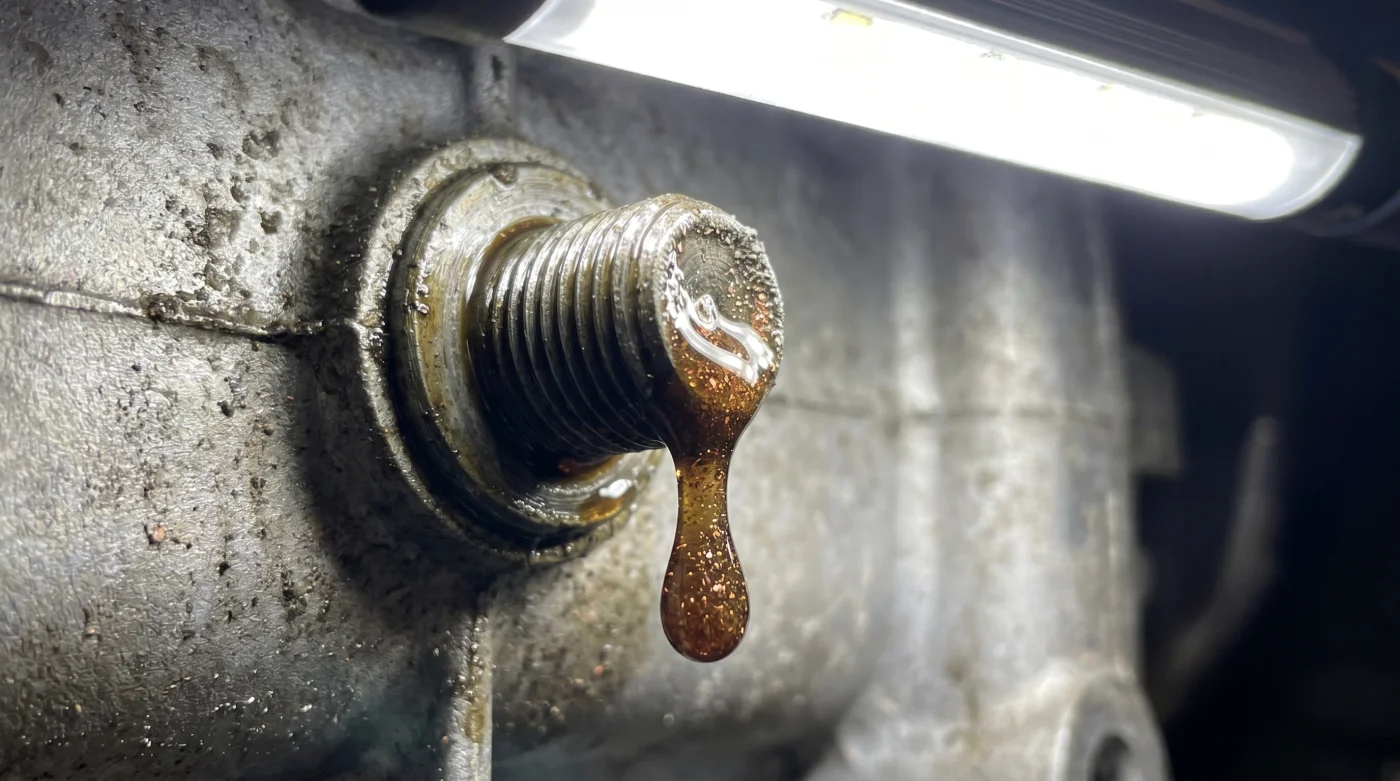
Instead, it has likely transitioned to a dark, caramelized amber with a distinctly acrid, metallic odor. While the owner’s manual quietly assures you that this fluid is a ‘lifetime’ component under normal driving conditions, actual real-world chemistry tells a far more urgent story. Neglecting this simple maintenance point can quietly compromise the very heart of your hybrid drive system.
In the high-mileage market, where used RAV4 Hybrids are changing hands in massive numbers, this ‘lifetime’ claim is showing its cracks. Owners who trust the manual implicitly are finding themselves facing sudden, catastrophic hybrid system errors. The secret isn’t that the gears are failing; it is that the fluid is changing its physical state.
The Fluid as an Electrical Shield, Not Just a Lubricant
To understand why the factory manual is misleading, we must look at the hybrid transaxle through a different lens. In a conventional automatic transmission, fluid is a hydraulic medium designed to slide clutches together and absorb immense friction. In a Toyota eCVT, there are no belts, no bands, and no friction clutches. Instead, the fluid acts as a cooling bath and an electrical insulator for thousands of feet of tightly wound copper wire.
Think of this system as an electric motor breathing through a heavy pillow. As current surges through the motor-generators during acceleration and regenerative braking, the copper windings generate intense localized heat. The WS fluid absorbs this thermal energy and carries it away to a heat exchanger. Over time, the constant electrical field combined with high operating temperatures causes microscopic copper degradation and chemical shearing.
- CarMax appraisal algorithms penalize aftermarket tinting by artificially grouping vehicles into high-risk categories
- Subaru Outback CVT inspections require a specific thermal stress test buyers completely ignore
- 2025 Ram 1500 aerodynamic grilles quietly choke engine cooling during heavy summer towing
- Tesla India anniversary price cut exposes massive artificial margins in global EV markets
- Newest electric cars suffer massive winter range drops proving modern hybrids remain superior
When the fluid loses its dielectric strength, it stops acting as a perfect insulator. The microscopic copper particles suspended in the degraded fluid can turn the liquid slightly conductive, creating a pathway for micro-voltage leaks that slowly degrade the winding insulation. By changing the fluid, you are not just preventing gear wear; you are restoring the electrical integrity of a high-voltage system.
Marcus Vance, a 48-year-old master hybrid technician based in Portland, Oregon, has spent the last two decades tearing down Toyota planetary gear systems. ‘I see RAV4s coming in with 120,000 miles where the owner swears they never towed a thing, yet the transaxle fluid drains out looking like dark espresso,’ Marcus explains, holding up a glass vial of spent WS fluid. ‘The problem isn’t the mechanical gears—they are practically bulletproof. The real enemy is the loss of dielectric resistance. Once that fluid starts carrying a charge, you’re on borrowed time before a winding short-circuits the entire transaxle, turning a simple maintenance task into a five-thousand-dollar replacement bill.’
How Your Daily Route Alters Fluid Lifespan
Not all miles are created equal, and your daily environment dictates how quickly your transaxle fluid degrades.
The Stop-and-Go Urban Commuter
For drivers who spend their mornings navigating dense city traffic, the constant transition between friction braking and heavy regenerative braking puts immense thermal strain on MG2. The electric motor is continuously cycling from cold to hot, pulling heat directly into the surrounding fluid. If your RAV4 primarily lives in this urban cycle, your fluid is working overtime to keep those copper coils cool.
The High-Speed Interstate Cruiser
For those who cruise at seventy miles per hour across flat highways, the engine runs continuously, and MG1 spins at incredibly high velocities to maintain the gear ratio. This continuous, high-speed rotation shears the fluid’s polymer chains, reducing its viscosity. Losing oil film thickness at high temperatures means less protection for the planetary gear teeth over long stretches.
The 100,000-Mile Fluid Renewal Protocol
Performing a drain and fill on a Toyota hybrid transaxle is a surprisingly straightforward task, far simpler than servicing a traditional automatic transmission. There is no internal filter to replace, no delicate valve body to disturb, and no complex flush machine required.
- Always ensure the vehicle is perfectly level on jack stands before beginning to get an accurate fill level.
- Locate the 10mm hex fill plug on the side of the transaxle case first and ensure it can be removed before touching the drain plug.
- Remove the drain plug, allowing the old fluid to flow into a graduated container so you can measure exactly what came out.
- Clean the magnetic drain plug thoroughly to remove the fine metallic gray paste that naturally accumulates over a hundred thousand miles.
- Reinstall the drain plug with a new aluminum crush washer, then pump fresh Toyota WS fluid into the fill port until it gently overflows.
To ensure a completely smooth process, always use fresh crush washers on both the fill and drain plugs to guarantee a perfect seal against the aluminum casing.
Your Tactical Service Toolkit
To complete this procedure cleanly and accurately, prepare these specific items before you raise the vehicle:
- Fluid Capacity: 3.8 to 4.1 quarts of genuine Toyota ATF WS fluid.
- Tools Required: 10mm hex bit socket, 24mm socket (for older models), torque wrench, and a manual fluid transfer pump.
- Torque Specs: Tighten both the drain and fill plugs to exactly 29 foot-pounds to prevent aluminum thread damage.
A Quiet Investment in Mechanical Peace of Mind
Maintaining a vehicle is often a conversation between short-term convenience and long-term stewardship. In an era where new car prices remain stubbornly high, taking care of the machinery you already own is the ultimate form of financial self-defense. The RAV4 Hybrid is legendary for its longevity, but that reputation is built on the assumption that even ‘lifetime’ components eventually require human touch and fresh chemistry.
When you slide back under your car, torque those plugs to spec, and lower the jack, you are doing more than just keeping metal from grinding against metal. You are preserving the quiet efficiency that made you buy a hybrid in the first place. That fresh, bright-pink fluid now circulating through the winding copper channels is a quiet shield, ensuring your daily commute remains as silent and reliable ten years from now as it was the day you drove it home.
‘There is no such thing as a lifetime fluid; there are only lifetime warranties that end when the component fails.’ — Marcus Vance
| Key Point | Detail | Added Value for the Reader |
|---|---|---|
| Fluid Type | Genuine Toyota ATF WS | Guarantees precise dielectric protection for high-voltage coils. |
| Service Interval | 100,000 Miles (60k for severe duty) | Intercepts fluid breakdown before copper contamination occurs. |
| Primary Threat | Dielectric degradation & acid build-up | Saves the electric motors from costly internal short-circuits. |
Frequently Asked Questions
Does changing the fluid void the Toyota factory warranty?
No. Servicing your transaxle does not void your warranty as long as you use compliant fluid (Toyota WS) and document the service history properly.Why does Toyota claim this is a lifetime fluid?
Manufacturers often define ‘lifetime’ as the duration of the original powertrain warranty (typically 60,000 to 100,000 miles) or the expected lifespan of the first lease, rather than the mechanical limits of the vehicle.Can I use aftermarket fluids like Valvoline MaxLife?
While some aftermarket fluids claim compatibility, using genuine Toyota WS fluid is highly recommended due to its specific dielectric properties designed for these exact motor windings.Is a transmission ‘flush’ safe for this hybrid?
You should never use a pressurized flush machine on a hybrid transaxle. A simple gravity drain and fill is the only safe and approved method to replace the fluid.What happens if I never change this fluid?
Over time, suspended copper particles and moisture can lower the fluid’s insulation resistance, potentially leading to an internal transaxle short-circuit and a complete hybrid system shutdown.