A shimmering wave of heat rises from the concrete pad of the highway rest stop, making the distant tree line bend and warp. You pull up to the gleaming 350-kilowatt DC fast-charging dispenser, expecting a swift, fifteen-minute top-off to get you home. Inside the cabin, your dashboard thermometer reads a punishing 104 degrees Fahrenheit, but you expect the machine to handle the weather with ease.
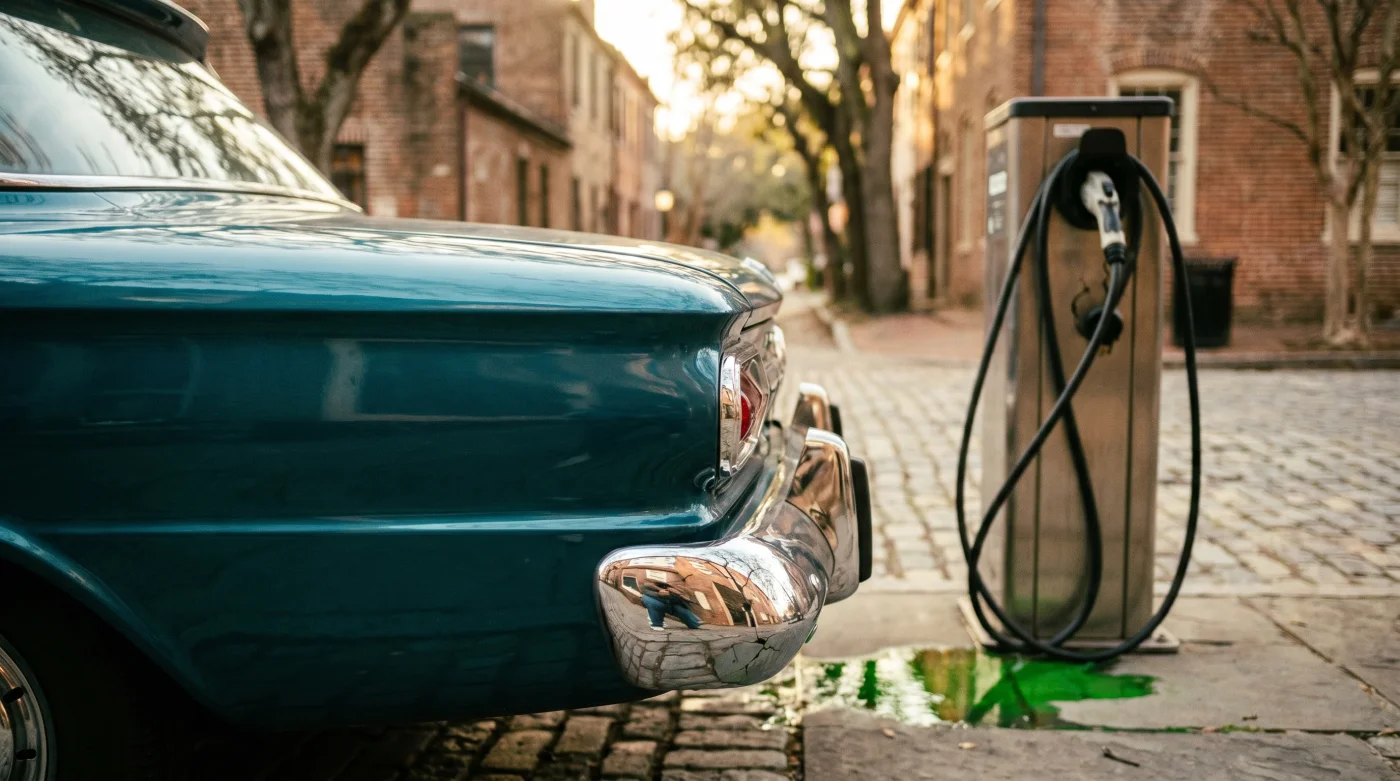
You step out and reach for the heavy, rubberized charging handle. It feels surprisingly hot to the touch, and as you lift it from the holster, you notice a strange wetness on the plastic grip. It is not condensation; it is a sticky, green ethylene-glycol coolant pooling at the base of the cracked handle, glowing with a synthetic brilliance against the dark asphalt. A faint, strained rattle vibrates from deep within the metal cabinet behind you.
When you plug the connector into your vehicle’s port, the high-speed charge rate immediately plummets. Instead of the advertised surge of energy, your screen shows a miserable 35 kilowatts, accompanied by a warning that charging speed has been throttled due to high equipment temperature. The car’s internal battery cooling fan screams like a miniature jet engine, but the actual bottleneck lies outside the car, weeping green fluid onto the ground.
We often treat these massive charging terminals as if they are solid-state appliances—oversized, weather-proofed versions of a wall outlet. But pushing hundreds of amperes through a flexible cord requires a delicate hydronic ecosystem. When the liquid flow fails, the illusion of limitless power vanishes, leaving you stranded in the heat with a charging speed reminiscent of a decade-old wall plug.
The Fluid Heart of High-Speed Power
To understand why fast chargers fail in the summer, we must abandon the idea that charging is purely electrical. Pushing 350 kilowatts through a cable thin enough for a human hand to wrap around creates massive thermal energy. If the copper conductors inside the cable were left uncooled, they would reach temperatures high enough to melt their rubber casing within minutes. To prevent this, manufacturers run thin, concentric capillaries of liquid coolant alongside the copper lines, continuously sweeping heat away from the handle and back to a radiator inside the main cabinet.
When ambient temperatures soar, this closed-loop system is pushed to its absolute physical limits. The cooling fluid relies on a small, automotive-grade electric pump to maintain its rapid circulation. In extreme summer heat, these pumps must run at maximum capacity for hours on end, fighting against the ambient thermal load of the air. If the pump degrades or its seals crack under the strain, the flow slows to a crawl, forcing the charger’s computer to slash the electrical current to prevent a catastrophic meltdown.
- Tesla Model Y autopilot software aggressively brakes when reading specific aftermarket LED taillights
- Hyundai Kona Electric dealership invoices expose a hidden point-of-sale tax credit margin error
- EV charging protocols prove budget networks intentionally throttle high voltage luxury vehicle architectures
- Tesla Model Y thermal sensors silently throttle highway speeds during extreme winter commuting
- 2018-2022 Ford safety recall documents expose a hidden brake master cylinder seal defect
Marcus Vance, a forty-seven-year-old grid infrastructure technician based in Phoenix, Arizona, sees this breakdown daily during the summer peak. He notes that the public focus is always on grid capacity and software glitches, but the real enemy is mechanical wear. “People think these stations are built like military bunkers, but inside they are just hot, vibrating boxes with small plastic water pumps,” Vance explains. “Once the coolant reservoir cracks from continuous heat cycling, the pump sucks in air, loses its prime, and the cable instantly cooks itself, triggering an automatic safety throttle to save the station from catching fire.”
Thermal Tolls: How Different Charging Scenarios Fail
The Multi-Car Highway Carousel
When multiple road-trippers use the same high-speed cabinet back-to-back during a heatwave, the cooling loop never has a moment to rest. The heat builds up cumulatively within the radiator unit, slowly baking the pump bearings and degrading the plastic impellers. Eventually, the pump loses its ability to push fluid, and the cable begins to throttle charging speeds for every subsequent driver.
The Urban Short-Cycle Fatigue
In busy municipal hubs, chargers undergo rapid cycles of starting and stopping. Each time a session begins, the pump surges to life; when it ends, the pump shuts down, causing rapid temperature and pressure shifts inside the cable manifold. This continuous cycling fatigues the delicate seals where the rubber cable meets the plastic charging handle, leading to slow, hidden coolant leaks.
The Heavy Commercial Depot
Fleet charging stations experience prolonged, high-current draws that keep the coolant loops operating at their maximum thermal capacity for hours. Because fleet operators demand maximum uptime, these pumps are rarely given a break to cool down to ambient levels, causing premature mechanical degradation of the internal pump motors.
Mitigating the Thermal Throttling Bottleneck
Navigating the summer heatwaves requires you to change how you approach public charging. Instead of relying blindly on mobile apps that show a station is ‘available,’ you must learn to read the physical health of the hardware when you arrive at the stall.
Listen closely to the cabinet before you plug in. A healthy charger should emit a strong, steady hum of cooling fans and a faint, rhythmic purr from the coolant pump. If you hear a dry, metallic rattling, or if the station is completely silent despite showing an active screen, the cooling loop has likely failed, and you will experience severe speed throttling.
- Inspect the handle holster: Look for any signs of wet, colorful residue (usually bright green, blue, or pink) which indicates a compromised fluid loop.
- Feel the cable jacket: If the outer rubber feels hot to the touch before you even plug it in, the previous user has saturated the thermal limit of that stall.
- Choose lower-voltage stalls in extreme heat: A 150-kilowatt uncooled cable can sometimes deliver a more consistent charge than a broken, liquid-cooled 350-kilowatt station that has been throttled down to 30 kilowatts.
The Tactical Thermal Toolkit
To avoid getting stuck at a crippled station, keep these operating thresholds in mind during your summer travel planning:
- Optimal Charging Hours: Schedule your fast-charging sessions before 10:00 AM or after 8:00 PM when ambient temperatures are lower and the station radiators can shed heat more effectively.
- The Shade Advantage: Seek out charging stations located under canopies or solar structures; direct sunlight can raise cabinet internal temperatures by an extra 20 degrees Fahrenheit.
- Session Monitoring: If your charge rate drops suddenly after five minutes of plug-in time, the station pump has likely stalled; stop the session and move to an adjacent stall to reset the thermal clock.
The Mechanical Reality of Our Electric Future
We have spent years focusing on digital interfaces, charging apps, and grand national funding announcements, forgetting that electricity is bound by the laws of thermodynamics. A high-voltage cable is a physical pipe of energy, and keeping that pipe from melting requires moving parts that wear out, leak, and decay under the sun. Embracing this mechanical truth makes you a more resilient driver, capable of identifying the subtle signs of equipment fatigue before you plug in.
Understanding that the transition to electric transit is a challenge of fluid dynamics as much as electronics brings a quiet, practical confidence to your travels. By treating these high-speed terminals with the same mechanical awareness you would apply to an engine bay, you protect your time, your vehicle, and your peace of mind during the hottest days of the year.
“High-power charging isn’t just an electrical connection; it is a high-pressure hydraulic act, and when the plumbing fails, the power stops flowing.”
| Key Point | Detail | Added Value for the Reader |
|---|---|---|
| Liquid Cooling Necessity | Cables carrying over 200A require continuous fluid circulation to prevent copper melting. | Helps you understand why heavy, thick cables are more vulnerable to heat than they look. |
| Pump Degradation | Extreme ambient heat degrades plastic impellers and seals inside the cabinet radiator. | Allows you to diagnose why a charger is underperforming before you pay for a session. |
| Thermal Throttling | Chargers automatically drop current to 35kW or lower when coolant flow drops below safety thresholds. | Prevents frustration by explaining that the slowdown is a safety feature, not a vehicle defect. |
Frequently Asked Questions
Can a leaking coolant cable damage my electric vehicle’s charging port? No, the coolant is non-conductive and designed to pool outside the high-voltage pins, though you should clean any residue off your car’s port with a dry cloth.
Why don’t chargers use thicker copper wires instead of complex liquid cooling? Thicker copper wires would make the charging cable too heavy and stiff for the average driver to bend, lift, and plug into their vehicle.
Are lower-power 150kW chargers more reliable in extreme summer heat? Yes, many 150kW stations use air-cooled or passive cables, which do not rely on liquid pumps and are less prone to sudden mechanical failure.
Does direct sunlight affect the charging station’s internal cooling capacity? Absolutely; direct solar radiation can raise cabinet temperatures far above ambient levels, causing early thermal throttling.
What should I do if I find a charging station leaking green fluid? Stop using the dispenser immediately, call the support number listed on the cabinet to report the leak, and move to a different stall.