The quiet inside a late-model BMW X5 is deliberate. Thick acoustic glass, heavy sound-deadening tiles, and the gentle hum of a perfectly balanced inline-six engine combine to isolate you from the chaotic world outside. You run your fingers along the stitched leather of the steering wheel, confident that your forty-thousand-dollar machine is a fortress of engineering and retained value.
But as you pull into the dealership for a trade-in appraisal, the evaluator takes the key without a word. He does not inspect the sparkling paint or admire the spotless interior. Instead, he drives to the back lot, turns the steering wheel to a full lock, and slowly creeps forward in a tight circle. A faint, cyclic vibration ripples through the floorboards—a subtle sensation, like tires gripping a wet painted floor. The appraiser nods to himself, writes a quick note on his clipboard, and appraisers instantly flag these subtle structural signs to slash your vehicle’s trade-in value by thousands of dollars.
The root of this sudden financial loss is not a catastrophic engine failure or a broken air suspension bag. It is a tiny, hidden pool of fluid housed inside the xDrive transfer case and differentials. While you thought you were following the factory maintenance schedule perfectly, you were actually falling victim to one of the most expensive marketing myths in the modern automotive world.
Beneath the chassis of your luxury SUV lies a complex network of gears and wet clutch packs. The manufacturer labeled the fluids inside these components as lifetime fill, leading owners to believe they never need to be changed. This lifetime fluid claim is a dangerous misnomer designed to lower the perceived cost of ownership during the initial lease period, leaving second and third owners to bear the brunt of mechanical neglect.
The Lifetime Fluid Illusion and the Anatomy of a Shudder
To understand why your X5 is losing value in silence, you must look at how the xDrive system works. Unlike a traditional mechanical four-wheel-drive system, your BMW uses an electronically controlled multi-plate wet clutch in the transfer case to continuously shift torque between the front and rear axles. This system relies on a specialized fluid to provide both cooling and the exact coefficient of friction required for the clutches to slip and grab smoothly.
Over time, the extreme shear forces and high operating temperatures inside the differentials and transfer case break down the fluid’s viscosity. The liquid loses its ability to keep the internal metal surfaces apart, and microscopic particles of clutch material accumulate in the housing. As the fluid degrades, the clutches begin to stick and slip unevenly during tight turns, generating micro-shudders that drop trade-in values the moment a professional gets behind the wheel.
- Toyota Tacoma 200k-mile longevity demands replacing the factory carrier bearing immediately
- TrueCar algorithm calculations secretly funnel buyers toward high-margin dealership inventory lots
- Volvo XC90 used buyers must inspect the sunroof drain for severe electronic rot
- Toyota 4Runner TRD Pro MSRPs mask a mandatory regional suspension adjustment fee
- Lexus RX 350h internal testing proves full electrification fails extreme winter commuting
The Asheville Wake-Up Call
Marcus Vance, a 47-year-old independent BMW specialist in Asheville, North Carolina, diagnoses this issue on a weekly basis. He recalls a customer who brought in a pristine, one-owner X5 with sixty thousand miles on the odometer. The owner had kept every oil change receipt but had been turned away by his local dealership when he asked to have his differential fluids swapped. The service writer insisted the fluid was good for the life of the vehicle. By the time the owner noticed a faint binding sensation during parallel parking, the transfer case clutches were already permanently glazed. A simple eighty-dollar preventative fluid service had turned into a four-thousand-dollar mechanical replacement.
Matching Your Mileage to the Real Maintenance Clock
The Stop-and-Go Suburban Commuter
Vehicles that spend most of their lives running errands, navigating tight parking garages, and sitting in school pickup lines put immense stress on their differentials. Constant low-speed turning forces the multi-plate clutches to slip continuously to prevent the inside and outside wheels from binding. This repetitive mechanical work shears the lubricant early, often requiring fresh fluid by 45,000 miles to prevent friction-induced wear.
The Long-Distance Highway Cruiser
If your X5 is a tool for long interstate road trips, the thermal profile of your drivetrain is much more stable. However, sustained high-speed driving generates continuous heat in the rear differential housing, which lacks a dedicated cooling loop. Over tens of thousands of miles, this steady thermal load gradually oxidizes the fluid, turning it from a light gold color to a dark, caramelized brown that offers little protection to the ring and pinion gears.
The Heavy Hauler and Twin-Turbo V8
For those who use their X5 to tow boats or opt for the high-horsepower twin-turbo V8 models, the drivetrain operates under a completely different level of stress. The massive torque output of these engines can easily thermal-shock the gear oil during hard acceleration. If you regularly tow or drive aggressively, changing your front differential, rear differential, and transfercase fluids every 30,000 miles is the only way to guarantee mechanical longevity.
The 50,000-Mile Fluid Sanctuary
Preventative maintenance is a quiet, methodical process. To protect your investment, you should perform a complete drivetrain fluid service every 50,000 miles. This is not a difficult task, but it requires precision and the correct specialized lubricants.
Before you begin draining any oil, you must ensure you have the proper tools and workspace. Working on a level surface is critical, as an uneven vehicle will prevent you from getting an accurate fluid level reading when filling the gear cases. When removing drain plugs, always remove the fill plug first to ensure you can refill the unit before draining the old fluid out.
- Front Differential: Access is tight near the subframe. Use a high-quality 14mm hex socket to remove the fill plug before draining. Refill with high-performance 75W-85 hypoid gear oil until it gently weeps from the fill hole.
- Transfer Case: This unit is incredibly sensitive. Use only BMW-approved DTF 1 fluid. After filling, you must use a diagnostic scanner to perform the transfer case wear-integrator reset, telling the computer that fresh fluid has been introduced.
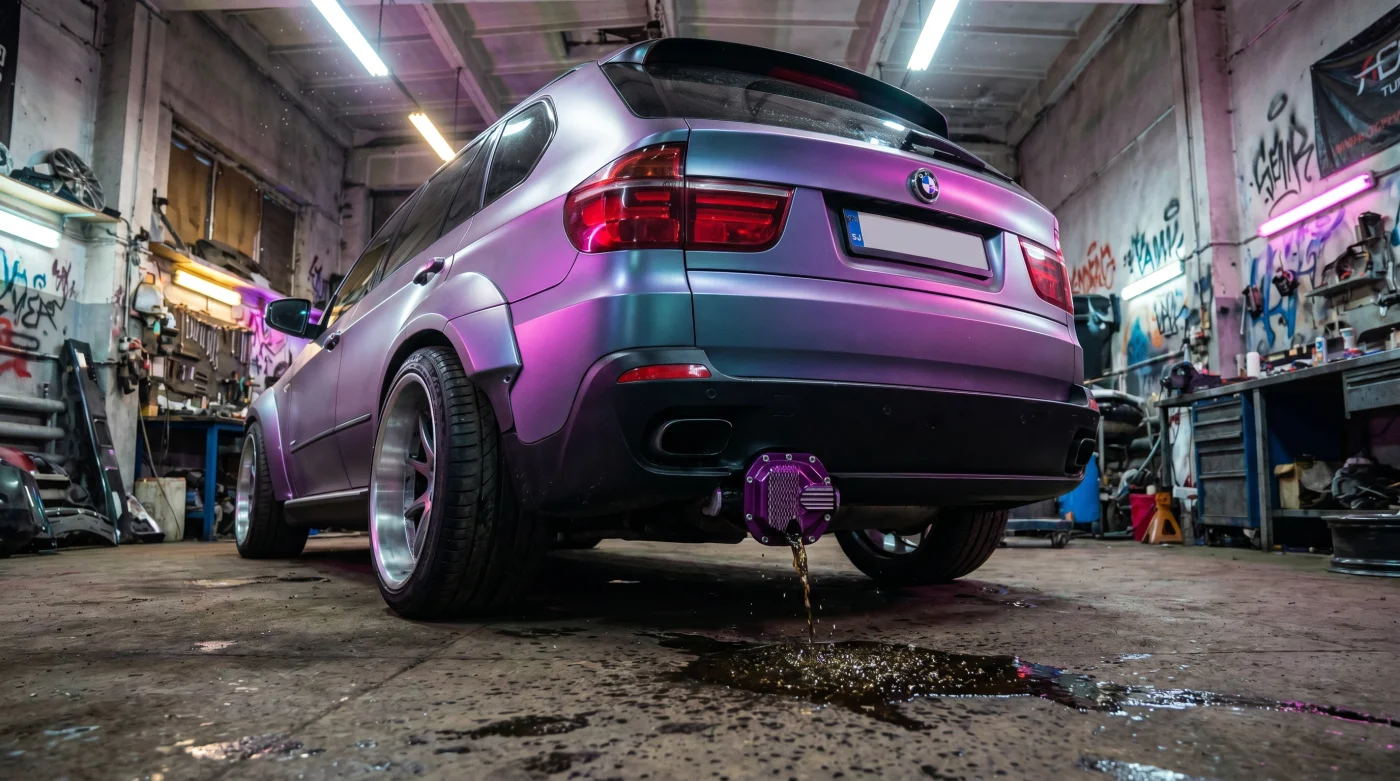
- Rear Differential: Many modern X5 rear differentials do not feature a drain plug. You must use a fluid extractor fluid pump to suck the old fluid out through the fill plug before pumping in fresh, clean gear lubricant.
Your tactical toolkit for this job should include a reliable fluid extraction pump, new aluminum sealing washers, a torque wrench set to factory specifications, and a can of brake cleaner to wash away any spilled oil so you can easily spot leaks later.
Preserving the Silent Machinery of Luxury
Caring for the parts of your vehicle that you cannot see is the ultimate form of automotive respect. It is an acknowledgment that mechanical systems do not care about marketing brochures or lease-term calculations. They only respond to clean lubrication, correct clearances, and regular physical inspection.
When you take the time to service these hidden gearboxes, you are doing more than just saving money on future repairs. You are preserving the smooth, silent glide that made you fall in love with your car in the first place. There is a deep, quiet satisfaction in watching the blackened, metallic-flecked gear oil drain from the transfer case plug, knowing that the fresh, amber fluid you pour back in is securing your vehicle’s mechanical integrity for another fifty thousand miles.
“True automotive luxury is not found in the digital screens or the leather seats, but in the silent, frictionless harmony of the machinery spinning beneath your feet.” – Marcus Vance, Independent BMW Specialist
| Drivetrain Component | Factory Service Claim | Real-World Service Interval | The Added Value for the Owner |
|---|---|---|---|
| xDrive Transfer Case | Lifetime Fill | 50,000 Miles | Prevents clutch glazing and eliminates low-speed binding shudders. |
| Front Differential | Lifetime Fill | 50,000 Miles | Protects internal bearings and ensures smooth power delivery to front wheels. |
| Rear Differential | Lifetime Fill | 50,000 Miles | Prevents gear whine and preserves expensive ring-and-pinion wear patterns. |
Frequently Asked Questions
Is xDrive shudder dangerous to drive with?
Yes, driving with degraded fluid causes the internal clutch plates to slip unevenly, creating heat that will eventually destroy the transfer case internals and lead to a costly mechanical breakdown.Why doesn’t BMW include differential service in the manual?
Automakers exclude these services to lower the projected cost of ownership during the initial warranty period, catering to fleet buyers and lease customers who do not keep cars past 50,000 miles.Can I use standard gear oil in my X5 transfer case?
No, the xDrive transfer case requires highly specific DTF 1 fluid to ensure the wet clutches slip and grab with the exact coefficient of friction programmed into the vehicle’s traction control computer.How can I tell if my X5 is suffering from bad differential fluid?
Listen for a high-pitched whine from the front or rear of the vehicle at highway speeds, or feel for a subtle binding or shuddering sensation when turning the steering wheel to full lock at low parking speeds.Do I need a scan tool to change my transfer case fluid?
Yes, after changing the transfer case fluid, a diagnostic scanner must be used to perform the adaptation reset so the vehicle knows how to properly distribute torque with the new fluid thickness.