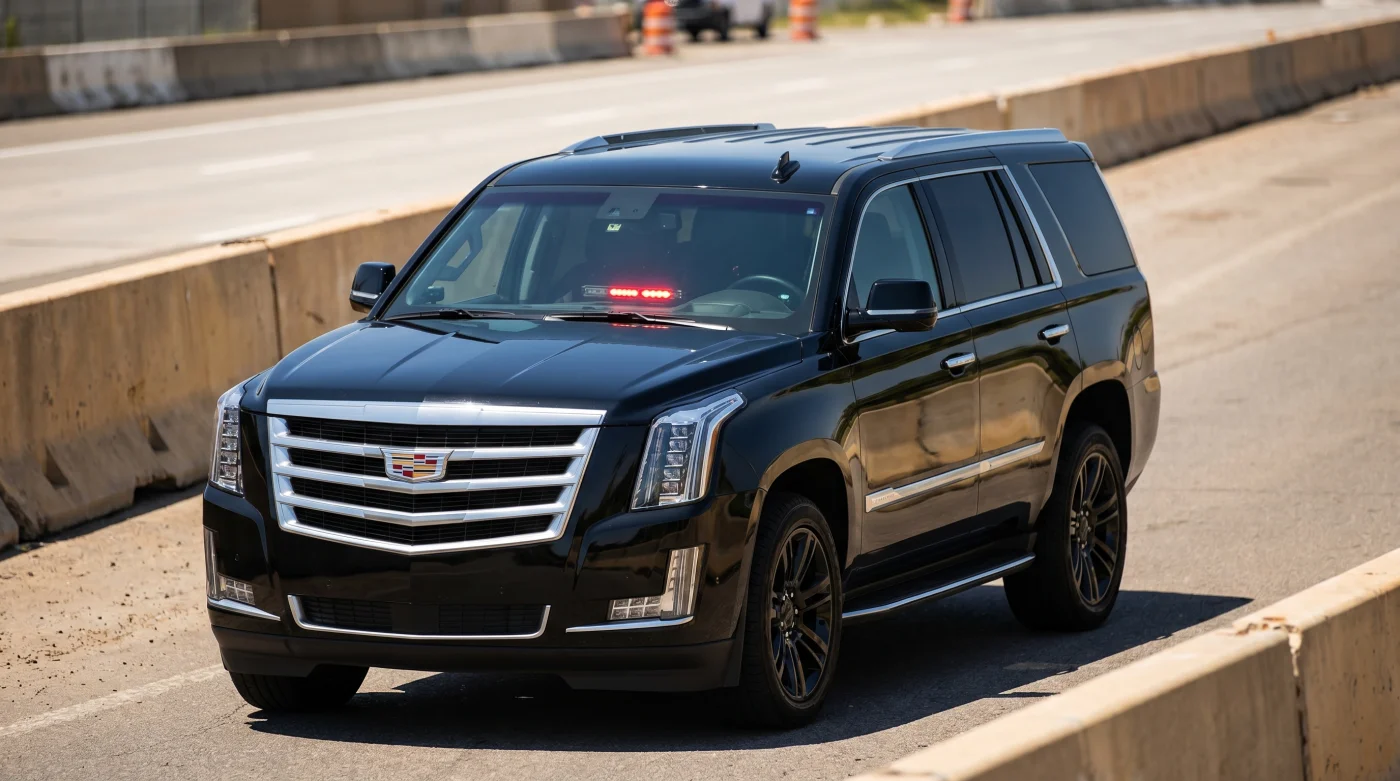
The interior of a late-model Cadillac is a sanctuary of hushed luxury. Double-paned glass isolates you from the roar of the interstate, while the subtle aroma of hand-stitched leather fills the cabin. Under the soft glow of the instrument panel, the light bar on the steering wheel glows a steady, reassuring green. The highway stretches ahead, and you let your hands rest lightly on your lap, trusting one of the most sophisticated driver-assistance systems on the market.
For miles, the system performs flawlessly, maintaining a perfect center within the lane lines. It feels like magic, a seamless partnership between high-definition LiDAR mapping and real-time optical cameras. You relax your shoulders, letting the vehicle shoulder the mental load of the evening commute. The illusion of absolute control is comforting, almost hypnotic, as the miles slip away under the chassis.
Then, the environment changes. The smooth asphalt gives way to a construction zone marked by temporary concrete barriers. The white lines on the right are suddenly accompanied by temporary orange markings, while old, partially erased lines create a confusing web of gray scars on the pavement. The barrier on the left sits mere inches from the active lane, narrowing your path significantly.
Without warning, the steering wheel jerks violently to the left. The vehicle drifts toward the raw concrete of the temporary barrier, ignoring the temporary lane markings entirely. Your heart leaps into your throat as you grab the leather rim, pulling the heavy sedan back into the center of the lane. This sudden, terrifying path deviation reveals a critical vulnerability in how our most advanced semi-autonomous systems interpret temporary road geometry.
The Ghost in the Mapping Database
To understand why this happens, you have to look past the marketing brochures and study how Cadillac’s system builds its reality. Super Cruise relies on a foundation of high-definition LiDAR maps, meticulously scanned and updated to provide a centimeter-accurate blueprint of the highway network. When the physical world matches this digital blueprint, the system operates with unparalleled precision, anticipating curves and grades long before they appear in your headlights.
However, when construction crews move lanes and place temporary concrete barriers, they create a spatial paradox. The pre-mapped database says the lane is straight and wide, but the real-world cameras see a narrow, curving chute bounded by gray concrete. This optical-spatial mismatch forces the onboard computer to make a split-second choice between the map it trusts and the physical lines its cameras see. When the two inputs conflict, the software can experience brief moments of indecision, tracking outdated lines that lead directly toward the barrier.
- GVWR tax classification rules allow heavy luxury EVs massive commercial depreciation write-offs
- Hyundai Ioniq 5 electric architecture matches premium Audi cabin acoustics for half the price
- Porsche Taycan owners report severe regenerative braking calibration failures on icy mountain roads
- Kia Telluride seatbelt recall triggers massive service delays at nationwide dealerships
- 2027 Ram Rumble Bee debut sparks massive dealership waitlists across America
A Real-World Alert from the Asphalt
Mark Vance, a 48-year-old structural inspector from Michigan, experienced this software conflict firsthand during his daily commute on Interstate 75. Driving his Escalade through an active bridge rehabilitation zone, he watched the green light bar turn to an anxious yellow, then blue, as the lane shifted three feet to the right to clear a newly placed concrete divider. “The car didn’t just drift; it actively steered toward the concrete wall as if trying to reclaim the old lane alignment,” Vance recalls. His quick physical intervention was the only thing that prevented a high-speed scrape against the rough concrete surface.
Navigating the Variable Geometry of Roadwork
The High-Contrast Shadow Play
During late afternoon drives, the sun hangs low, casting long, sharp shadows from the top of concrete barriers directly across the active lane. These dark bands mimic the appearance of solid black lane markings, especially on lighter concrete surfaces. Sensors struggle with contrast, sometimes interpreting a shadow boundary as a lane line, which triggers an abrupt, unwanted steering correction away from the perceived edge.
The Wet-Pavement Reflection Trap
Rain changes how light bounces off the road surface, turning every groove and old marking into a mirror. When temporary yellow lines are painted over old, ground-down white lines, the wet surface reflects both sets of markings with equal intensity. Water creates a visual trap where the optical cameras cannot distinguish the active temporary lane from the decommissioned path, leading to sudden, erratic hunting behaviors between the lines.
Reclaiming Control: The Construction Zone Protocol
Navigating these zones safely requires you to transition from a passive passenger to an active supervisor the moment you see orange construction signs. Do not wait for the system to signal its confusion. By adopting a proactive stance, you can enjoy the benefits of driver assistance while keeping yourself safe. Reclaiming your driving authority is critical during these high-risk infrastructure changes.
Implement these physical steps to maintain safety in variable lane configurations:
- Keep your hands hovering at the ten-and-two position, ready to apply physical torque to the wheel instantly.
- Observe the pavement ahead for lane scarring or old lines that run underneath the temporary barriers.
- Be prepared for sudden system dropouts when passing high-contrast overhead gantries or construction lighting.
- Deactivate the system manually if the lane width drops below ten feet or if barriers lack reflective markers.
Your tactical approach to managing semi-autonomous systems in construction zones should center on these key operating parameters. Focusing on these tactical settings ensures you are prepared to react instantly if the cameras lose track of the lane line boundaries.
- Maximum Operational Speed: Keep your speed below 55 mph in active work zones to allow maximum reaction time.
- Target Visual Focus: Watch the gap between your left front tire and the barrier, rather than relying on the instrument cluster.
- Physical Anchor Point: Keep your right heel firmly planted on the floorboard directly in front of the brake pedal for instant stopping power.
The Illusion of Seamless Safety
The dream of hands-free driving is incredibly seductive, promising to transform tedious highway miles into moments of absolute relaxation. Yet, as excellent as Super Cruise is, it remains a tool that assists, not a chauffeur that replaces. The complex, ever-changing reality of our nation’s infrastructure is too dynamic for static digital maps to capture in real time.
When you enter a construction zone, you are entering a space where human ingenuity and machine logic must negotiate. Understanding the physical limits of optical cameras and LiDAR databases keeps you safe. When those systems clash, the sudden red light bar flashes before disengagement, demanding that you take the wheel immediately.
“No digital map can replace the split-second judgment of an attentive driver when the physical world refuses to match the blueprint.” — Autonomous Vehicle Safety Institute
| Key Point | Detail | Added Value for the Reader |
|---|---|---|
| Mapping Lag | LiDAR maps cannot update fast enough to reflect daily construction lane shifts. | Helps you anticipate when the system is most likely to lose track of the road. |
| Optical Override | Optical cameras try to follow confusing temporary lines when LiDAR data fails. | Explains the physical reason behind sudden steering wheel jerks. |
| Red Alert Disengagement | The system flashes red and vibrates the seat when it gives up control. | Prepares you for the immediate physical feedback of a system failure. |
Is Super Cruise safe to use in active construction zones?
While Super Cruise is highly capable, it is safest to take manual control in active construction zones due to unpredictable temporary barriers and confusing lane markings.
Why does the steering wheel jerk near concrete barriers?
The optical cameras may misinterpret the shadows or reflections on the concrete barrier as lane lines, causing the system to make sudden, sharp corrections.
What does the flashing red light bar on the steering wheel mean?
The flashing red light bar indicates an emergency disengagement, requiring you to take steering control immediately to prevent an accident.
How often does Cadillac update its high-definition LiDAR maps?
Maps are updated frequently via over-the-air connections, but they cannot keep pace with overnight lane shifts in active roadwork areas.
Can wet pavement trigger a Super Cruise lane drift?
Yes, wet asphalt reflects both old and new lane lines, confusing the camera sensors and causing the vehicle to drift or hunt for the correct path.