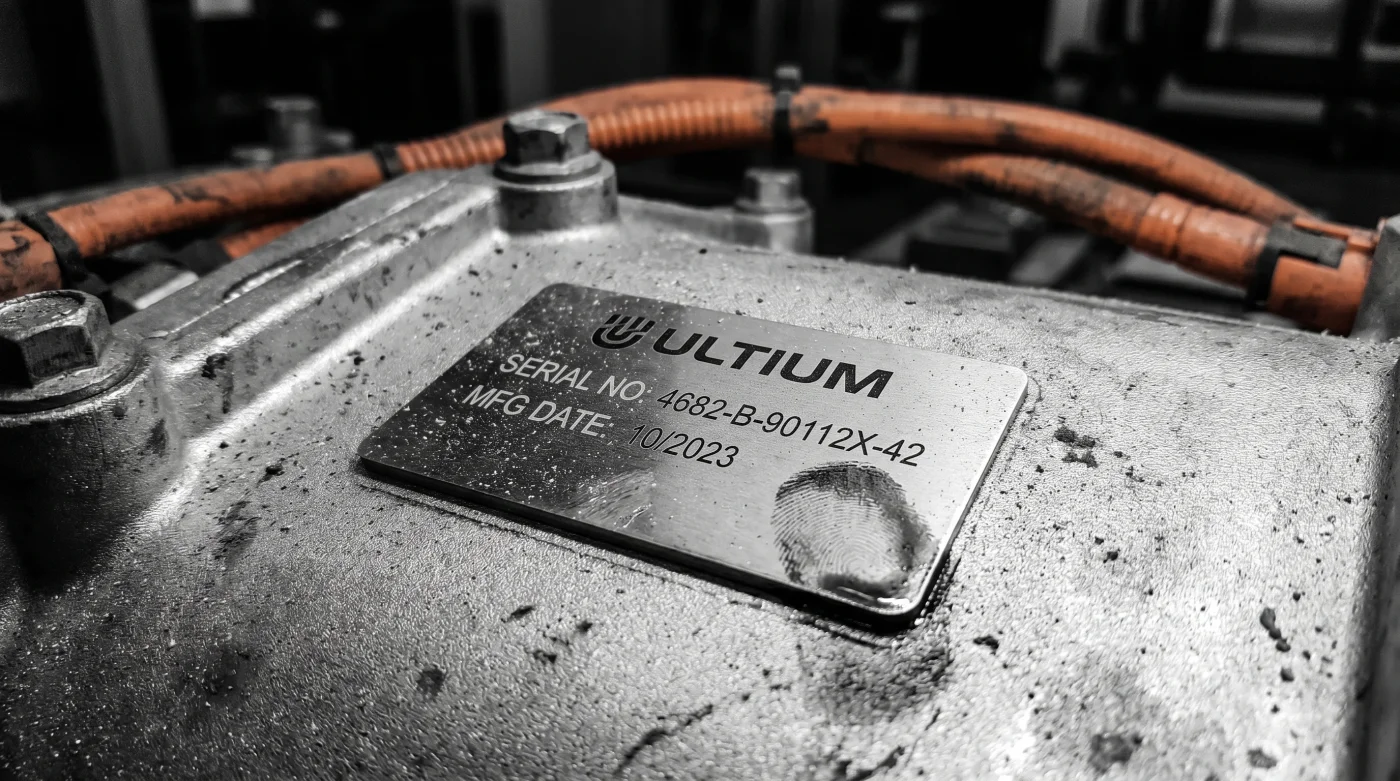
The workshop floor is cold, but the air around the charging port feels alive, a faint ozone scent hanging in the stillness of a 6:00 AM diagnostic check. You run your hand over the door handle of the Chevy Equinox EV, and it feels solid—not budget-brand solid, but something weightier. Beneath the white-pearl paint and the familiar bowtie badge, there is a mechanical pulse that doesn’t quite match the window sticker price. It is the hum of a machine that was built to carry a much heavier crown.
When you sit inside, the silence is not the hollow quiet of a cheap commuter car; it is the dense, dampened stillness of a vault. You press the accelerator, and the response is linear and immediate, lacking the jittery nervousness often found in entry-level electrics. This is the first clue that the car is lying to you about its heritage. The steering rack resists your palm with a calculated, hydraulic-like smoothness that belongs in a zip code miles away from the Chevrolet dealership.
In the world of internal combustion, a Chevy engine was a Chevy engine, and a Cadillac engine was something else entirely. But the electric era has dissolved those borders. As the hoist lifts the vehicle, the plastic cladding disappears, revealing a chassis that looks remarkably familiar to anyone who has spent time under a luxury SUV costing thirty thousand dollars more. The secret isn’t in the leather or the screens; it is hiding in the high-voltage wiring and the cast-aluminum cradles.
The Ghost in the Luxury Machine
We have been taught to believe that price dictates the soul of a vehicle, but the Chevy Equinox EV operates on a principle of shared DNA that the industry calls the Ultium platform. Think of it like a master-crafted watch movement placed inside two different cases: one stainless steel, one platinum. The heart beats exactly the same way in both. For the Equinox buyer, this isn’t just a platform share; it is a mechanical loophole that allows you to drive a premium architecture for a middle-market payment.
This shift from ‘bespoke engines’ to ‘modular architectures’ means the hardware protecting your family and driving your commute was engineered to meet the NVH (Noise, Vibration, and Harshness) standards of a luxury flagship. When you buy the Equinox, you aren’t getting a ‘watered-down’ Cadillac; you are getting the Cadillac’s skeleton at a massive discount. It is a rare moment where the manufacturing efficiency of a global giant actually works in the favor of the individual’s wallet.
- Hyundai Ioniq 5 charging ports throttle speeds when ambient temperatures hit eighty degrees
- Kevin Bradley Dodge Charger fleet contracts face scrutiny amid top cop allegations
- 2026 Subaru Outback preorders expose a sudden halt in hybrid trim availability
- Tesla stock price fluctuations mask a hidden mechanical cost in gigacasting repairs
- Ford Super Duty Carhartt truck inventory vanishes as rural dealerships inflate prices
Marcus, a 52-year-old lead diagnostic tech at a high-volume GM service center in Michigan, once showed me a stack of shipping crates. One was destined for a Cadillac Lyriq repair, the other for an Equinox EV drivetrain swap. He pointed to the labels and laughed. Both crates contained the Ultium Drive Unit Assembly (Internal GM Part No. 24043320), a 150kW front-drive motor that is physically and electronically identical across both models. ‘The customer pays for the badge,’ Marcus whispered, ‘but the copper and the magnets don’t know the difference.’
Choosing Your Level of the Ultium Logic
Not every Equinox is built to the same spec, and understanding where the luxury overlap is strongest can help you choose the right trim. The architecture is modular, meaning you can essentially choose how much of that ‘premium feel’ you want to pay for.
- For the Value Seeker: The base 1LT trim utilizes the same 11.5 kW onboard charger found in luxury tiers. You are gaining the same ‘refill’ speed at home as a vehicle twice the price.
- For the Long-Haul Driver: Opting for the larger battery pack aligns you with the 102.0 kWh usable energy density modules shared with the Lyriq, ensuring the thermal management system works with identical cooling-plate efficiency.
- For the Tech-Focused: Even the entry-level screen architecture runs on the same Snapdragon Cockpit Platform, meaning the ‘brain’ of your budget EV has the same processing power as a luxury suite.
How to Inspect Your Potential Investment
Buying an EV is different from buying a gas car because you are buying a battery and a thermal management system first, and a car second. To ensure you are getting the most out of this ‘shared’ architecture, you need to look at the build sheet with a professional eye. The magic is in the sub-components that dealers rarely mention in their brochures.
- Verify the presence of the heat pump; this is the same unit used to maintain cabin comfort in premium EVs without draining the battery.
- Check the door seals. The Equinox uses a multi-layer acoustic glass and weather-stripping system that was originally validated for the higher-priced Cadillac sibling.
- Listen for the ‘AVAS’ sound. Even the pedestrian warning system shares the same frequency modulation as the premium lines, ensuring a more sophisticated sound profile in parking lots.
The New Definition of Automotive Value
Ownership today isn’t about the hood ornament; it is about the structural integrity of the high-voltage system you are sitting on. When you realize that the Equinox EV shares the same 190kW DC fast-charging capability and the exact same motor stator design as a vehicle costing $70,000, the ‘budget’ label begins to feel like a badge of honor. You are essentially arbitraging the automotive market, taking advantage of a production scale that requires the manufacturer to use their best parts even in their most affordable cars.
In the end, peace of mind comes from knowing that the components underneath you weren’t built to be ‘just good enough’ for a budget car. They were built to survive the scrutiny of a luxury buyer. That realization changes the way you look at your driveway. It’s no longer just a Chevy; it’s a high-performance platform in a sensible coat, a secret held in plain sight by the bolts and wires of the Ultium era.
“The modern EV market is a game of hidden commonalities; when you find the shared part number, you find the real value.”
| Key Point | Shared Component Detail | Added Value for the Reader |
|---|---|---|
| Drive Motor | GM Part #24043320 (150kW) | Luxury-grade acceleration and durability at a Chevy price point. |
| Battery Chemistry | NCMA (Nickel-Cobalt-Manganese-Aluminum) | Same thermal stability and cycle life as the flagship Cadillac Lyriq. |
| Onboard Charging | 11.5 kW Level 2 Module | Home charging speeds that match premium EVs, reducing ‘garage time’. |
Is the ride quality the same as a Cadillac? While the Equinox uses the same chassis, it has slightly different suspension tuning, though it remains much smoother than other budget EVs due to its luxury-grade subframes.
Does the Chevy Equinox EV use the same software? Yes, the underlying Ultifi software platform is identical, though the visual skins and some ‘luxury features’ are exclusive to Cadillac.
Why would Cadillac buyers pay more if the motors are the same? Luxury buyers pay for the interior materials, ‘Super Cruise’ availability, and the dealership experience, but the mechanical reliability is identical.
Are the batteries really the same? They use the same modular Ultium cells, though the Cadillac may have more modules in its largest configuration compared to the Equinox’s base trim.
Will this shared platform make repairs cheaper? Absolutely; because these parts are used in millions of vehicles across different brands, long-term availability and third-party repair knowledge will be much higher.