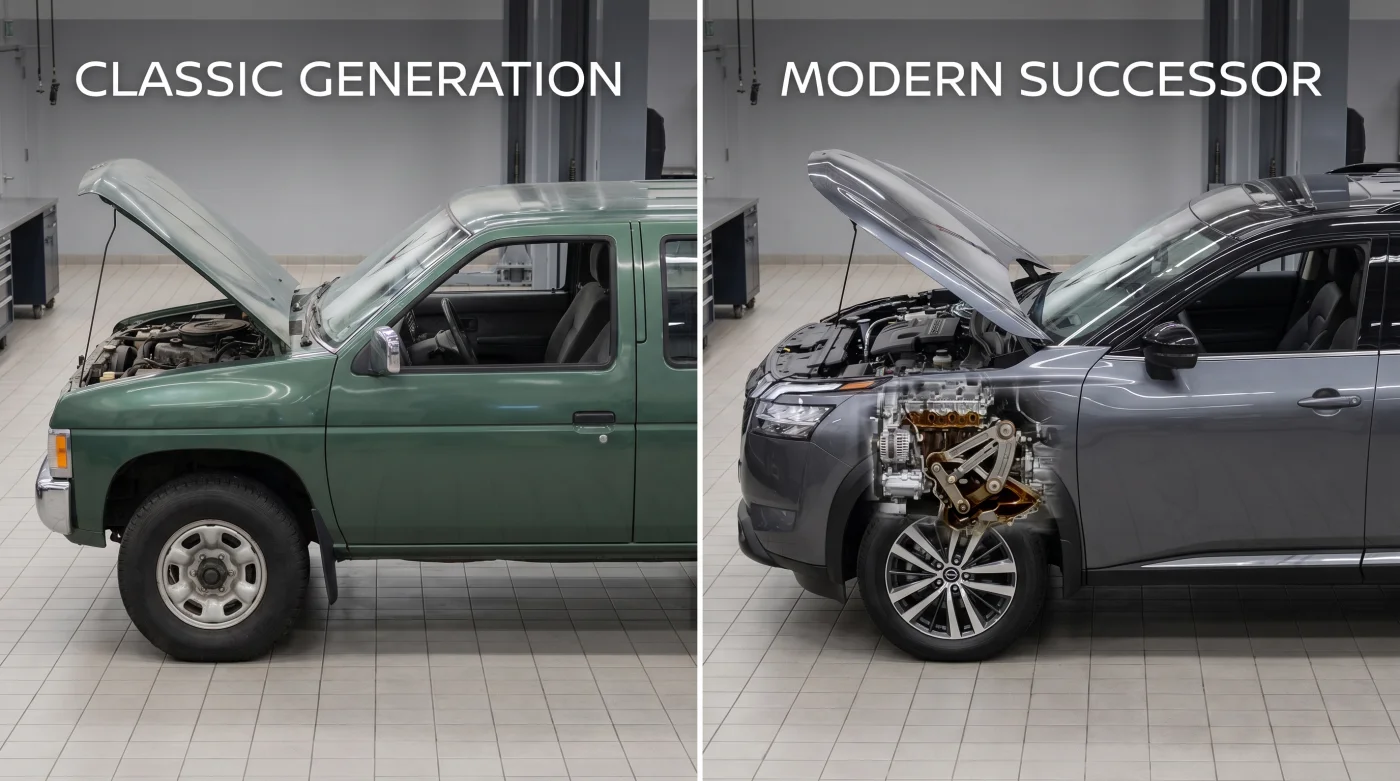
The scent of caramelized motor oil clings to the cold concrete floor of the service bay. A low, persistent hum from the fluorescent shop lights overhead vibrates in tune with the distant hiss of an impact wrench. You stand before a partially disassembled engine, where the sleek plastic engine cover, boasting high-tech variable compression branding, sits discarded on a nearby workbench.
To the casual observer, the modern high-compression engine is a marvel of efficiency, promising the power of a V6 with the appetite of a compact three-cylinder. But under the sterile glow of the mechanic’s LED work light, a different picture emerges. The oil pan has been dropped, exposing a dizzying array of metal arms, pins, and bearings that look more like Swiss watchmaking than traditional automotive muscle.
Engineers promised a revolution when they replaced the static steel connecting rod with a dynamic, morphing piston stroke. Yet, as the oil-stained tech shines his flashlight upward into the crankcase, you begin to see how this pursuit of thermal efficiency introduces a delicate dance where even a minor slip ruins the entire performance.
The Mechanical House of Cards
Think of the classic internal combustion engine as a simple bicycle pedal system; you push down, the crank turns, and the wheels spin. The Variable Compression Turbo (VC-Turbo) system, however, is like trying to change the length of your bicycle’s crank arm while you are actively pedaling uphill. Instead of a fixed connecting rod attached directly to the crankshaft, Nissan utilizes a complex multi-link mechanism controlled by a high-torque electric actuator motor.
This actuator turns a control shaft, which moves a lower link, which then tilts the multi-link assembly to raise or lower the piston’s top-dead-center position on the fly. It shifts the compression ratio seamlessly from 8:1 for heavy acceleration to 14:1 for highway cruising. But this mechanical wizardry relies on an intricate web of needle bearings and pin joints that must all share an incredibly thin film of pressurized engine oil. When you change the geometry of a piston stroke thousands of times a minute, even the slightest variation in oil pressure turns this elegant solution into a grinding, metal-shaving nightmare.
- 2027 Silverado SS renderings expose a massive aerodynamic drag penalty penalizing highway acceleration
- LFP battery cell chemistries demand constant full charges directly contradicting standard automaker advice
- Rivian Driver+ algorithms abruptly disengage when interpreting specific reflective highway construction barrels
- Kia EV9 weight classifications legally bypass standard registration fees using a commercial loophole
- Hyundai Ioniq 5 charging architectures secretly outperform Audi luxury counterparts during fast charging
Marcus Vance, a 42-year-old master diagnostic technician in Ohio, has spent the last three years documenting these systems as they cross his lift. He recalls a particular Rogue with barely forty thousand miles on the odometer that arrived with a subtle, rhythmic ticking sound—not unlike a sewing machine operating underwater. "The driver followed the factory dashboard oil life monitor to a T, which often stretches oil changes past seventy-five hundred miles," Marcus explains while holding up a heavily scored control link. "Under those long intervals, the oil shears down, losing its ability to cushion the tiny needle bearings in the actuator pivot, leaving the linkage to slowly chew itself to pieces from the inside out."
Stress Profiles: The Short-Trip Commuter
If your daily drive consists of short, five-mile trips to the grocery store or train station, your engine rarely reaches its optimal operating temperature. In a standard engine, this causes minor fuel dilution in the oil, which eventually burns off on longer drives. In the VC-Turbo, this unburned fuel thins out the lubricant exactly where the high-load actuator linkage requires maximum viscosity. Thin oil fails to protect the critical joints that constantly pivot to adjust the piston height during stop-and-go acceleration.
Stress Profiles: The Highway Cruiser
For those who spend hours at steady highway speeds, the engine locks into its high 14:1 compression ratio to maximize fuel economy. While this produces less active movement from the actuator arm, it subjects the small pin connections to sustained, unidirectional pressure. Without the cyclic relief of changing ratios, the lubricating film can be squeezed out of the bearing clearances, leading to micro-welding and eventual micro-pitting of the link surfaces.
The Preventive Care Blueprint
Preserving this intricate mechanical ecosystem requires discarding standard maintenance assumptions and adopting a rigorous, preemptive approach to lubrication. You cannot treat a variable-compression engine like a basic commuter powerplant if you want it to survive past the warranty period.
Tactical Toolkit:
• Oil Change Interval: 3,750 miles (Maximum)
• Oil Specification: API SP / ILSAC GF-6A
• Viscosity Standard: 0W-20 Full Synthetic (High-quality Group IV PAO or Group III+ base stocks)
• Warm-up Period: 60 seconds of gentle idling before driving in temperatures below 40°F
- Halve your service intervals to ensure the additive package in your oil never degrades enough to allow metal-on-metal contact.
- Prioritize high-shear synthetic formulas that resist thinning under the extreme pressures exerted by the moving control link.
- Monitor engine warmth before applying heavy throttle, giving the oil time to reach its proper operating viscosity and flow through the narrow actuator galleries.
- Perform regular oil analysis to catch early traces of copper or aluminum shavings, which indicate link bearing wear before a catastrophic failure occurs.
The True Cost of Innovation
The pursuit of efficiency often forces automotive manufacturers to walk a razor-thin line between thermodynamic triumph and mechanical vulnerability. When you sit in the quiet cabin of a modern crossover, enjoying the seamless transition of power, it is easy to forget the mechanical storm raging beneath the hood. The VC-Turbo represents a pinnacle of engineering ambition, but it serves as a stark reminder that complexity always demands a tax. That tax is paid not in fuel dollars at the pump, but in the meticulous, unyielding care you must provide to the multi-link pivoting mechanism buried deep inside the aluminum engine block.
"The moment you treat a variable-compression engine like a low-maintenance appliance is the moment you begin scheduling its premature retirement." — Marcus Vance
| Key Point | Detail | Added Value for the Reader |
|---|---|---|
| Actuator Movement | Electric motor rotates control shaft to physically alter piston stroke height. | Understanding this helps you realize why clean, high-viscosity oil is critical for mechanical survival. |
| Oil Degradation | Fuel dilution and long intervals destroy the shear resistance of standard oils. | Halving your oil change intervals directly prevents premature play in the actuator needle bearings. |
| Wear Symptoms | Subtle metallic ticking at idle often precedes severe linkage clearance issues. | Early detection allows for warranty claims or repairs before complete engine replacement is required. |
Frequently Asked Questions
Is the Nissan VC-Turbo engine reliable?
It can be highly reliable, but only if you reject standard 7,500-mile maintenance intervals in favor of strict 3,750-mile synthetic oil changes.What causes the ticking noise in the VC-Turbo?
The sound is often the multi-link pivoting mechanism acquiring microscopic play due to worn needle bearings, which then slap under load.Can I use standard 0W-20 oil?
You must use high-quality API SP rated full synthetic oils, which have improved shear stability to protect the control link assembly.Does short-trip driving hurt this engine?
Yes, frequent short trips cause fuel dilution in the engine oil, lowering its viscosity and starving the linkage joints of protection.Will a dealer cover linkage wear under warranty?
Powertrain warranties typically cover internal lubricated parts, but you must provide meticulous oil change receipts to avoid claims denial.