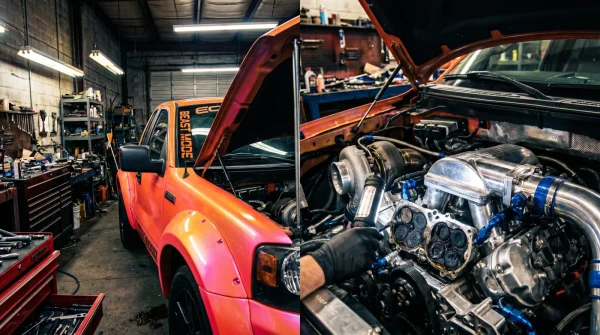
The suburban garage smells of spilled washer fluid and cold concrete, an unassuming stage for a recurring mechanical tragedy. Outside, a pristine three-row family cruiser sits idling with a barely perceptible shimmy in its steering wheel. Most drivers dismiss this slight tremor as a normal characteristic of a cold morning start, trusting the glossy maintenance booklet in the glovebox to guide them safely toward a quarter-million miles of trouble-free highway road trips.
Yet, beneath that clean silver plastic engine cover lies a quiet civil war. The instrument cluster proudly flashes an “ECO” light, promising environmental responsibility and modest fuel savings. What the dashboard does not show is the physical distress occurring within the rear cylinder bank as computer algorithms repeatedly choke off fuel and air to three of the engine’s six cylinders. This gentle cycling creates a hidden vacuum inside the combustion chambers, turning a highly engineered powerplant into an expensive air pump that slowly drinks its own lubrication.
When you extract the spark plug from cylinder number five, the sterile promises of the owner’s manual instantly evaporate. The threads feel gritty, resisting the socket wrench with a dry, metallic groan that signals trouble. Held up to the harsh fluorescent work light, the plug reveals the true cost of factory-optimized efficiency. Instead of a clean, tan tip, you are met with a swollen, carbon-caked, blackened electrode of a misfiring rear-bank spark plug, wet with oil that should have stayed in the crankcase.
The Breathing-Through-a-Pillow Illusion
Variable Cylinder Management is the automotive equivalent of forcing an athlete to breathe through a pillow while running a marathon. To meet strict EPA fleet averages, the engine’s computer shuts down specific cylinders during low-load highway cruising. However, while the intake and exhaust valves remain tightly closed, the heavy steel pistons keep flying up and down at thousands of revolutions per minute. This rapid movement without active combustion creates a powerful internal suction.
- TrueCar algorithm pricing completely ignores hidden mandatory dealership protection packages
- Jeep Grand Cherokee used inspections require pressing this specific dashboard seam
- Toyota Sienna Woodland dealer markups exploit a completely artificial suspension scarcity
- Ford F-150 PowerBoost hybrid mechanics solve the terrifying winter payload drop
- Used Genesis G80 sedans deliver identical Bentley suspension geometry for cheap
Deprived of outward pressure, the piston rings lose their seal. They begin to dance in their grooves, allowing microscopic droplets of engine oil to migrate upward into the combustion chamber. Over time, this baked-on lubricant hardens into an abrasive crust, locking the piston rings firmly in place. What began as a clever software trick to save a fraction of a gallon of fuel ends as a mechanical failure that requires a multi-thousand-dollar engine rebuild.
Marcus Vane, a 51-year-old independent Honda specialist from Cincinnati, has kept a private logbook of V6 engine repairs for over two decades. “We see dozens of family haulers roll in with flashing check engine lights and owners who swear they changed their oil every 5,000 miles,” Vane explains while wiping a layer of dark grease from his hands. “The dealership tells them they need new piston rings and catalytic converters for six grand, but the root cause is never addressed. The factory software is simply designed to pass laboratory emissions tests at the expense of physical metal.”
Adapting the Cure to Your Driving Routine
Every household uses their utility vehicle differently, meaning the rate of oil migration varies based on your daily commute. Understanding where your vehicle fits on this spectrum allows you to make an informed intervention before the low-oil light flickers on your dash.
If your daily routine consists of short school drop-offs and stop-and-go grocery runs, your engine rarely reaches the sustained highway speeds that keep VCM engaged for long periods. However, the constant cycling on and off causes rapid thermal expansion changes across the cylinder block. This frequent temperature fluctuation accelerates uneven spark plug wear, meaning you need to monitor the rear spark plugs at every oil change interval.
For the Long-Haul Highway Traveler
Families who use their SUVs for cross-country road trips are at the highest risk for severe carbon buildup. Hours spent cruising at seventy miles per hour keep the engine in three-cylinder mode for up to eighty percent of the trip. The disabled cylinders run cold, allowing unburned fuel vapor and oil mist to solidify into a stubborn lacquer that degrades the catalytic converters downstream.
Restoring Full-Time Six-Cylinder Integrity
Reclaiming your engine’s natural balance does not require physical engine teardowns or complex software reprogramming. Instead, the solution lies in a simple, elegant electronic bypass that gently alters the temperature signal sent to the engine computer. By convincing the vehicle that it has not quite reached the operating temperature required for cylinder deactivation, the software keeps all six cylinders firing harmoniously.
Installation is a calm, focused ten-minute process that requires no specialized mechanical training. You simply plug the harness in-line with the coolant temperature sensor, securing the module away from direct heat sources. This small adjustment preserves the full-time balanced combustion that the V6 engine was originally engineered to deliver, instantly ending the cycle of vacuum-induced oil consumption.
- Locate the Engine Coolant Temperature (ECT) sensor 1, typically found near the thermostat housing on the driver’s side of the engine block.
- Disconnect the factory wiring harness plug from the sensor with a gentle pinch of the locking tab.
- Insert the aftermarket VCM bypass module between the factory plug and the physical sensor until you hear a distinct click.
- Mount the module’s adjustment dial or resistor block to a nearby clean wiring loom using high-temperature zip ties.
- Verify that the vehicle starts smoothly and the coolant temperature gauge on your dashboard operates normally within its standard range.
Your tactical toolkit should include an aftermarket VCM disable harness with an active variable resistor, high-temperature nylon zip ties rated up to 250 degrees Fahrenheit, long-nose pliers for stubborn sensor clips, and a fresh set of pre-gapped iridium spark plugs.
The Peace of a Mechanical Safeguard
There is a quiet confidence that comes from knowing your family transport is no longer consuming its own vitals to satisfy a laboratory test benchmark. When you eliminate the constant vibrations of active cylinder shutting, you notice an immediate return to the velvety smoothness that made these naturally aspirated engines famous. The transmission shifts with predictable rhythm, no longer hunting for gears to mask the sudden loss of torque when cylinders drop offline.
By taking control of this single variable, you protect the heavy investment of family transport. You transition from a passive consumer following an optimized corporate schedule to an active steward of mechanical longevity. In a world of increasingly complex, fragile drivetrains, preserving the simple strength of a full-time six-cylinder engine is the ultimate preventive care.
“True engine longevity isn’t found in the owner’s manual; it’s found by correcting the compromises the manufacturer was forced to make.”
| Key Point | Detail | Added Value for the Reader |
|---|---|---|
| Piston Ring Protection | Keeps all six cylinders firing to prevent combustion vacuum from sucking oil past the rings. | Saves thousands of dollars by avoiding premature piston ring replacement. |
| Spark Plug Longevity | Prevents fuel and oil from fouling the rear-bank electrodes. | Eliminates engine misfires and frequent, frustrating spark plug replacement cycles. |
| Driveability Improvement | Eliminates active vibration and transmission gear hunting. | Provides a smooth, luxurious ride quality similar to premium luxury vehicles. |
Frequently Asked Questions
Will disabling VCM cause my vehicle to fail local emissions inspections?
No. The bypass module does not alter the exhaust monitoring systems or trigger check engine lights, allowing the vehicle to pass standard state OBD2 inspections.Does this modification significantly reduce my average fuel economy?
Real-world testing shows a negligible drop of only one to two miles per gallon, a small price to pay for preventing major engine damage.Is the VCM bypass module reversible if I decide to sell the vehicle?
Yes, the harness uses factory plug-and-play connectors and can be completely removed in less than five minutes without leaving a trace.Which years of the Honda Pilot V6 are most affected by VCM issues?
All models equipped with the 3.5-liter V6 from 2008 through the late 2010s suffer from oil consumption issues linked to active cylinder management.Do aftermarket warranties get voided by installing a VCM muzzle device?
While dealerships may look for excuses, the module can be easily unplugged before service visits to avoid any warranty discussions.