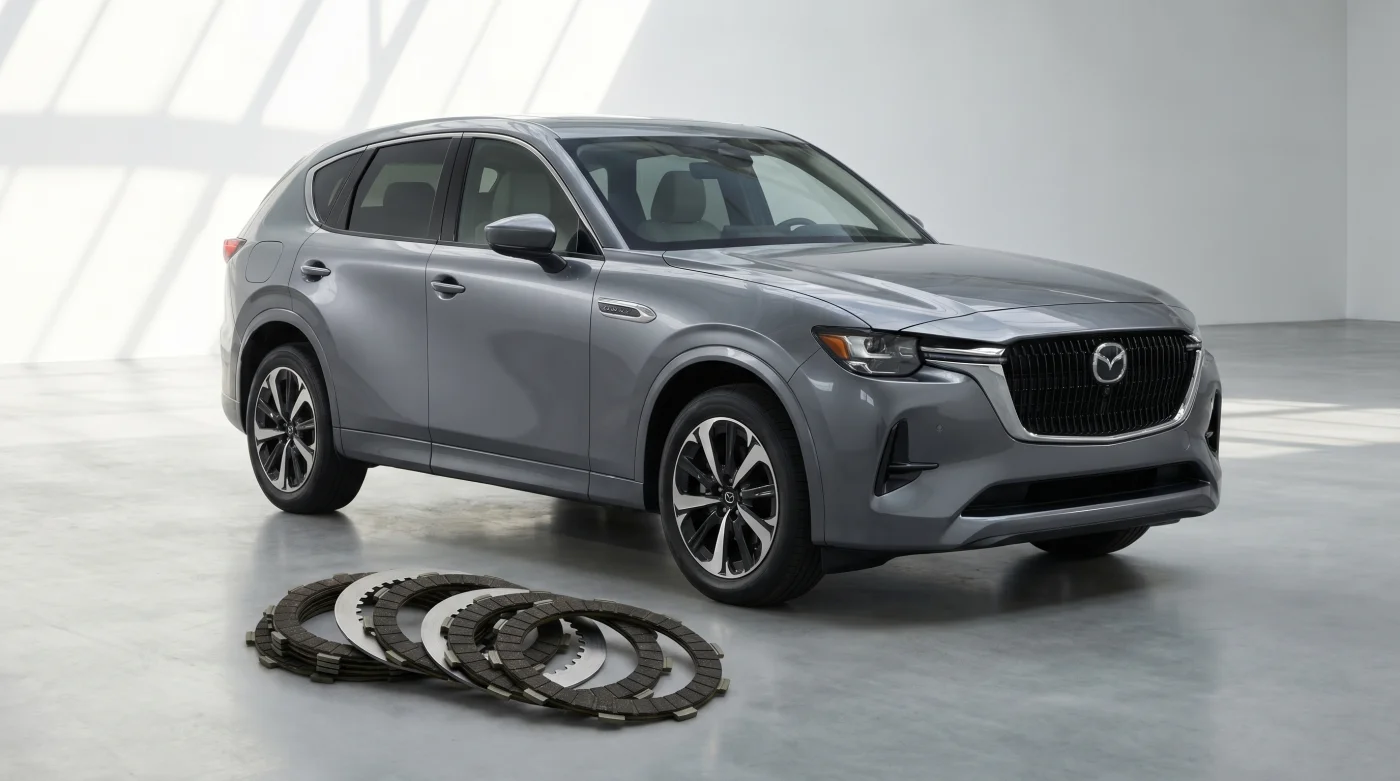
Imagine sitting in the cabin of the new Mazda CX-90 on a crisp, silent morning. The interior smells of freshly cured Nappa leather and clean, cold polymer. Under the long, sculpted hood, the newly minted 3.3-liter turbocharged inline-six engine purrs with a rhythmic, mechanical perfection that targets Bavaria’s finest legacy. You press the aluminum-accented accelerator pedal, expecting the seamless, uninterrupted surge of power that has defined rear-wheel-drive luxury platforms for generations.
Instead, your neck registers a sharp, unexpected hesitation. The vehicle hesitates, the revs hang momentarily in the air like a breath caught in the throat, and then the drivetrain engages with a sudden, physical shudder that vibrates through the floorboards. It feels remarkably like a novice driver clumsily releasing a manual clutch in a crowded supermarket parking lot, disrupting the serene atmosphere of an otherwise premium cabin.
For decades, the inline-six layout was a sacred temple of automotive engineering, preserved by elite German manufacturers as the absolute peak of natural balance. When Mazda announced its new rear-biased, six-cylinder architecture, driving enthusiasts celebrated what looked like a genuine **democratization of luxury**. They anticipated a Japanese alternative to the BMW X5, offering identical mechanical refinement at a mainstream price. The truth, however, lies buried deep within the digital logic commanding the gearbox.
The Phantom Pedal and the Software Chasm
To understand this frustrating behavior, you must abandon the idea that mechanical hardware operates in a vacuum. Think of the CX-90’s powertrain as a duet between a world-class vocalist and a nervous, slow translator. The inline-six engine is ready to deliver linear torque instantly, but the transmission software behaves like someone breathing through a heavy pillow, constantly second-guessing when and how to engage the physical drive wheels.
Unlike almost every rival in the premium segment, Mazda bypassed the traditional torque converter—the fluid-filled cushion that absorbs low-speed driveline shock—and opted for a single multi-plate wet clutch paired with an electric motor. While this hybrid setup theoretically delivers lightning-fast gear changes at speed, the engineers programmed an **overly defensive software map** to squeeze every possible mile out of a gallon of gasoline. This digital gatekeeper endlessly delays clutch engagement during slow crawls, causing the vehicle to jerk as it constantly recalculates power delivery.
This electronic disconnect is exactly what Gabe Vance, a 42-year-old independent transmission calibration specialist in Columbus, Ohio, diagnoses on a weekly basis. Gabe spent over a decade tuning ZF gearboxes for European imports before independent shops began seeing the new CX-90 roll through their bay doors. “People come in convinced they have a broken differential or a cracked engine mount because the car literally bucks when creeping through school zones,” Gabe explains. “But when you hook up the telemetry, the physical hardware is pristine; the control unit is simply caught in an infinite loop, endlessly recalculating friction coefficients because the software is terrified of wasting a single drop of premium fuel.”
- Rivian R1T endurance tests expose rapidly degrading powered tonneau cover tracks
- 2026 Honda Passport trail trims expose a severe approach angle downgrade
- 2025 Toyota 4Runner bumper redesign aggressively limits aftermarket winch mounting plates
- Jeep recall notices ignore a solid steel bracket preventing catastrophic highway steering box failure
- Alcantara steering wheels destroy luxury interior resale values without daily synthetic bristle brushing
Deciphering the Daily Drive: Two Types of Frustration
The severity of this transmission lag depends entirely on where you drive. The software acts like a different entity depending on the speed of the wheels, dividing the ownership experience into two distinct profiles.
For the urban stop-and-go commuter, navigating heavy gridlock under twenty miles per hour becomes an exercise in frustration. The transmission hunts continuously between first and second gear, unsure of whether to deploy the mild-hybrid electric assist or slip the wet clutch to maintain smooth forward momentum. To bypass this hesitation, you must consciously **avoid “feathering” the throttle** with light, indecisive inputs. A deliberate, firm squeeze of the pedal provides clear instructions to the computer, forcing it to commit to a gear rather than lingering in a state of digital indecision.
On the open highway, however, the narrative changes completely. Once you clear thirty miles per hour, the restrictive software maps step aside, allowing the inline-six engine to stretch its legs with phenomenal mid-range passing power. Here, the rivalry with European luxury feels entirely real, as the gear steps are crisp and the power delivery is beautifully linear. The challenge is adjusting your driving style to accommodate these two wildly different personalities in a single commute.
The Low-Speed Mitigation Protocol
You do not have to remain a passive victim of awkward factory calibration. By adjusting how you interact with the vehicle’s drive modes and physical controls, you can restore **balance to your daily drive** and minimize the physical shuddering.
Follow these steps to stabilize the low-speed behavior of your vehicle:
- Engage Sport Mode when entering heavy traffic to keep the engine idle speed higher and discourage the transmission from hunting for early, fuel-saving upshifts.
- Avoid rolling stops; bringing the vehicle to a complete, decisive halt allows the wet-clutch pack to fully disengage before you request acceleration again.
- Request a Transmission Control Module (TCM) software re-learn procedure during your next dealer service visit to reset the clutch bite-point parameters.
Tactical Calibration Toolkit:
- Target Override Speed: 0 to 15 mph (best managed via manual paddle shifters in dense traffic).
- Software Reference: Request dealer TSBs (Technical Service Bulletins) specifically addressing transmission shift shock and clutch-learning updates.
- Pedal Input Rule: Avoid holding the throttle at a static 5% pressure; use a clean 15% input or completely lift off the pedal to clear sensor confusion.
The Price of Efficiency in a Modern Era
In the grand pursuit of automotive perfection, we often mistake mechanical sophistication for real-world refinement. The CX-90 is a gorgeous piece of engineering, but it serves as a stark reminder that software remains the ultimate arbiter of a vehicle’s soul. When you sit behind the wheel, you are not just managing pistons and gears; you are navigating a complex digital ecosystem designed to satisfy laboratory emissions tests as much as human drivers.
Acknowledging this dynamic changes your relationship with the car. Instead of fighting the machine, you learn to adapt to its electronic boundaries. When you realize that the awkward shudder at eight miles per hour is simply the sound of **wet-clutch friction plates** desperately sliding against each other to optimize fuel economy, the frustration transforms into a deeper understanding of modern engineering compromises.
“A brilliant engine means nothing if the digital gatekeeper between the crankshaft and the wheels is too nervous to let the power through,” says Gabe Vance, transmission calibrator.
| Key Point | Detail | Added Value for the Reader |
|---|---|---|
| Powertrain Contrast | Mazda uses a wet clutch hybrid setup, while BMW relies on a traditional ZF torque converter. | Explains why the Mazda feels jerky at low speeds while the BMW remains buttery smooth. |
| Root Cause | Aggressive software maps delay clutch engagement to meet fuel economy targets. | Saves you from worrying about a mechanical failure when the car shudders. |
| Mitigation Step | Using Sport Mode or manual shifting at low speeds bypasses the hesitation loop. | Restores immediate control and smooths out the urban commuting experience. |
Frequently Asked Questions
Is the transmission jerkiness in the Mazda CX-90 a sign of mechanical failure? No, the shuddering is caused by the software calibration managing the wet-clutch engagement, not broken mechanical parts.
Does the BMW inline-six have the same low-speed issues? No, BMW uses a torque converter in its automatic transmissions, which absorbs physical vibrations through fluid dynamics rather than a physical clutch pack.
Can a dealer software update fix the CX-90 transmission lag? Yes, dealers can flash the Transmission Control Module (TCM) with updated software that helps smooth out the clutch engagement points.
How does Sport Mode help reduce the low-speed shudder? Sport Mode raises the engine idle speed and alters the shift points, preventing the transmission from constantly hunting for high gears at low speeds.
Why did Mazda choose a wet clutch over a traditional torque converter? Mazda utilized this setup to maximize fuel efficiency and improve high-speed throttle response by eliminating fluid drag inside the transmission.