The morning sun hits the hood of a Cactus Gray Bronco Sport, and for a moment, the world feels full of unpaved possibilities. You pull the door handle, hearing that heavy, reassuring thunk that Ford designers spent months perfecting. Inside, the cabin smells of faint cleaning citrus and rugged fabric, a space designed for messy boots and mountain bikes. From the driver’s seat, the vehicle feels indestructible, a mechanical mountain goat ready to scale the nearest trailhead.
But as you turn the key, there is a reality hidden beneath the skid plates that no shiny tire shine can cover. While the engine hums with suburban politeness, a small, cast-aluminum box known as the Power Transfer Unit (PTU) sits tucked near the exhaust, working in near-total silence. In these early-wave models now flooding the used market, that silence is often a mask for a slow, thermal-driven leak that can turn a reliable daily driver into a five-thousand-dollar repair bill before your first oil change.
Standard pre-purchase inspections usually look for the obvious: balding tires, coffee-stained carpets, or a puff of blue smoke from the tailpipe. However, the Bronco Sport’s PTU is a master of disguise. It doesn’t usually leave a puddle on your driveway to warn you; instead, it mists oil onto the hot exhaust, where the fluid evaporates into a faint, acrid smell you’ll likely mistake for road grime or a neighboring truck’s exhaust.
The PTU is a Marathon Runner Breathing Through a Pillow
To understand why this failure happens, you have to view the PTU as a heart under immense pressure. Its job is to send power to the rear wheels whenever the computer senses a slip. Because it sits so close to the searing heat of the turbocharger and exhaust manifold, the internal oil reaches temperatures that would make a kitchen deep-fryer blush. This creates pressure that needs to escape, which is why Ford installed a small vent tube on top of the unit.
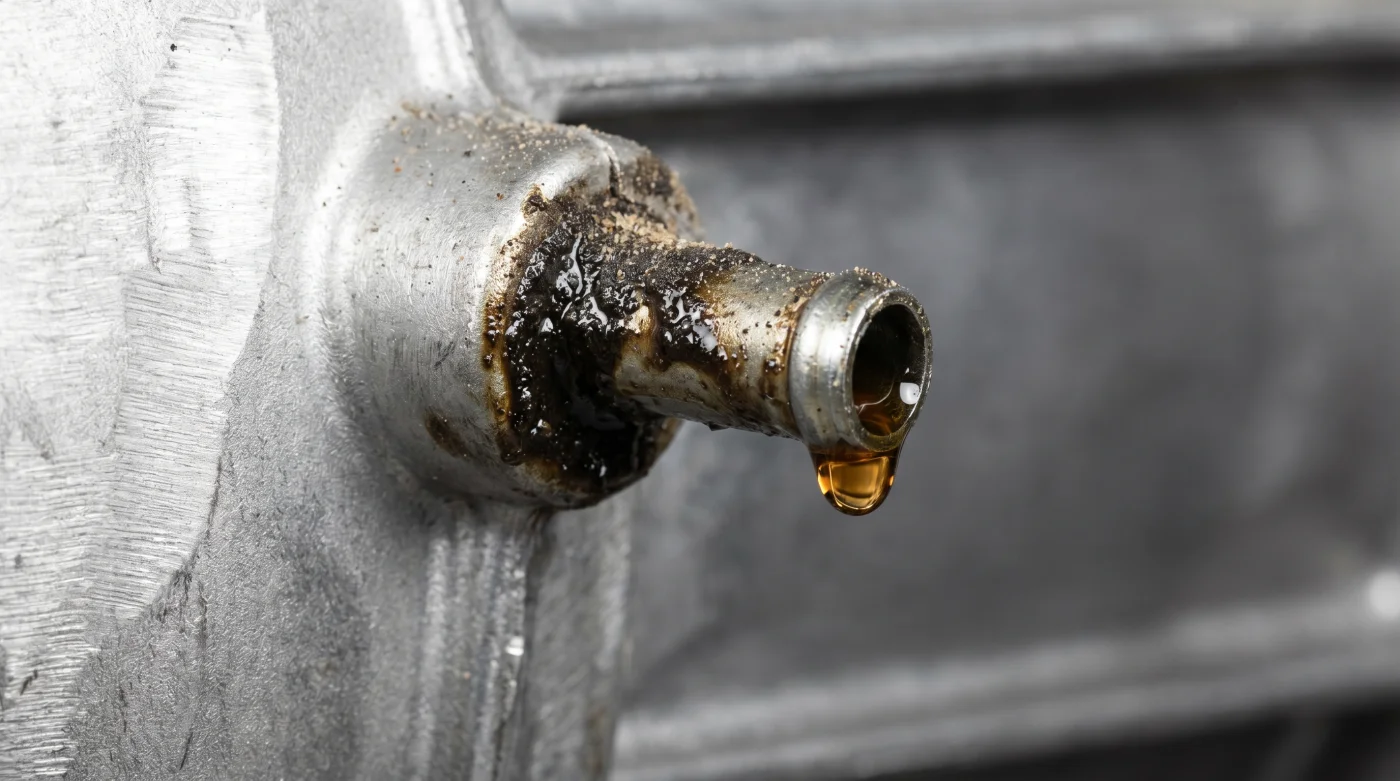
When the system works, it’s seamless. But when the oil degrades or the seals begin to groan under the heat, that vent tube becomes a chimney for misery. Instead of just venting air, it begins to spit microscopic droplets of lubricant. This isn’t a sudden spray; it is a slow, rhythmic weeping that starves the internal gears of their lifeblood. By the time you hear a ‘binding’ sensation during a tight turn in a parking lot, the internal bearings have likely already begun to grind themselves into metallic glitter.
- Honda Pilot 200k-mile longevity requires replacing the timing belt tensioner before catastrophic failure
- Mazda CX-90 base models feature the exact same inline-6 engine blocked by software
- Toyota Grand Highlander dealer markups artificially inflate prices despite overflowing factory lots
- Tesla new colors mask a factory paint thickness shift affecting scratch resistance
- Toyota RAV4 XLE Premium trim provides identical hybrid mechanics without dealer markups
Marcus, a veteran master technician in Dearborn with twenty years of Blue Oval experience, once described it as a ‘ghost leak.’ He’s seen dozens of Bronco Sports come in with ‘All-Wheel Drive Temporarily Unavailable’ messages on the dash. By then, the PTU case is often bone dry. He keeps a failed gear set on his workbench to show owners how quickly the metal turns blue and brittle once the lubrication vanishes.
Targeted Inspections for Every Type of Buyer
Not every Bronco Sport has lived the same life, and the risks vary depending on how the previous owner treated the ‘GOAT’ modes. You need to adjust your scrutiny based on the specific trim and history of the vehicle you are eyeing on the lot.
For the Suburban Commuter: If the vehicle has spent its life on paved highways in a warm climate like Florida or Texas, the heat soak is your primary enemy. Look for a ‘sweating’ appearance around the PTU seams. Even if there is no active drip, a dark, fuzzy coating of road dust stuck to the unit indicates a slow weep that has been happening for months.
For the Weekend Warrior: Vehicles used for actual off-roading or light towing face higher internal pressures. On these models, you must look higher up. Use a high-lumen flashlight to trace the vent tube path. If you see oily residue near the top of the transmission bell housing where the vent terminates, the unit has likely overheated and ‘puked’ fluid during a heavy load session.
The Glove-and-Light Inspection Protocol
You do not need a mechanic’s lift to perform a high-level triage on a potential purchase. You only need a pair of nitrile gloves, a powerful flashlight, and ten minutes of focus while the vehicle is still cold. Do not perform this check after a long test drive, as the exhaust components near the PTU will be hot enough to cause serious burns.
- Reach behind the front passenger-side wheel well with your flashlight aimed toward the center of the chassis.
- Locate the silver aluminum box where the front axles meet the driveshaft; this is your PTU.
- Run a gloved finger along the bottom of the casing and, more importantly, around the vent tube connector on the top-rear of the unit.
- Smell the residue. Fresh PTU fluid has a very distinct, pungent sulfur odor—similar to rotten eggs. If your finger comes back smelling like a chemical swamp, the seals are failing.
- Check the color. Honey-colored is healthy; black or metallic-flecked fluid means the unit is already eating itself alive.
Why This Detail Defines Your Peace of Mind
Choosing a used vehicle is an act of trust between you and a machine you haven’t yet met. By catching a PTU leak during the negotiation phase, you aren’t just saving money; you are reclaiming control over the narrative of your ownership. A seller might tell you the car is ‘mint,’ but the hidden residue on a vent tube tells the objective truth about the vehicle’s mechanical health.
Mastering this single point of inspection allows you to walk away from a lemon or negotiate a price that includes a pre-emptive fluid flush and seal replacement. When you finally do take that Bronco Sport out into the wild, you want your only worry to be whether you packed enough coffee for the sunrise, not whether a silent leak is grinding your gears to a halt ten miles from the nearest paved road. True adventure requires a foundation of mechanical honesty.
“The most expensive car you will ever buy is a cheap one with a silent leak and a loud radio.”
| Inspection Zone | What to Look For | Value to You |
|---|---|---|
| PTU Vent Tube | Oil residue or ‘weeping’ at the top of the tube. | Confirms the unit has overheated and lost fluid volume. |
| Casing Seams | Dark, oily ‘fuzz’ or caked-on road grime. | Indicates a long-term slow leak that can lead to gear failure. |
| Fluid Odor | Sharp, sulfur-like smell (rotten eggs) on your fingers. | Identifies active seal degradation before the dashboard lights trigger. |
Common Buyer Concerns
Does a small amount of ‘sweating’ mean the PTU is definitely broken? Not necessarily, but it is a sign that the fluid is breaking down. It’s a leverage point to demand a fluid service before you sign the paperwork.
Is this problem covered under the Ford powertrain warranty? Typically, yes, if the vehicle is still under 5 years or 60,000 miles. However, you must have proof of the leak to get a dealership to act.
Can I just top off the fluid myself? It is incredibly difficult. The PTU is a ‘fill-for-life’ unit with no traditional dipstick, making professional extraction and refilling the only real way to save it.
Will a standard OBD-II scanner catch this? No. A scanner only sees electrical faults. A PTU can be physically dying from fluid loss while the sensors still report everything is fine.
Does the 2.0L Badlands engine have this issue more than the 1.5L? The 2.0L engine produces more heat and torque, which puts significantly more stress on the PTU seals compared to the base models.