A cold morning in the garage always speaks the truth. When you turn the key in your Chevrolet Silverado, you expect the deep, reassuring rumble of a classic American V8 engine. Instead, you are met with a tiny, rhythmic metallic tick-tick-tick that bounces off the concrete walls. It sounds like a ball bearing rattling inside a tin can, a sound that immediately makes your throat tighten with worry.
You already know what that sound means because you have spent hours reading truck forums late into the night. The local dealership will likely tell you it is time for a head-gasket teardown, a full lifter replacement, or a completely new crate engine costing upwards of eight thousand dollars. They treat this mechanical failure as an inevitable tax on modern half-ton truck ownership, leaving you to foot the bill.
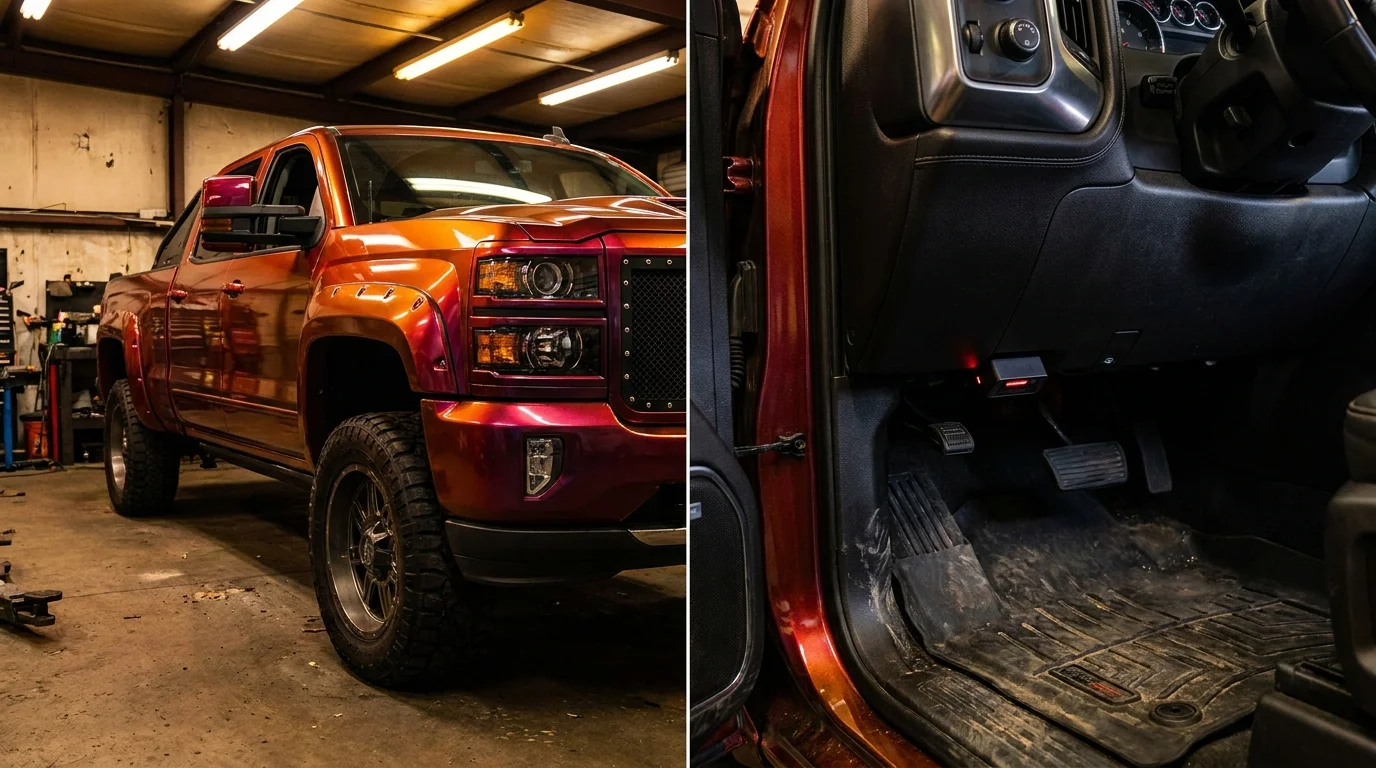
But there is a silent savior sitting right under your steering wheel, completely hidden from view. Reach your hand down beneath the dashboard, just near your left knee, and you will feel the cold plastic edge of the OBD-II diagnostic port. Plugging a small plastic diagnostic port dongle into this socket can stop this destructive cycle before the metal inside your engine ever begins to shred itself.
This device is not a miracle cure for an already shattered valve, but rather a protective shield for a healthy engine. It stops the frantic computer brain from forcing your V8 to masquerade as a four-cylinder economy vehicle, saving you from a catastrophic mechanical autopsy.
The Mechanical House of Cards
To understand why your engine is eating itself, you have to look at how GM designed its cylinder deactivation. Think of Active Fuel Management (AFM) and Dynamic Fuel Management (DFM) like forcing an elite marathon runner to hop on one leg every time they go down a slight hill. The computer believes it is saving energy, but it actually places immense, uneven stress on the runner’s joints.
When your Silverado decides you do not need full power, it shuts down oil pressure to specific lifters using tiny, fragile solenoids. The lifters collapse, holding the valves shut. Meanwhile, the engine struggles against its own internal weight. When you step on the gas pedal, oil pressure rushes back to expand the lifters. This violent, non-stop cycling causes the lifters to stick, warp, and eventually gouge the camshaft. By disabling the cylinder deactivation early, you keep the oil flowing constantly, keeping the lifters pressurized, balanced, and healthy.
A Hidden Lesson From the Fleet Shop
Marcus Vance, a 54-year-old fleet maintenance supervisor in Toledo, Ohio, has spent three decades working on small-block Chevy V8 engines. He watched the legendary reliability of these engines crumble when GM introduced active fuel management. “We had half-ton work trucks coming into the shop at sixty thousand miles with bent pushrods and chewed-up cams,” Marcus explains. He started plugging a hardware bypass disabler into every fleet Silverado that crossed his threshold before they could fail, saving his company over fifty thousand dollars in repair bills in a single year.
- Ford F-150 aluminum tailgate corrosion instantly destroys resale trade-in market values
- Honda CR-V 200k-mile longevity requires bypassing the factory transmission fluid schedule
- TrueCar pricing algorithms aggressively funnel buyers into inflated dealership finance packages
- Used Subaru Outback inspections demand checking this specific suspension bushing bracket
- Ford Bronco Raptor dealer markups completely collapse forcing sudden inventory discounts
Understanding Your V8: AFM vs. DFM
The Active Fuel Management Era (2007-2018)
Active Fuel Management is a binary system. It drops your V8 down to a V4 when you are cruising on the highway. While simple, the sudden transition puts high stress on the active cylinders, causing uneven piston ring wear and increased oil consumption over time.
The Dynamic Fuel Management System (2019-Present)
Dynamic Fuel Management is far more complex, operating in 17 different cylinder-firing patterns. The computer constantly recalculates which cylinders to fire. This makes the transition feel seamless to the driver, but the mechanical complexity is much higher, leaving your lifters vulnerable to constant software-driven changes.
The Elegant Shield: How to Install Your Bypass Module
The beauty of using an electronic bypass module lies in its simplicity. It does not rewrite your engine control module (ECM) or void your factory warranty, meaning it leaves no permanent footprint if you unplug it before taking your truck in for scheduled maintenance. It simply tells the computer to keep all cylinders running at all times.
To install the module, make sure your truck’s ignition is completely turned off and the keys are out of the ignition. Locate the OBD-II port under the driver-side dashboard. Align the pins of the module with the port and press it in firmly. You will see a small LED light on the device blink to life, signaling that the device is communicating with your truck. This simple action keeps all cylinders firing and prevents the software from playing Russian roulette with your lifters.
Tactical Setup Toolkit:
- Required hardware: Range Technology AFM/DFM Disabler (or a high-quality electronic equivalent).
- Installation time: Under 10 seconds.
- Operational check: Verify the blue LED light is active on the dongle, then check your dashboard screen to confirm it stays in V8 mode permanently.
- Battery tip: Unplug the device if your truck will sit idle in a garage for more than ten consecutive days to prevent minor battery drain.
The Return of the True V8
There is an undeniable peace of mind that comes with driving a truck that behaves like a truck. When you accelerate onto the highway, the power delivery is linear, predictable, and incredibly smooth. The annoying hesitation as the computer decides to turn your cylinders back on completely disappears.
By spending a small amount on a simple plug-in bypass, you avoid a massive, multi-thousand-dollar engine rebuild. You protect your bank account, preserve your truck’s resale value, and reclaim the mechanical simplicity that made Chevy small-block engines famous in the first place.
“Preventative electronics are always cheaper than heavy mechanical steel.” — Marcus Vance
| Engine Strategy | Mechanical Action | Added Value for the Reader |
|---|---|---|
| Standard AFM/DFM Active | Constantly collapses and expands lifters based on driving speed. | Marginal fuel savings at the cost of premature engine wear and potential failure. |
| Electronic Bypass Installed | Forces the engine to run on all eight cylinders permanently. | Eliminates lifter cycling, keeps oil pressure steady, and protects the camshaft. |
| Full Engine Rebuild | Tearing down the top end to replace bent pushrods, lifters, and cams. | A massive financial burden that can be avoided entirely with early prevention. |
Frequently Asked Questions
Will this electronic bypass module void my manufacturer warranty?
No, because the module does not rewrite the vehicle’s computer code. It simply sends a continuous signal while plugged in. If you need to visit the dealer for service, simply unplug the device, and the truck returns to its factory state without leaving a trace.
Does keeping the truck in V8 mode drop my fuel economy significantly?
The fuel economy difference is barely noticeable, usually averaging less than one mile per gallon. Most drivers find this minor trade-off incredibly worth it compared to the cost of a major engine repair.
What is the difference between an OBD-II dongle and an engine tuner?
An OBD-II bypass dongle is a plug-and-play hardware device that stops active fuel management without altering the truck’s permanent software. A tuner permanently rewrites the engine control unit, which can instantly void your warranty and cause issues with emissions testing.
Can I install this on a truck that is already ticking?
If your engine is already making a loud ticking sound, mechanical damage has likely already occurred. The bypass module is a preventative tool designed to protect healthy lifters from failing, not a cure for broken metal parts.
Will the module drain my truck’s battery when parked?
High-quality bypass modules feature low-power sleep modes to prevent battery drain. However, if you plan to leave your truck parked and untouched for more than ten days, it is always safest to unplug the dongle.