The 6:00 AM chill settles into the suburban driveway as you slide the heavy side door open. There is a specific, comforting mechanical thrum to a Honda J35 engine—a sound that has soundtracked a decade of school drop-offs and rain-soaked soccer practices. It feels permanent, like the foundation of your home. You check the odometer: 115,000 miles. To anyone else, it is a used car. To you, it is barely halfway through its life. But as the engine warms, a faint, acrid scent of toasted oil wafts through the vents, barely noticeable over the smell of cold upholstery and spilled juice boxes.
Under the hood, everything looks orderly, yet a small, rubberized gasket sits directly above one of the most vital electrical components in the vehicle. It is a slow, quiet betrayal. This tiny seal is the front spool valve, and its failure is not a matter of ‘if,’ but a calculated ‘when.’ While the rest of the van is built to endure the heat of a desert crossing, this single point of failure is currently preparing to drench your alternator in black, pressurized lubricant.
You expect a breakdown to be loud—a bang, a cloud of steam, or a grinding gear. But in the world of high-mileage Odysseys, disaster is a silent drip. It is the steady erosion of a copper winding inside an alternator, choking the electrical system until the dashboard lights up like a Christmas tree in the middle of a highway merge. Understanding this dynamic is the difference between a 250,000-mile triumph and a three-thousand-dollar repair bill on the side of the road.
The Trojan Horse in Your Timing Cover
We often treat car maintenance as a reactive sport, waiting for a light to flash or a belt to squeak before we intervene. However, the Honda V6 architecture, particularly those equipped with Variable Cylinder Management (VCM), operates on a different logic. The spool valve acts as a gatekeeper for oil flow, regulating the valve timing to save you pennies at the pump. It is a sophisticated piece of engineering held together by a gasket that grows brittle after years of heat cycles.
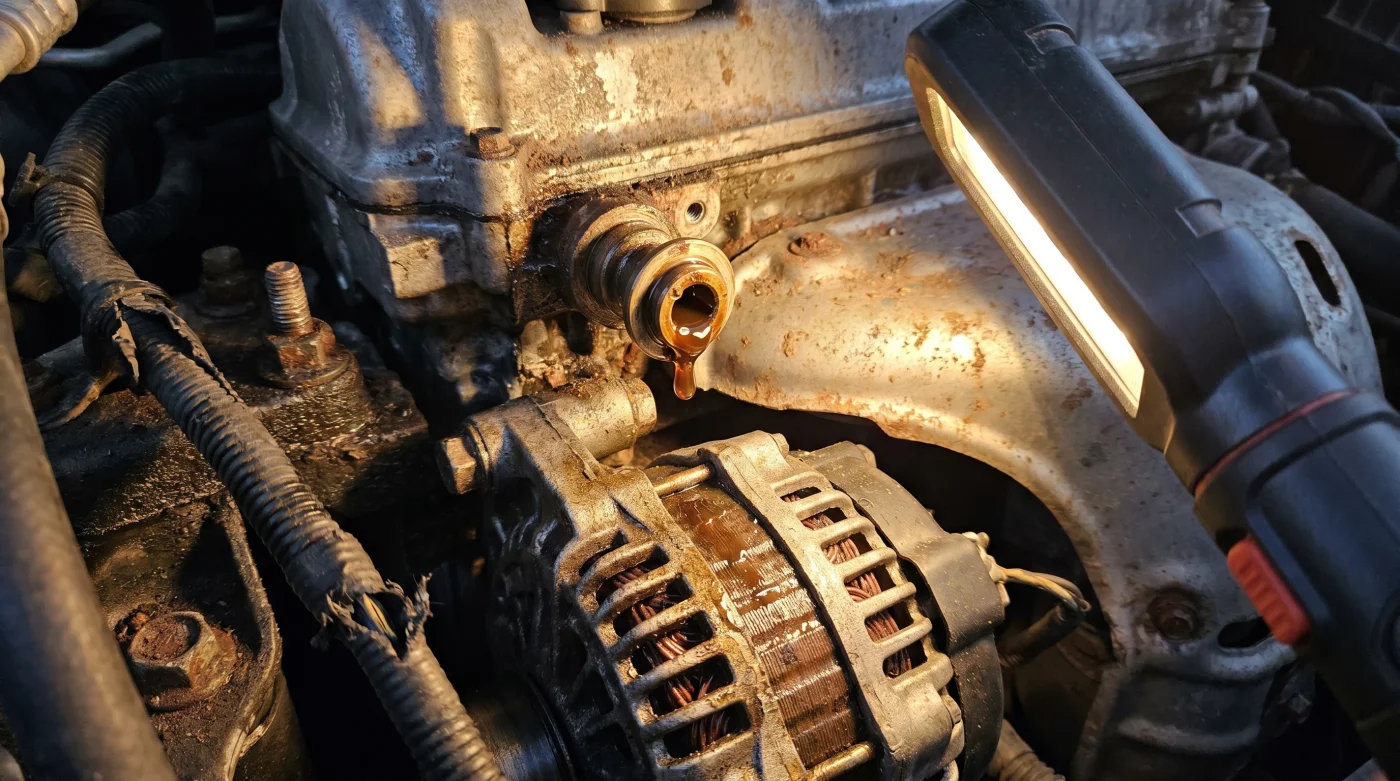
Think of the spool valve like a faucet that never quite shuts off. When the seal begins to flatten, it doesn’t leak onto the ground where you would see a puddle. It creeps down the engine block, following the path of least resistance directly into the cooling vents of the alternator. It is a mechanical sabotage that effectively kills two birds with one stone: you lose oil pressure, and your charging system fries simultaneously.
- TrueCar pricing models expose a massive margin gap against independent brokers
- Subaru Crosstrek used inspections require checking this specific CVT fluid color
- Ford Maverick inventory surges hide persistent dealer markups on hybrid trims
- Jeep Wrangler 4xe battery weight proves full electrification ruins off-road balance
- Genesis G70 depreciation mechanics provide exact German luxury performance under budget
Marvin, a veteran Honda tech in Cincinnati with grease permanently etched into his knuckles, calls this the ‘Odyssey Tax.’ He has seen countless families roll in on a flatbed, convinced their battery just died, only to find the alternator caked in sludge. Marvin’s rule is simple: if you cross the 100,000-mile mark and your spool valve is original, you aren’t driving a car; you’re driving a countdown clock.
Mapping the 200,000-Mile Trajectory
Not every Odyssey owner faces the same urgency, but the window of safety is narrower than most realize. The longevity of these vans is legendary, but it is a curated longevity. You have to categorize your vehicle’s current state to decide how to pivot your maintenance strategy before the leak turns into a flood.
For the ‘Second-Hand Adventurer’ who just bought a used 2014 or 2016 model, the inspection must be immediate. Look for a dark, damp sheen on the front of the engine, just behind the dipstick. If the metal looks wet, the clock has started. For the ‘Original Owner’ hitting the 120k mark, replacement is no longer optional; it is a prophylactic necessity to ensure the next 80,000 miles are as quiet as the first.
The Flashlight Inspection: A Mindful Protocol
You do not need a degree in mechanical engineering to protect your engine. It requires only fifteen minutes and a bright light. This is not about ‘fixing’ a broken car, but about monitoring a living system that is under constant thermal stress. Follow these steps to audit your spool valve health:
- Pop the hood after the engine has been sitting for at least an hour to avoid burns.
- Aim a high-lumen flashlight toward the passenger side, specifically looking at the top of the alternator housing.
- Check for ‘weeping’—a subtle accumulation of dust that sticks to a wet surface. If the top of the alternator is shiny, the seal has breached.
- Inspect the electrical connector plugged into the spool valve; if there is oil inside the plastic clip, the valve is leaking internally through the sensor.
The tactical toolkit for this job is modest: a 10mm socket, a new OEM gasket (never go third-party on seals), and a can of brake cleaner to strip away the old residue. It is a Saturday morning ritual that saves the equivalent of two mortgage payments in parts and labor costs.
The Bigger Picture: Maintenance as Peace of Mind
We live in an era of disposable goods, where a cracked screen or a failing battery is often the signal to upgrade. But the Honda Odyssey represents a different philosophy—a machine that can outlast a childhood if you respect its quirks. Replacing a spool valve isn’t just about preserving a piece of machinery; it is about protecting the reliability of your daily life.
When you take the time to address this hidden flaw, you are no longer a passive passenger to the machine’s eventual decay. You become its steward. There is a profound sense of satisfaction in knowing the internals are dry, the electrical signals are clear, and the engine is breathing freely. That peace of mind is what carries you through the next 100,000 miles, long after the neighbor’s newer, flashier SUV has been traded in for something else.
“Reliability isn’t something a car has; it’s something you maintain by catching the small leaks before they drown the big components.”
| Key Point | Detail | Added Value for You |
|---|---|---|
| The Danger Zone | 100,000 to 130,000 miles. | Identifies the exact window to prevent a breakdown. |
| The Target | Front Spool Valve (VVT Solenoid). | Eliminates guesswork in the engine bay. |
| The Collateral Damage | Alternator and battery failure. | Saves $600-$1,200 in secondary repair costs. |
Can I just replace the gasket instead of the whole valve?
Yes, many owners find success replacing only the rubber seal, but ensure the solenoid itself isn’t leaking through the electrical plug.Will a spool valve leak trigger a ‘Check Engine’ light?
Not always. It often leaks externally onto the alternator long before it causes a pressure drop significant enough to trip a sensor.Is this a problem on all Honda Odysseys?
It is most prevalent on the 2008-2017 models equipped with VCM (Variable Cylinder Management) engines.What is the cost of the parts if I do it myself?
An OEM gasket is usually under $30, while a full spool valve assembly ranges from $150 to $250.How long does the replacement take?
For a novice with basic tools, it is a 1-to-2 hour job that requires minimal disassembly of the engine’s upper trim.