The morning air in a suburban driveway feels different when your hand rests on a cold, weighted door handle that doesn’t wiggle. There is a specific, metallic ‘thunk’ unique to German flagship cars, a sound that suggests the door was carved from a single block of granite rather than stamped in a factory. Inside, the scent is a mixture of **tannin-heavy leather and aged magnesium**, a stark departure from the chemical ‘new car’ off-gassing of a modern budget sedan. You turn the key—always on the left, a nod to Le Mans starts—and the needle on the center tachometer dances with a mechanical urgency.
For the price of a mid-trim Toyota Camry or a generic compact crossover, you are sitting in a cockpit that once commanded a six-figure sticker price. This isn’t just about owning a badge; it is about the way the steering wheel communicates the texture of the asphalt through your palms. Most neighbors will assume you’ve had a **massive windfall or a promotion**, unaware that the vehicle cost less than their four-cylinder commuter. It is the ultimate social camouflage, hiding world-class engineering behind the brutal curve of Porsche’s depreciation cycle.
The secret lies in the ‘bottoming out’ of the first-generation Panamera, specifically the refined 970.2 facelift models. While the world chases the latest touchscreens and digital fluff, the heavy-duty mechanicals of these cars have reached a price floor that feels like a clerical error. You aren’t buying a used car; you are **acquiring a depreciated masterpiece** that still handles like a 911 despite its four-door silhouette.
The Physics of the Forty-Thousand Dollar Ceiling
To understand why this car is a steal, you have to view depreciation as a gift from the impatient. The original owners of these cars were likely executives who leased them for three years and moved on to the next shiny object. By the time a Panamera hits its tenth birthday, the market treats it like an old phone, but **physics doesn’t have an expiration date**. A chassis engineered to stay composed at 175 mph on the Autobahn doesn’t suddenly lose its structural integrity because the calendar turned.
Think of it like buying a heritage-grade wool coat at a thrift store. The style might be last season, but the **warmth and the stitch density** are infinitely superior to anything sold at the mall today. In the automotive world, this ‘stitch density’ is the Porsche Doppelkupplung (PDK) transmission—a gearbox that shifts with the crispness of a bolt-action rifle, a sensation no CVT or budget automatic can ever replicate.
- 2026 Cadillac Escalade luxury trims quietly hide the exact powertrain found in base models
- Chevrolet Camaro resale value plummets when owners modify the factory magnetic ride suspension
- GM ends Silverado HD production to pivot assembly lines toward heavier commercial fleets
- FCA US 2019-2023 recall triggers sudden buyer panic over hidden electrical fire risks
- Honda EV sales slump forces massive unadvertised dealer discounts on remaining Prologue inventory
The Mechanic’s Whisper: The Gary Factor
Gary, a 54-year-old independent Porsche specialist in Ohio, has spent three decades looking at the underbellies of Stuttgart’s finest. He points to the 2013 to 2016 model years as the ‘High-Water Mark’ for the budget-conscious enthusiast. ‘The early 2010 models had some teething issues with camshaft controllers,’ Gary explains while wiping grease from a heavy-duty control arm. ‘But by 2014, they had **ironed out the mechanical wrinkles**, leaving us with a tank that just happens to go 160 miles per hour.’
Gary’s advice is a shared secret among the ‘poor-rich’: find a car where the previous owner was terrified of a breakdown. These are the cars with thick folders of service receipts from authorized dealers. When you find a Panamera with a **documented 60,000-mile PDK service**, you aren’t just buying a car; you are buying the peace of mind that someone else already paid the ‘Porsche Tax’ for you.
Segmenting the Legend: Which 970 is Yours?
Not all Panameras are created equal. Depending on your appetite for speed and your tolerance for maintenance, there are three distinct paths to luxury under the forty-thousand-dollar mark.
- The Purist’s Daily (Panamera 4): This is the V6 workhorse. While it lacks the thunder of the V8, it is lighter over the front wheels and significantly easier on the wallet during spark plug intervals. It feels like **breathing through a straw** compared to the Turbo, but it is plenty for the American interstate.
- The Executive Muscle (Panamera 4S): The 4.4-liter V8 (in earlier years) or the twin-turbo V6 (later years) provides that ‘hand of God’ shove into your seat. This is the trim that makes the car feel like a **supercar in a business suit**.
- The Overkill (Panamera Turbo): Finding one under $40k requires patience and higher mileage, but it offers a level of violence that defies its weight. It is for those who want the **cream to tremble in their coffee** when the engine cold-starts.
The Tactical Inspection Toolkit
Buying into this tier of performance requires a mindful approach. You cannot kick the tires and hope for the best; you must audit the machine. Use this checklist to ensure your budget luxury doesn’t turn into a high-priced paperweight.
- The Borescope Audit: On V8 models, ask a mechanic to check for cylinder scoring. It is rare in later years but is the ‘resale killer’ you must avoid.
- The Air Suspension Dance: Cycle the car through its ride-height settings. If it groans or takes more than 10 seconds to rise, the **compressor is gasping for air**.
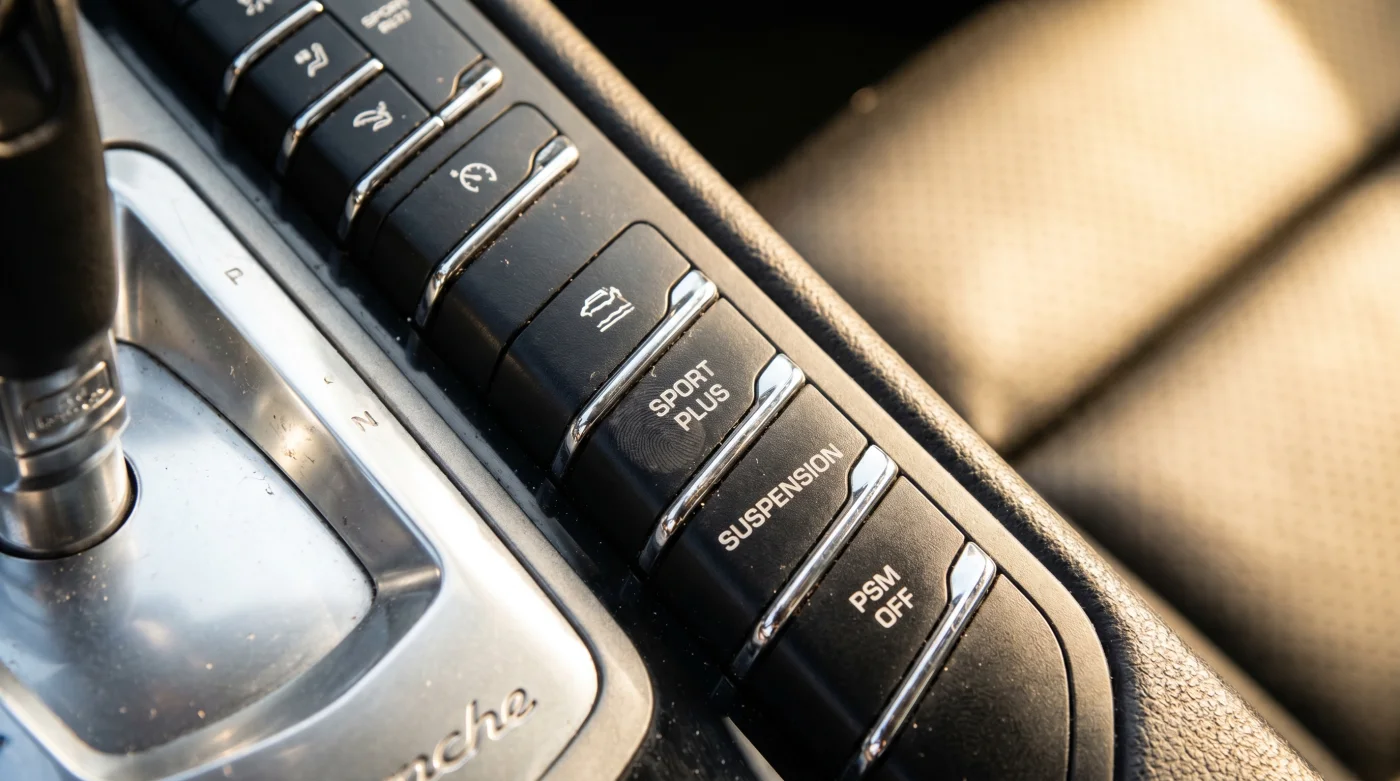
- The Electronic Handshake: Press every single button in that button-heavy center console. Every switch should provide a tactile click and an immediate response.
- The Bushing Test: Listen for ‘clunking’ over speed bumps. These are heavy cars, and the **front control arm bushings** usually give up the ghost around 70,000 miles.
The Reflective Return to Quality
In an era where cars are becoming disposable appliances with giant iPads glued to the dashboard, the first-generation Panamera stands as a monument to tactile engineering. Choosing a decade-old Porsche over a brand-new economy car is a quiet rebellion against the ‘good enough’ culture. It is an admission that you value the **weight of the steering** and the smell of real materials over a wireless charging pad or a five-year warranty.
Ultimately, driving a Panamera for $38,000 provides a peace of mind that a new car can’t match: the knowledge that the steepest part of the depreciation cliff is behind you. You are no longer watching your net worth evaporate every time you turn the odometer. Instead, you are simply enjoying the **mechanical heartbeat of a machine** built to outlast its original owner. It turns a boring commute into a calculated event, proving that luxury isn’t about the price you pay, but the value you extract from every mile.
‘The most expensive Porsche you can buy is a cheap one, but the smartest one you can buy is the one someone else already paid to fix.’
| Key Point | Detail | Added Value |
|---|---|---|
| The 970.2 Sweet Spot | 2013-2016 Model Years | Avoids early-gen engine issues and features updated LED lighting. |
| PDK Transmission | Dual-Clutch Engineering | Provides instant shifts that make 400hp feel like 500hp. |
| Depreciation Floor | $30k – $40k Range | Minimal future loss compared to buying a new entry-level luxury car. |
Frequently Asked Questions
Is the maintenance really that much more expensive than a Lexus?
Yes, parts carry a premium, but by using independent specialists instead of dealers, you can maintain a Panamera for about 30% more than a standard luxury sedan, not 300%.Will a Panamera with 80,000 miles still be reliable?
If the PDK service and oil changes are documented, these engines are easily capable of 200,000 miles. The key is preventative care rather than reactive repair.Does the V6 feel underpowered for such a heavy car?
It produces 310 horsepower. While it isn’t a rocket ship, it is faster than 90% of the traffic you will encounter on a daily basis.What is the one ‘deal-breaker’ to look for?
A lack of service history. If a seller can’t provide receipts, walk away, regardless of how clean the leather looks.Can it handle winter driving?
The ‘4’ in Panamera 4 or 4S stands for All-Wheel Drive. With a good set of winter tires, it is one of the most composed foul-weather cars on the road.