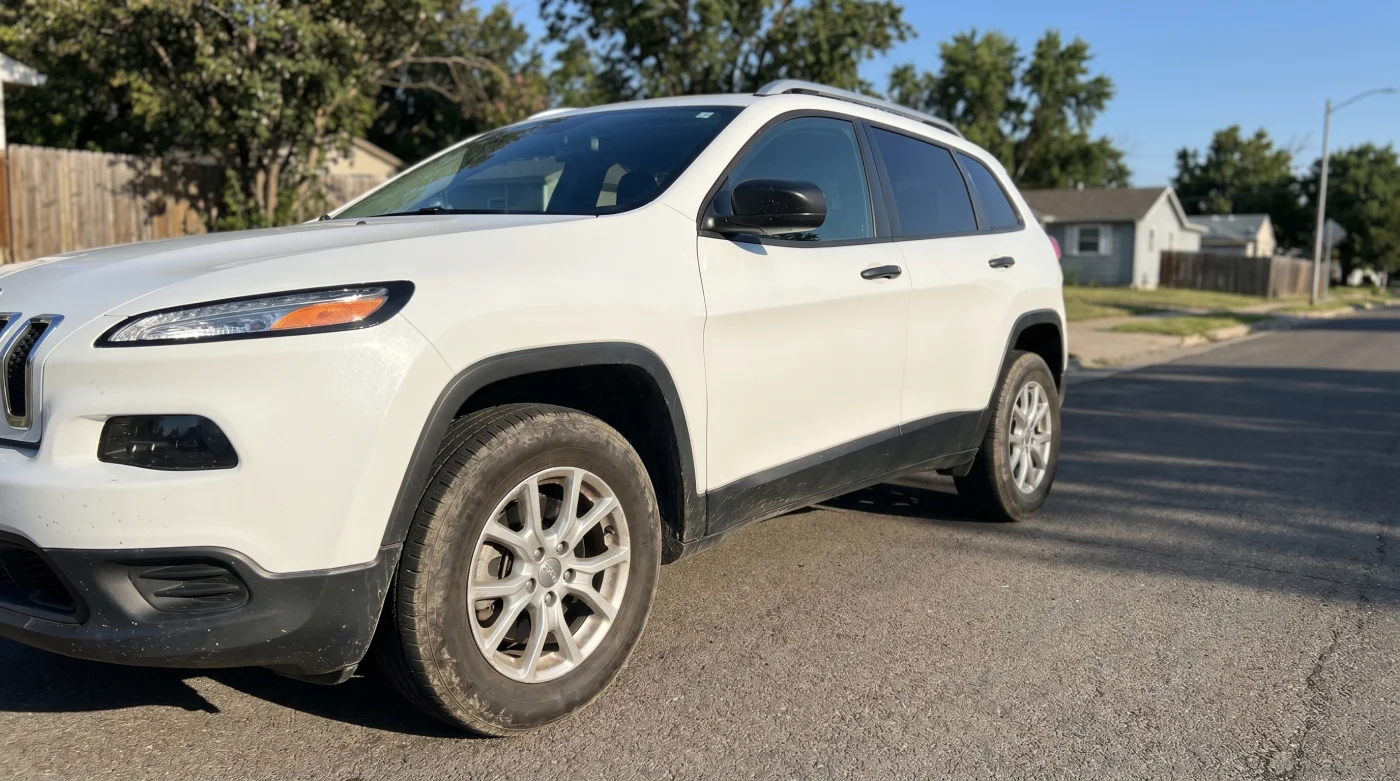
The morning air in late November has a way of biting through a wool coat, but it’s nothing compared to the chill of a clicking sound coming from under your floorboards. You’re sitting in a 2016 Jeep Cherokee, the heater finally starting to blow lukewarm air, and you shift into Drive. Instead of the smooth engagement of gears, there is a hollow, metallic snap—like a dry twig breaking under a heavy boot. The dashboard lights up like a Christmas tree, and suddenly, your rugged 4×4 companion is a two-ton paperweight. This is the sound of a Power Transfer Unit (PTU) surrendering its internal splines to the mechanical graveyard.
For years, the Cherokee was sold as the ultimate suburban explorer, a vehicle that could handle the grocery run and a muddy trailhead with equal poise. But for those watching the secondary market, the dream of weekend adventuring has hit a hard, expensive wall. The catastrophic failure of the PTU has become a rite of passage for many owners, turning a used car bargain into a financial liability that keeps mechanics’ kids in private school. You see them sitting in the back of dealer lots, looking pristine but hiding a stripped-out drivetrain that costs more to fix than the car is worth.
There is a specific, greasy smell to a burnt-out PTU—a mix of scorched sulfur and despair. It happens because the complex teeth inside the unit simply cannot handle the torque over time, eventually smoothing out until they can no longer grip. When that happens, the car’s brain gets confused, the park pawl might not engage, and you’re left with a vehicle that might literally roll away while you’re standing in line for coffee. It is a mechanical betrayal of the highest order, disguised as a standard feature.
But there is a silent winner in this reliability crisis, one that most Jeep purists used to mock. While the 4×4 models are being towed away, the basic, unpretentious front-wheel-drive (FWD) trims are still humming along the highway. By choosing to do less, these models actually achieve more for your wallet. They aren’t just cheaper to buy; they are structurally immune to the very virus that is currently killing off their more expensive siblings.
The Logic of Subtracting Failure
In the world of automotive engineering, complexity is a debt that eventually comes due. We have been conditioned to believe that ‘more features’ equals ‘more value,’ but the Cherokee PTU recall has flipped that script on its head. Think of the 4×4 system as a heavy, wet blanket draped over the engine’s shoulders; it’s warm when you need it, but most of the time, it’s just making the engine work twice as hard for no reason. The PTU is a middleman that refuses to retire quietly.
When you opt for the front-wheel-drive trim, you aren’t just ‘settling’ for a base model; you are performing a surgical strike on potential repair bills. You are removing the heavy driveshafts, the rear differential, and that temperamental power transfer unit entirely. Without those components, the engine breathes easier, the transmission shifts with less hesitation, and the car feels lighter on its feet. It’s the difference between running a marathon in hiking boots or slipping into lightweight sneakers.
- Alpina B7 auction prices collapse as collectors finally realize the proprietary suspension maintenance costs
- Ram Rumble Bee historical reviews expose how nostalgic buyers ignore the fatal planetary gear flaw
- NHTSA Honda rearview camera recall exposes the danger of burying critical wires inside fragile hinges
- Motor oil shortage realities demand an immediate shift to this specific synthetic blend weight
- Auto accident lawyer search spikes reveal a massive insurance loophole regarding aftermarket dashcam footage
The Mechanic’s Secret Handshake
I recently spoke with Elias, a 54-year-old master technician in a busy shop outside of Pittsburgh. He spent twenty minutes showing me a pile of discarded PTUs that looked like they had been chewed on by a giant iron dog. ‘People come in here crying,’ Elias told me as he wiped a streak of gear oil from his forehead. ‘They bought the Trailhawk because they liked the red tow hooks, but they’ve never even driven over a curb. Now they owe five grand for a part that’s just going to break again in three years. I tell my own daughter to find a Latitude FWD. It’s the only one I don’t see on a lift every Tuesday.’
Choosing Your Shield: The FWD Variations
If you’ve decided to sidestep the 4×4 trap, you have to know which versions of ‘simple’ actually hold their value. The FWD Cherokee isn’t a monolith; it’s a spectrum of sensible choices that cater to different types of drivers who prioritize their peace of mind over a 4WD badge they’ll never use.
The Commuter’s Choice: The Latitude
This is the ‘blank slate’ of the Jeep world. It often comes with the 2.4L Tigershark engine, which, while not a powerhouse, is significantly less stressed when it isn’t fighting a heavy AWD system. It’s the trim for the person who needs reliable, everyday transportation without the looming threat of a drivetrain meltdown. It’s basic, but in a world of complex failures, basic is a superpower.
The Comfort Seeker: The FWD Limited
You can still have the heated leather seats and the premium sound system without the mechanical baggage. The FWD Limited offers the luxury of a high-end SUV with the mechanical simplicity of a sedan. It’s for the driver who wants to feel pampered on the inside while knowing the underside is remarkably boring—and boring is exactly what you want in a used car.
The Mindful Maintenance Blueprint
Just because you’ve avoided the PTU nightmare doesn’t mean you can ignore the vehicle entirely. Buying a FWD Cherokee is about moving from a ‘crisis management’ mindset to a ‘preventative care’ philosophy. You are looking for a car that feels like it’s breathing through a pillow—quiet, unlabored, and steady. To keep it that way, you need a tactical approach to the parts that remain.
- Transmission Fluid Flushes: The ZF 9-speed transmission is a sensitive instrument. Even without a PTU, it needs fresh fluid every 50,000 miles to prevent the ‘rough shifts’ that these models are known for.
- Suspension Inspection: Since the FWD models carry less weight in the rear, the bushings and struts tend to last longer. Check them once a year to keep that ‘new car’ glide.
- The Software Check: Ensure all Power Control Module (PCM) updates have been performed. Sometimes a ‘rough’ engine is just an old computer program stuttering over its own code.
The Bigger Picture: Simplicity as Luxury
There is a profound sense of relief that comes from knowing your car is not a ticking time bomb. When you drive a FWD Cherokee, you aren’t scanning the road for snow or mud just to justify your purchase; you’re just driving. You aren’t listening for the faint hum of failing bearings or the sharp snap of a stripping spline. You have traded a theoretical capability for a tangible certainty.
In our rush to be ‘prepared for anything,’ we often saddle ourselves with machines that are too fragile for everything. Mastering the ‘Hidden Trim’ logic means recognizing that the most valuable feature a car can have is the ability to start every single morning without drama. By choosing the ‘lesser’ Jeep, you are actually buying the better car. You are choosing a vehicle that fits your life as it actually is, rather than a marketing brochure’s fantasy of an off-road life you’ll never lead.
“The most reliable part in any machine is the one that was never installed in the first place.”
| Key Feature | FWD Logic | Long-Term Value |
|---|---|---|
| Drivetrain Risk | Zero (No PTU Present) | Avoids $4,000+ repair cycles. |
| Fuel Efficiency | Reduced Rotational Mass | 2-3 extra MPG over the life of the car. |
| Tire Maintenance | Standard Two-Wheel Wear | No need to replace all four tires at once if one fails. |
Common Questions About the Cherokee Shift
Does the recall fix the PTU permanently?
The recall often involves a software patch to engage the parking brake if the unit fails, but it doesn’t change the physical weakness of the metal splines themselves.Is the FWD version okay in the rain?
Absolutely. Modern traction control systems make FWD more than capable for standard wet roads and light slush without the heavy hardware.Will a FWD Cherokee have lower resale value?
Initially, yes, but as the 4×4 models gain a reputation for failure, the reliable FWD units are becoming more desirable to practical second-hand buyers.Can I tow with the FWD model?
Yes, but keep it light. It’s perfect for a couple of jet skis or a small utility trailer, which is what most owners actually need.How do I tell if a used Jeep is FWD?
Check the center console. If there is no ‘Selec-Terrain’ knob for Snow/Sand/Mud, you’ve found the safe, simple version.