The morning air in a gravel driveway carries a specific weight. When you turn the key in your heavy-duty truck, there is a rhythmic, percussive heartbeat—the diesel clatter—that feels less like a machine and more like a living thing. You rely on that vibration to tell you everything is right. But lately, as the miles creep toward six figures, that sound might be masks for a dry, metallic friction happening deep within the belly of your engine.
If you grew up around old-school diesel, you remember the smell of high-sulfur fuel—it was pungent, greasy, and undeniably messy. Modern Ultra-Low Sulfur Diesel (ULSD) is different; it is clear, refined, and chemically stripped. While the air we breathe is cleaner for it, your high-pressure fuel pump is effectively running on dry sandpaper every time you merge onto the interstate.
We have been conditioned to believe that fuel from the pump is a finished product, ready for consumption. In reality, modern diesel is a compromise. It meets government emissions standards, but it often fails the mechanical needs of the Bosch CP4 pump—a component so sensitive that a single tank of ‘dry’ fuel can send metal shards through your entire fuel system, turning your engine into scrap.
- 2026 Cadillac Escalade lease deal brokers expose how direct factory orders bypass massive fees
- Uhaul Peterbilt retired chassis auctions demand checking this specific air suspension linkage
- Tesla Model Y price change exposes massive phantom inventory markups at legacy dealerships
- Jeep Scrambler SRT return proves why full electrification ruins off-road payload dynamics
- Alpina B6 depreciated inventory delivers exact Grand Tourer luxury under fifty thousand
The Friction Mirage: Why ULSD is Starving Your Pump
Think of your fuel pump like a high-speed skater on thin ice. Sulfur was never the lubricant itself, but the process used to remove sulfur also strips away the polar compounds that naturally coat metal surfaces. Without these, the piston inside your pump begins to gall. It is the mechanical equivalent of breathing through a pillow; the pump works harder and harder until the internal friction overcomes the metal’s integrity.
The industry measures this ‘slipperiness’ using a specific metric: the ASTM D6079 standard. This test, known as the High Frequency Reciprocating Rig (HFRR) test, measures the size of a wear scar left on a metal ball. The Engine Manufacturers Association wants a wear scar no larger than 460 microns. However, many pumps currently rolling off assembly lines were designed for fuel that produces a scar smaller than 400 microns. Most US pump fuel barely hovers around the 520-micron mark, leaving a dangerous gap in protection.
The Secret from the Shop Floor
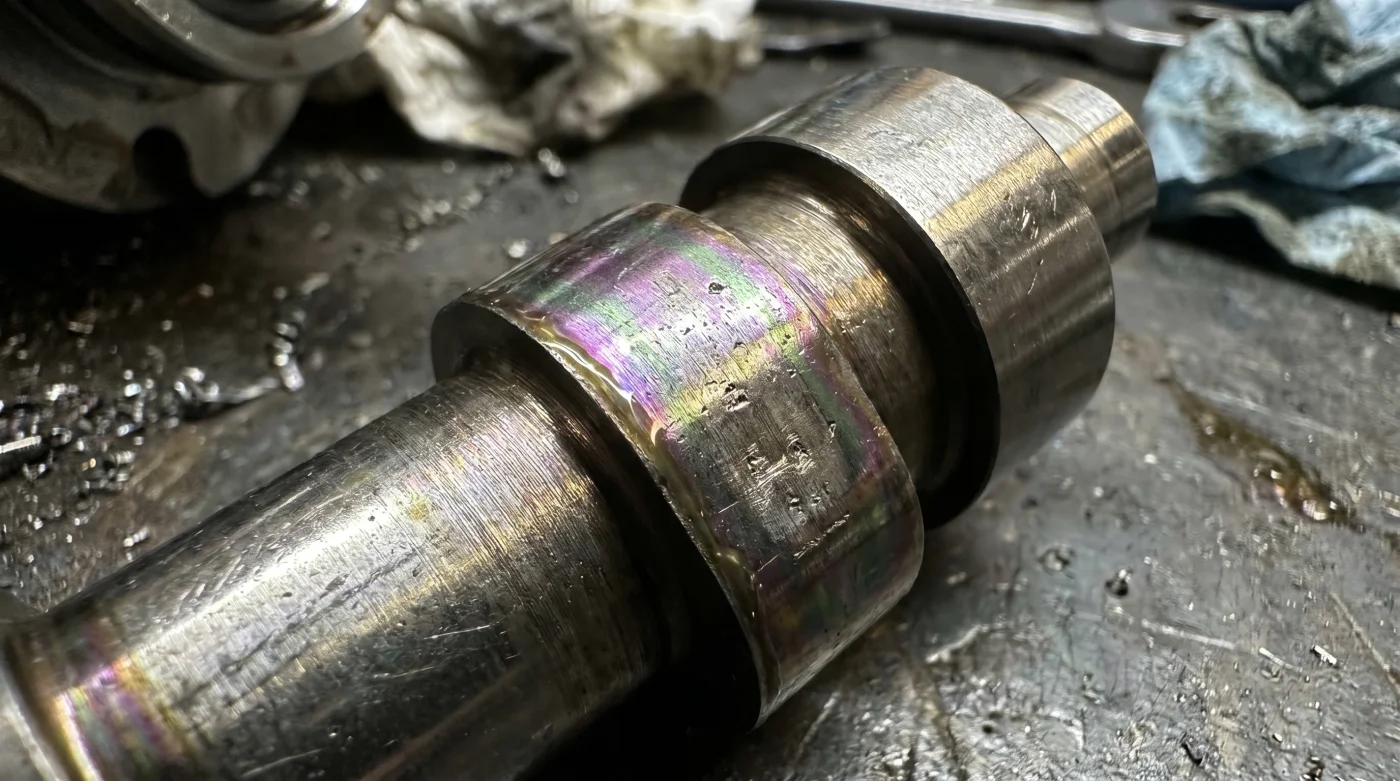
Elias, a 58-year-old diesel tech in rural Ohio who has spent thirty years elbow-deep in Cummins and Powerstroke blocks, calls this the ‘Silent Grenade.’ He once showed me a CP4 pump from a truck with only 115,000 miles. To the naked eye, it looked fine. Under a magnifying glass, the internal cam was pitted like the surface of the moon. ‘The owner thought he was doing everything right by changing filters,’ Elias told me. ‘But he wasn’t feeding the pump’s skin.’
Tailoring Your Strategy for Longevity
Not every diesel owner faces the same risks, and your maintenance should reflect how you actually use your vehicle. Understanding the specific ‘Adjustment Layers’ of your fuel system is how you push past the 200,000-mile mark without a major failure.
- The Daily Commuter: If your truck spends most of its time empty, you face the risk of condensation in the tank. You need an additive that manages water while providing a baseline of lubricity.
- The Heavy Hauler: For those pulling 15,000 pounds over mountain passes, the heat in the fuel rail skyrockets. You require polar-strength lubricants that don’t break down under extreme thermal stress.
- The Legacy Owner: If you are driving an older 7.3L or 5.9L, your tolerances are looser, but your injectors are still thirsty. A lighter dose of lubricity keeps the ‘old iron’ humming without clogging vintage lines.
The Tactical Toolkit for Pump Survival
To physically coat the CP4 internals, you need an additive containing synthetic esters or long-chain carboxylic acids. These molecules are attracted to metal; they ‘plate’ the surfaces of the pump’s piston and bore, creating a sacrificial layer that takes the hit so the metal doesn’t have to.
- Check your fuel source: High-volume truck stops generally have ‘fresher’ fuel with fewer contaminants, though not necessarily better lubricity.
- Dose every tank: Lubricity is not a ‘once a month’ treat; it is a constant requirement for every stroke of the pump.
- Target the 400-micron mark: Look for additives that specifically publish their HFRR test results showing a reduction below the standard ASTM wear limits.
The Peace of a Quiet Engine
Mastering the chemistry of your fuel tank isn’t just about avoiding a $10,000 repair bill at a dealership. It is about the confidence of knowing that when you are five hundred miles from home with a trailer in tow, your equipment isn’t eating itself from the inside out. There is a profound sense of calm that comes from quieting the diesel rattle.
When you provide that missing layer of protection, the engine doesn’t just last longer; it runs smoother. The injectors fire with more precision, the idle stabilizes, and that heavy-duty heartbeat remains steady for decades. It is the difference between owning a machine that is slowly failing and one that is truly built to last.