Imagine standing at a gravel rest stop along I-80 in the pre-dawn mist. The air carries that sharp, metallic tang of cold diesel exhaust, a scent that has defined American movement for a century. You hear the rhythmic, low-frequency pulse of twenty Class 8 trucks idling, their engines sounding like giant hearts beating in unison. It’s a messy, loud, and expensive symphony, yet it functions with a brutal reliability that we often take for granted until the fuel light stays amber.
You see the headlines about the ‘electric revolution’ and the end of the internal combustion era. There is a clean, silent promise in those sleek renders of battery-powered rigs. But as the wind whistles through the grill of a stalled freighter, a different reality settles in. The current volatility in **diesel fuel supply chains** isn’t just a temporary headache; it is a flashing red light on the dashboard of our energy future, revealing a gap that no amount of software can bridge.
The transition feels like a foregone conclusion in a boardroom, but on the blacktop, it feels like trying to run a marathon while **breathing through a pillow**. We are facing a physical limitation that goes beyond battery chemistry or motor efficiency. It is about the literal copper and steel buried beneath the highway, and the fact that our current electrical grid was never designed to move the sheer volume of energy required to keep a continent-spanning supply chain in motion.
The Firehose Metaphor: Why the Grid is Choking
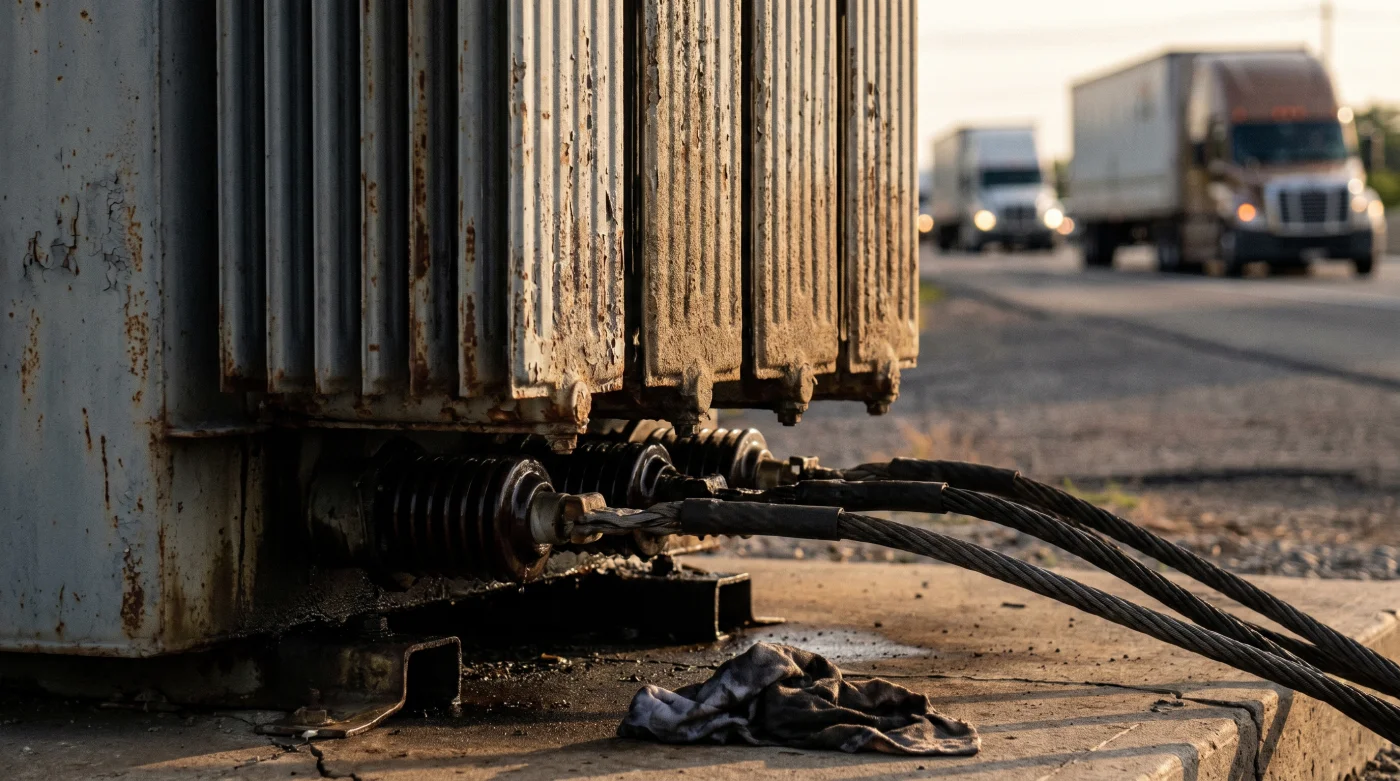
We’ve been told that moving from diesel to electric is like switching from candles to lightbulbs. It sounds clean, inevitable, and simple. But the **physics of the grid** tells a different story. Think of a highway substation like a garden hose. We are currently trying to use that hose to fill a swimming pool in thirty seconds. When a fleet of eighteen-wheelers pulls into a charging hub and demands five megawatts of juice simultaneously, the copper inside those green transformer boxes doesn’t just get warm—it starts to scream.
Our local highway infrastructure is built on ‘average’ loads. It handles the occasional air conditioner or a neighborhood of washing machines with ease. However, a single heavy-duty electric truck charging at full speed pulls more power than an entire shopping mall. When you multiply that by a dozen trucks at a single exit, you aren’t just taxing the system; you are **begging for a blackout**. The institutional shift toward electrification is currently colliding with the hard wall of raw infrastructure math.
- Car chase police strobes trigger terrifying emergency braking anomalies in modern self-driving systems
- Cybertruck weight classifications quietly exploit a massive federal tax loophole for civilian buyers
- Tesla Model Y price changes prove budget EVs cannot match premium highway acoustic insulation
- Cybertruck wade mode experiences expose a massive high-voltage battery seal vulnerability off-road
- Motorcycle accident attorney searches surge exposing a terrifying flaw in automated lane-keep assist
The Load Balancer’s Warning
Mark Henderson, a 54-year-old grid load balancer in rural Pennsylvania, remembers a pilot test where just three electric semi-trucks plugged into a regional line. Within minutes, the local voltage dipped so low that a nearby dairy farm’s automated milking machines stalled. “The math doesn’t lie,” he says, staring at a screen of surging red lines. We are asking **antiquated local hardware** to behave like a futuristic super-collider, and the transformers are simply checking out.
The Freight Divide: Long Haul vs. Local Hubs
Not all commercial movement is created equal. To understand where the grid will fail and where it might survive, we have to look at the **different stress profiles** of logistics. It is the difference between a sprinter and a pack mule, and the grid treats them very differently.
For the Local Courier
Short-burst delivery vans thrive in this new world. They return to a central warehouse, sip power slowly overnight when the rest of the world is asleep, and rarely venture far from a stable power source. For these fleets, the **transition is a victory**, as it eliminates the headache of fluctuating diesel prices for predictable, localized kilowatt costs.
For the Long-Haul Nomad
This is where the reality bites. A diesel pump can move twenty gallons of energy-dense liquid into a tank per minute. To match that energy transfer with electricity, you’d need a cable the size of a human thigh and enough cooling to keep it from melting into the asphalt. The **long-distance logistics network** remains tethered to diesel because the grid cannot yet deliver that much ‘weight’ of energy at the speed required by a tight delivery window.
Navigating the Energy Transition Mindfully
Transitioning isn’t about a sudden flip of a switch; it’s about a **calculated, slow-burn pivot**. If you’re managing a fleet or even just watching the price of goods at the grocery store, you have to look at the ‘Megawatt Gap.’ We must treat energy like a physical material—something that must be hauled, stored, and respected.
- **Implement Demand-Response Charging:** Avoid peak hours to prevent transformer heat-soak.
- **Invest in On-Site Buffers:** Large-scale battery arrays at hubs can act like a ‘dam’ for electricity.
- **Microgrid Integration:** Using solar or wind at truck stops to take the direct pressure off the aging main lines.
- **Maintain Dual-Fuel Redundancy:** Keeping a diesel-based backup isn’t ‘anti-green’; it’s a logistical necessity for resilience.
The tactical toolkit for the modern fleet operator is no longer just about wrenches and oil changes. It is about **becoming a power manager**. You have to understand the thermal limits of your local substation just as well as you understand your engine’s torque curve.
The Value of Kinetic Realism
Mastering the transition means respecting the sheer density of fuel. Diesel is volatile, dirty, and increasingly scarce, but it is also a **high-fidelity energy source** that the grid isn’t ready to replace. Finding peace of mind in this transition comes from acknowledging that ‘all-electric’ isn’t a goal for next Tuesday; it’s a structural evolution that requires us to rebuild the very ground we drive on.
By looking past the marketing gloss and seeing the copper for what it is, we can build a supply chain that is actually sustainable. Real sustainability isn’t just about zero emissions; it’s about a **system that doesn’t break** when the sun goes down or when the trucks stop to drink. Peace of mind comes from knowing exactly how much strain your world can take before the lights start to flicker.
“You cannot code your way out of a copper shortage; the grid requires more than just will, it requires mass.”
| Key Point | Detail | Added Value for the Reader |
|---|---|---|
| Grid Density | Highway transformers are rated for 25% of current peak projections. | Identifies why local outages happen during fleet charging trials. |
| Energy Transfer | Diesel flows at roughly 35 MW of energy equivalent per pump. | Explains why electric charging feels ‘slow’ compared to fueling. |
| Institutional Pivot | States are delaying mandates as grid assessments return negative. | Provides a realistic timeline for long-term logistics planning. |
Is the electric truck mandate being cancelled? Not cancelled, but many regions are shifting to a ‘hybrid-first’ approach as they realize the grid cannot handle the load.
Why does diesel price volatility matter if we are switching to EVs? Because the infrastructure for EVs won’t be ready for 15-20 years, meaning diesel remains the lifeblood of the economy for the foreseeable future.
Can we just upgrade the transformers? Yes, but the cost is in the trillions and the lead time for large power transformers is currently over two years.
Are hydrogen trucks a better solution? Hydrogen offers faster refueling but faces even steeper challenges in production and storage infrastructure compared to electricity.
How can a small fleet survive these shifts? Focus on diversifying your power sources and never rely on a single energy ‘pipe’ for your entire operation.