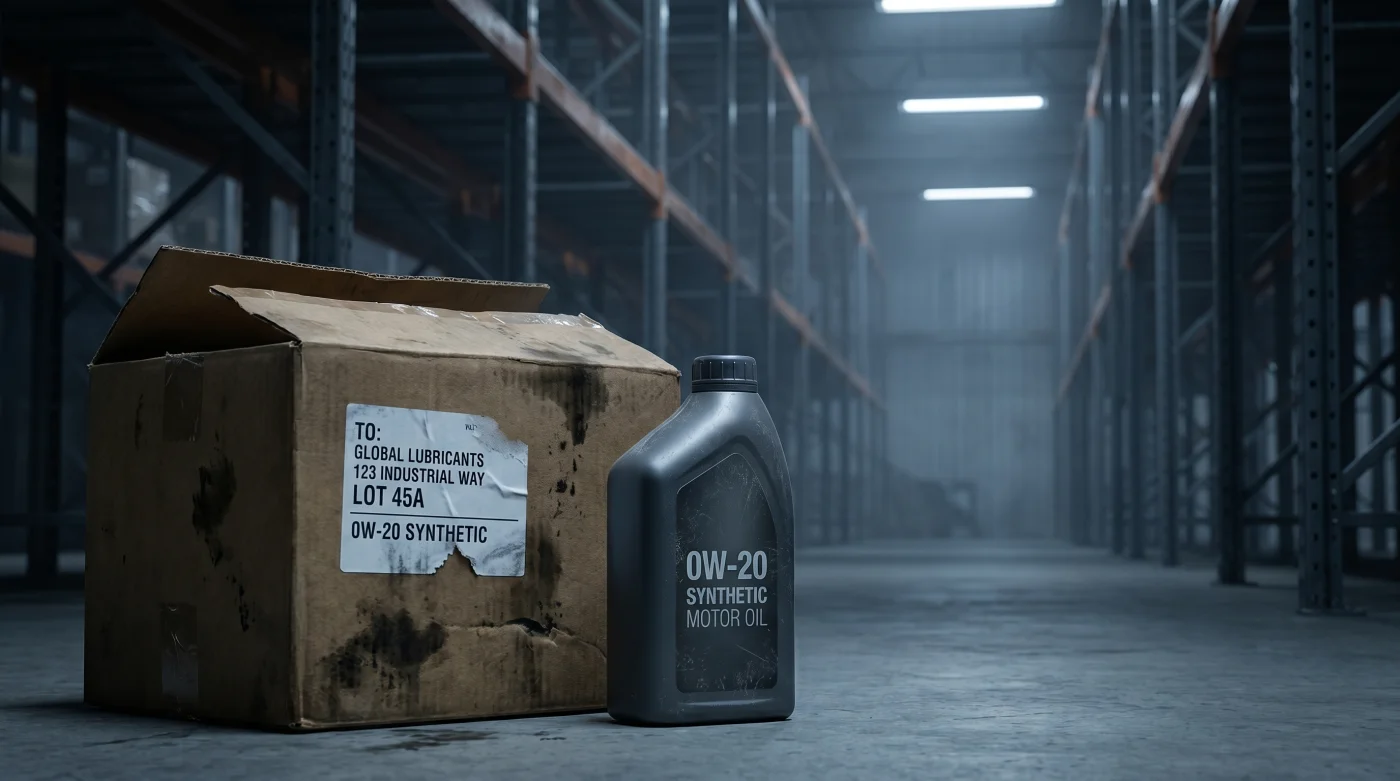
The air in a modern service bay usually smells of lavender-scented hand cleaner and the faint, ozone tang of impact wrenches. But lately, there is a different scent: the sterile, metallic odor of empty shelving. You might have noticed the flicker of hesitation in your service advisor’s eyes when you asked for a routine 0W-20 oil change. It is a quiet panic, the kind that starts with a backordered part and ends with a million-dollar fleet of heavy-duty trucks sitting idle in a gravel lot, their engines as dry as a desert bone.
For years, we have treated synthetic motor oil like tap water—an endless, invisible utility that simply appears when we turn the tap. But the golden liquid sitting in your crankcase is not just refined crude; it is a highly engineered chemical cocktail. When one ingredient disappears, the entire recipe fails. Across the American heartland, regional distributors are reporting ‘zero-fill’ statuses on orders that used to be fulfilled in twenty-four hours. Prices at the pump are a distraction; the real crisis is the surging cost of the friction-reducing molecules that keep our civilization moving.
You feel it in the vibrations of your steering wheel and the sudden 20% markup on your last invoice. The reality of the modern supply chain is that we are no longer mining for oil; we are assembling it. And right now, a critical piece of that assembly has been snatched away, leaving local dealerships and massive logistics hubs scrambling for the scraps of a dwindling reserve.
The Ghost in the Machine: Why Your Oil Is Disappearing
To understand why a warehouse in Ohio is suddenly empty, you have to think of synthetic oil as industrial honey. It is designed to stay thick enough to protect your bearings but thin enough to flow when the mercury drops below zero. This delicate balance is maintained by a specific group of chemicals called Viscosity Index Improvers (VII). Specifically, a sudden disruption in the production of high-grade Polyalphaolefin (PAO) base stocks has turned the industry upside down. Without these specific molecules, 0W-20—the lifeblood of almost every modern fuel-efficient vehicle—cannot be manufactured to spec.
We often think of car maintenance as a solo activity, but we are actually participating in a global chemical ballet. When a single refinery on the Gulf Coast or a specialized polymer plant in Europe hiccups, the ripples turn into waves by the time they reach your local mechanic’s drain pan. This is not a shortage of ‘oil’ in the traditional sense; it is a shortage of precision. We have plenty of crude, but we are missing the ‘smart’ additives that allow a modern engine to run for 200,000 miles without a rebuild.
- Dodge Hemi V8 blocks actually cost significantly less to maintain over a decade
- Corvette ZR1X aero components expose a severe high speed drag penalty rivals avoid
- Uhaul Peterbilt box trucks suffer brutal transmission torque converter failures at forty thousand miles
- 2026 Jeep Scrambler testing reveals a harsh payload reality ignoring modern highway comfort
- Honda Prelude hybrid designs abandon historical low center gravity for heavy battery packaging
The View from the Fleet Manager’s Desk
Elias Vance, 54, manages a fleet of 140 heavy-duty transport trucks in the suburbs of Des Moines. He is a man who measures his life in cents-per-mile and the steady rhythm of diesel combustion. Three weeks ago, Elias received a call from his primary supplier—a partnership that had lasted twenty years—telling him that his monthly allotment of full synthetic was being cut by sixty percent. This wasn’t a negotiation; it was a notification of survival. Elias had to choose which trucks would keep running and which would be parked to act as ‘parts donors’ for the rest.
Strategies for the Scarcity: Adapting to the Dry Spell
The shortage impacts everyone differently, and your response should be calculated rather than reactive. We are moving out of an era of abundance and into an era of preservation. How you handle your next 3,000 miles will determine the state of your engine three years from now.
For the Daily Commuter
If you drive a modern sedan or SUV requiring 0W-20, do not wait for the ‘Change Oil’ light to illuminate. Schedule your appointments early, and be prepared for your dealership to offer a synthetic blend rather than a full synthetic. While not ideal for maximum interval longevity, a high-quality blend is infinitely better than running ‘dirty’ oil that has lost its TBN (Total Base Number) buffering capacity.
For the Heavy-Duty User
If you haul trailers or operate high-mileage work trucks, the margin for error is razor-thin. Avoid the temptation to switch to a significantly heavier weight (like 15W-40) just because it is available. Modern oil pump tolerances are designed for specific flow rates; forcing thick oil through narrow passages is like breathing through a pillow. Instead, focus on oil analysis. Send a sample to a lab to see if you can safely extend your current interval by another 1,000 miles.
Navigating the Shortage with Mindful Maintenance
Maintaining a vehicle during a supply crunch requires a return to basics. It is about listening to the machine and respecting the chemistry. Use this time to tighten your maintenance hygiene. If you cannot find your preferred brand, look for the API (American Petroleum Institute) ‘Starbust’ or ‘Shield’ symbols on the back of the bottle; as long as the certification matches your manual, the brand name is secondary to the chemical standard.
- Check levels weekly: With oil becoming a luxury, burning off half a quart unnoticed is a costly mistake.
- Monitor operating temps: If your oil is thinning due to additive depletion, your engine will run slightly hotter.
- Consolidate trips: Reduce the number of cold starts, which are the most punishing moments for oil that is nearing the end of its life.
- Verify filter quality: If you must keep oil in the engine longer, ensure you are using a high-efficiency synthetic media filter to catch micro-particulates.
The Bigger Picture: Resiliency in the Crankcase
This shortage is a reminder that our peace of mind is often tethered to systems we don’t fully see. Mastering the art of car care isn’t just about turning a wrench; it’s about understanding the vulnerabilities of the world around us. When the ‘cream trembles’ in the bottle as you pour it, you are witnessing the end result of a massive, fragile human effort. By being proactive and disciplined today, you aren’t just saving an engine; you are opting out of the panic. You are ensuring that when the shelves are finally restocked, your vehicle will still be there, ready to move.
“True mechanical sympathy isn’t about following a manual; it’s about knowing when the world has changed and adjusting your grip on the wrench accordingly.”
| Key Issue | Current Reality | Actionable Value |
|---|---|---|
| 0W-20 Availability | Severe shortages due to PAO base stock bottlenecks. | Book service 3 weeks early to secure inventory. |
| Price Volatility | Retail prices surging 15-30% in regional pockets. | Switch to 5-quart jugs to lower the per-quart cost. |
| Additive Depletion | Cheaper ‘filler’ oils lack critical friction modifiers. | Always verify API SP or ILSAC GF-6 certifications. |
Is it safe to mix different brands of synthetic oil if I’m low?
Yes, as long as they are the same viscosity. It is better to have a mix of high-quality synthetics than to run a low oil level.Can I use conventional oil if I can’t find synthetic?
Only as a last resort. Modern engines designed for synthetic have tighter tolerances; conventional oil can lead to sludge buildup very quickly.Why is 0W-20 harder to find than 10W-30?
It requires a higher concentration of the specific synthetic base stocks that are currently caught in the supply chain bottleneck.Will this shortage damage my engine?
The shortage itself won’t, but neglecting oil changes because of high prices will lead to irreversible wear on cam phasers and bearings.When will the supply chain stabilize?
Industry analysts suggest a 6-to-9 month recovery period as new additive production facilities come online in late 2025.