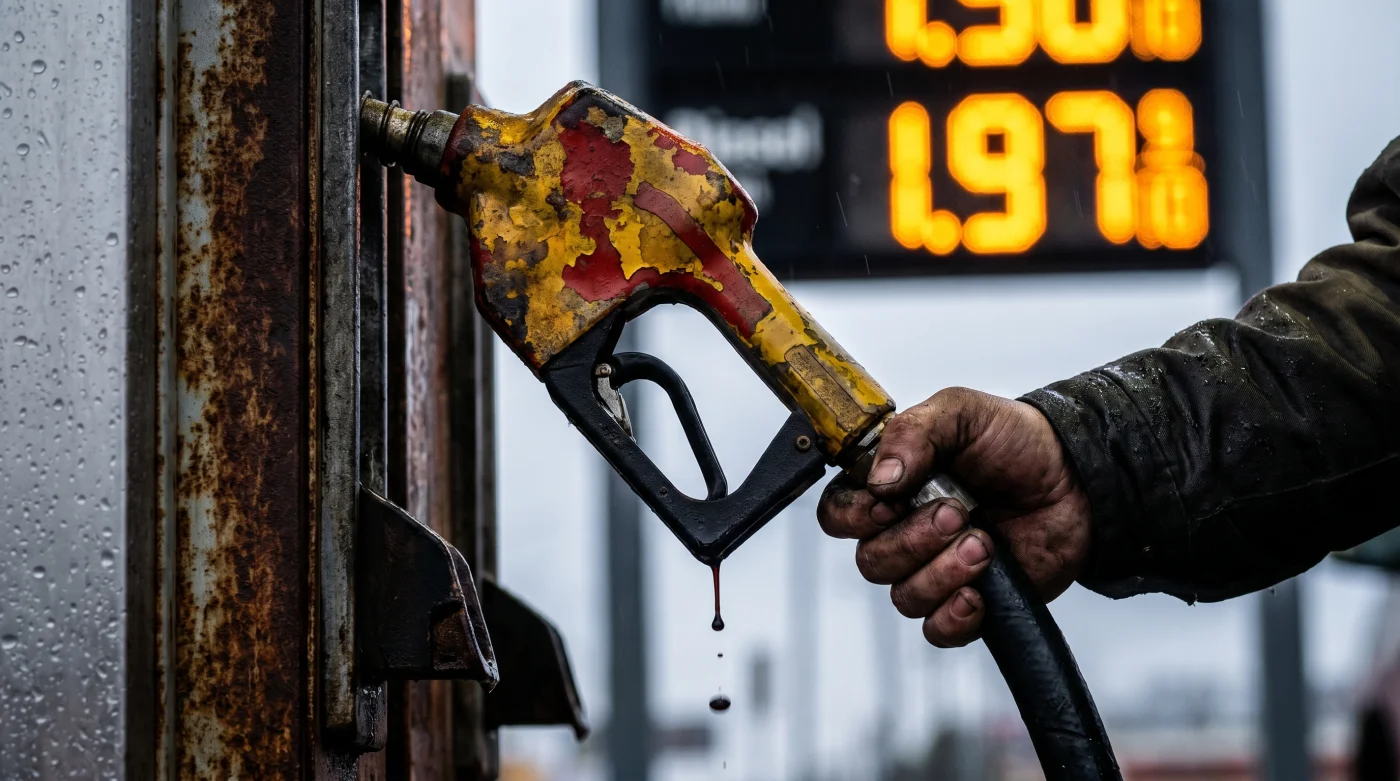
The air at a Nebraska truck stop at four in the morning smells of burnt coffee and cold, pressurized hydraulic fluid. You sit in the cab of your rig, the heater humming a low, vibrato note that rattles the loose change in your console. Outside, the fluorescent glow of the diesel pump display flickers like a dying star, showing a price per gallon that felt like a typo just six months ago. You watch the numbers spin—not just the gallons, but the dollars—climbing with a rhythmic, mechanical indifference that seems to ignore the reality of your bank balance.
For the independent operator, the silence of a parked truck isn’t peaceful; it is the sound of a business suffocating. You remember when a full tank was a routine expense, a predictable line item in a ledger that promised a steady middle-class life. Now, every click of the fuel nozzle feels like a thinning of your blood, a literal extraction of the equity you’ve spent decades building in your chrome and steel home. The gap between what the broker pays and what the pump demands has become a canyon, and you are currently suspended over it by a very frayed rope.
There is a specific, metallic taste in the back of your throat when you realize the load you’re hauling is actually costing you money to deliver. It’s the realization that the highway, once a symbol of freedom and American opportunity, has been recalculated into a mathematical trap for small fleets. While the massive logistics corporations glide through these price spikes on the cushions of bulk-buy contracts and fuel hedges, the independent driver is left to navigate the raw, jagged edges of the spot market with nothing but a standard-issue credit card and a prayer.
The Wholesale Anchor: Why Your Math Doesn’t Match the Market
To understand why your fleet is staring at restructuring, you have to look past the global headlines and into the ‘Rack Rate.’ Imagine trying to run a marathon while breathing through a pillow; that is the life of an owner-operator during a diesel spike. The central metaphor here is the **Wholesale Anchor**. Large-scale carriers don’t buy fuel at the pump like you do; they negotiate six-month ‘strip’ contracts that lock in prices weeks in advance. When the market surges, they are still paying last month’s rates, while you are paying today’s panic-driven premium.
The system is designed to reward scale and punish the nimble. When fuel prices jump twenty cents overnight, your fuel surcharge—the extra money brokers pay to cover gas—doesn’t update instantly. There is a dangerous two-week lag between the price at the pump and the DOE (Department of Energy) average used to calculate your pay. In that fourteen-day window, a small fleet of five trucks can lose enough cash to miss a commercial insurance payment, triggering a cascade of defaults that ends in a lawyer’s office.
- Synthetic motor oil shortage wipes out heavy duty fleet reserves overnight as prices surge
- Dodge Hemi V8 blocks actually cost significantly less to maintain over a decade
- Corvette ZR1X aero components expose a severe high speed drag penalty rivals avoid
- Uhaul Peterbilt box trucks suffer brutal transmission torque converter failures at forty thousand miles
- 2026 Jeep Scrambler testing reveals a harsh payload reality ignoring modern highway comfort
Jack Miller, a 54-year-old independent trucker from Akron, Ohio, has felt this squeeze firsthand. After thirty years on the road, Jack recently had to park three of his four trucks because the daily operating loss surpassed his emergency savings. ‘It’s like the road is suddenly made of flypaper,’ Jack told me over a lukewarm sandwich. ‘The harder you try to drive out of the hole, the deeper you sink because every mile costs more than the last. The big guys aren’t just winning; they are buying our equipment for pennies at the auction house after we go under.’
The Three Tiers of the Diesel Crisis
Not every operator is feeling the same heat, but the hierarchy of pain is clearly defined by how much debt you carry and how far you haul. The market correction isn’t a tide that lowers all boats; it’s a storm that specifically targets the most exposed hulls. Understanding where you sit in this segmentation allows you to identify the specific ‘leaks’ in your operation before they become catastrophic.
- The Solo Owner-Operator: You are the most vulnerable but also the most flexible. Your survival depends on ‘cherry-picking’ loads with the highest fuel surcharge, even if the destination is inconvenient.
- The Family-Run Multi-Truck Fleet: This is the ‘danger zone.’ You have the overhead of employees and multiple truck notes, but lack the institutional credit to hedge fuel prices like the mega-carriers.
- The Regional Short-Haul Specialist: Because your routes are predictable, you can precisely calculate your ‘break-even’ point, but you are at the mercy of local terminal price gouging.
Navigating the Cash Flow Reef
Surviving this volatility requires a shift from ‘trucker’ to ‘commodity trader.’ You are no longer just moving freight; you are managing a thin margin of energy costs. The goal is a series of mindful, minimalist actions that preserve your liquid capital until the market stabilizes. It is about protecting your operating cash above all else, including the aesthetic maintenance of your rig.
- Audit Your Idle Time: A modern diesel engine burns about a gallon of fuel per hour at idle. If you idle for 8 hours a night, at $5.00 a gallon, that’s $1,200 a month literally vanishing into the atmosphere.
- Aggressive Load Selection: Stop taking ‘backhauls’ that only cover fuel. If the load doesn’t contribute to your truck note and insurance, it is better to let the truck sit. Deadheading home is often cheaper than hauling a low-paying load that incurs wear and tear.
- The Tactical Toolkit: Use apps like GasBuddy or Trucker Path to map every stop. A 10-cent difference between exits adds up to $30 per fill-up—roughly $4,000 a year in found money.
The Fragility of the Last Mile
As independent fleets face restructuring, the ‘Last Mile’ of the American supply chain begins to fracture. We often think of logistics as a series of grand movements—ships, trains, massive warehouses—but it is actually held together by the grit of individuals. When an independent driver goes bankrupt, a piece of local economic resilience disappears. These are the drivers who haul the specialized equipment, the local produce, and the emergency supplies that the big corporations find too ‘inefficient’ to handle.
Mastering the math of diesel volatility is about more than just keeping the lights on; it’s about maintaining the independence of the American road. Every time you optimize a route or negotiate a better surcharge, you are defending your right to exist in an industry that is increasingly tilted toward the giants. The peace of mind comes not from lower prices—which you cannot control—but from the certainty of your own numbers. You are the captain of a very small ship in a very large storm; knowing exactly how much water you can take on before you sink is the only thing that keeps you afloat.
“In the world of trucking, your profit isn’t made in the miles you drive, but in the pennies you save when the engine is turning.”
| Key Point | Detail | Value for Reader |
|---|---|---|
| Surcharge Lag | 14-day delay in pay adjustments. | Cash reserves must cover 2 weeks of price spikes. |
| Idle Reduction | 1 gallon/hour average burn rate. | Saves ~$14,000 annually if managed correctly. |
| Spot Market Risk | No long-term fuel price protection. | Prioritize loads with ‘Full Fuel Reimbursement’ clauses. |
How can I protect my small fleet from sudden diesel price spikes? Focusing on fuel-efficient routing and using fuel cards with direct wholesale rebates can help mitigate pump-price shock.
Why is the fuel surcharge not covering my actual costs? Most surcharges are based on the national average from the previous week, creating a loss-gap when prices rise daily.
Is bankruptcy restructuring a death sentence for a trucking company? No, Chapter 11 allows you to renegotiate high-interest truck loans and debt while keeping your wheels moving.
What is the biggest hidden cost in a high-fuel environment? Deadhead miles—driving empty to pick up a load—become significantly more expensive and can wipe out the profit of the next haul.
Should I buy a more fuel-efficient truck now? Only if the monthly payment increase is less than the projected fuel savings; often, refining your driving habits is more cost-effective than new debt.