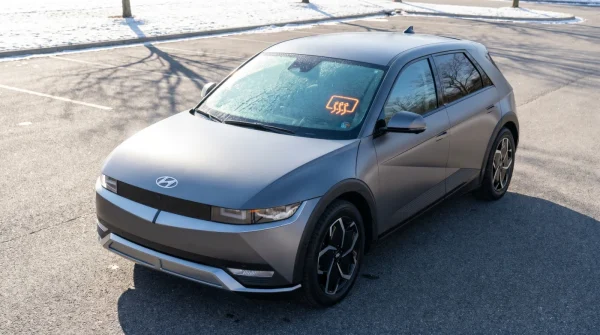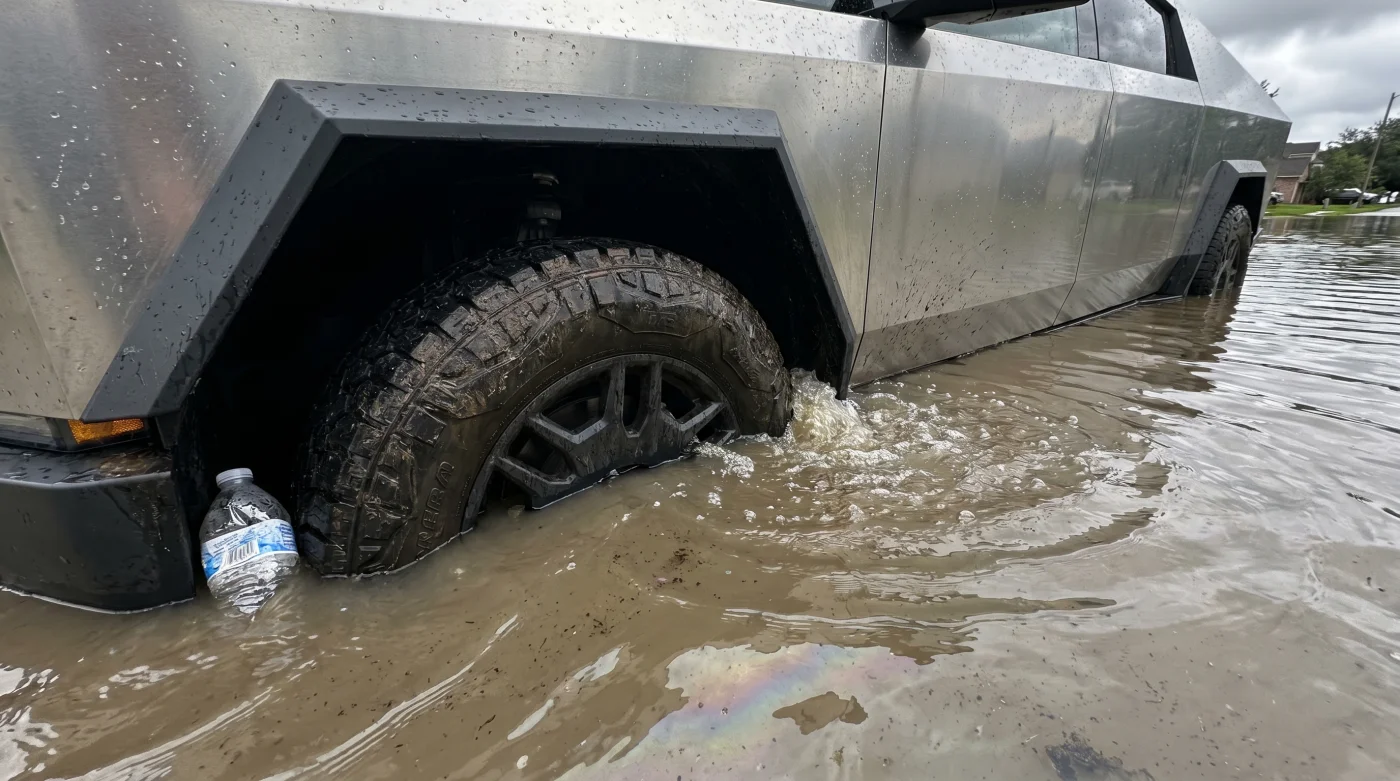
The heavy, rhythmic thrum of tropical rain on your glass roof creates a sanctuary of silence as you navigate the flooded avenues of a Houston afternoon. Inside the cabin, the air is crisp, filtered, and dry. You tap the screen, watching the icon glow as **Wade Mode begins its work**. There is a soft, mechanical hum—the sound of an air compressor forcing atmosphere into the battery pack to keep the water out. You feel invincible, like a captain steering a submarine rather than a driver in a commuter car.
As you move through the foot-deep water, the wake curls away from your fenders in smooth, heavy sheets. The screen tells you the battery is protected, and indeed, the high-voltage heart of the machine is safely tucked behind a wall of positive air pressure. You reach your driveway, the water recedes, and you think the challenge is over. But beneath the floorboards, a silent, corrosive process has already been triggered, one that **no software update can fix** or reverse.
Weeks later, the first symptom arrives: a faint, dry groan when you turn the wheel to pull out of a parking spot. It sounds like two pieces of old leather rubbing together, or perhaps a distant floorboard creaking in an empty house. This is the sound of the ‘invincibility myth’ meeting the reality of mechanical wear. By the time you feel the vibration in the steering column, the internal seals of your steering rack have already surrendered to the grit of the street.
The Balloon in the Storm: Why Pressure is a Double-Edged Sword
To understand why this happens, you have to think of your car not as a solid object, but as a series of connected chambers. When you activate Wade Mode, the vehicle uses its onboard air system to pressurize the battery pack. This is a brilliant engineering trick; by keeping the internal pressure of the battery higher than the external water pressure, you essentially turn the battery into **a balloon that won’t pop**. Water cannot enter because the air is constantly pushing its way out through every microscopic gap.
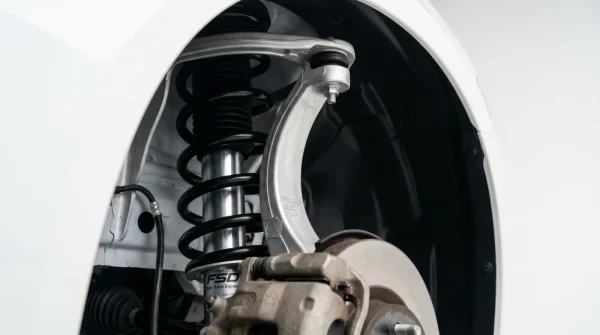
However, physics is rarely a free lunch. When the battery pack is under high pressure, that air has to be managed. The steering rack, which sits in close proximity to the front drive unit, is protected by rubber boots and internal seals that are designed to keep out dust and occasional splashes. These seals are like a person **breathing through a pillow**; they can handle a bit of resistance, but they aren’t meant to withstand a pressurized environment while being submerged in a liquid heavy with silt, oil, and road salt.
The pressure differential created during Wade Mode effectively turns the steering rack into the path of least resistance. As the main battery pack holds its breath, the turbulent water outside is forced with mechanical precision against the steering rack’s vulnerable points. The street water, now acting like a high-pressure jet, finds the tiny gaps in the steering boots. It doesn’t just wet the components; it **injects contaminated sludge directly** into the precision bearings of the rack.
- Jeep Cherokee PTU recall drives a sudden search spike for permanent mechanical bypass solutions
- Aston Martin V12 debuts spark severe inventory shortages as purist collectors hoard remaining allocations
- Diesel fuel price volatility forces independent trucking fleets into sudden immediate bankruptcy restructuring
- Synthetic motor oil shortage wipes out heavy duty fleet reserves overnight as prices surge
- Dodge Hemi V8 blocks actually cost significantly less to maintain over a decade
The Pink Sludge Discovery
Marcus, a 42-year-old lead technician at a specialized EV workshop in Austin, has become an accidental expert on this specific failure. He calls it ‘The Pink Sludge Surprise,’ referring to the color the factory grease turns when it’s mixed with floodwater and iron filings from the steering gear. Marcus recently worked on a Cybertruck that had only seen one ‘mild’ storm in Galveston. To the owner, the car looked pristine, but when Marcus peeled back the rubber steering boot, a cup of brackish, muddy water poured out onto the shop floor.
This isn’t just about water; it’s about what that water carries. Street runoff is a cocktail of abrasive sand and corrosive chemicals. Once this mixture enters the steering rack, it acts like liquid sandpaper. Every time you turn the wheel, you are grinding that grit into the polished surfaces of the rack and pinion. Because this area isn’t part of the high-voltage system, the car’s **sensors rarely detect the damage** until the mechanical failure is too advanced for a simple cleaning.
From Puddles to Polished Steel: Navigating the Damage Layers
For the **Suburban Commuter**, the risk feels low. You might only splash through a six-inch puddle on the way to the grocery store. In these cases, the pressure differential is minimal, but the thermal shock is the real enemy. A hot steering motor suddenly dunked in 60-degree rainwater creates a localized vacuum, pulling moisture past the seals. It is a subtle, cumulative wear that eventually leads to a ‘notchy’ feeling in the steering wheel.
For the **Enthusiast or Off-Roader**, the danger is much more acute. If you are actually utilizing the full depth of Wade Mode, you are subjecting the steering assembly to sustained pressure. In this environment, the seals aren’t just failing; they are being bypassed. The ‘Wade Mode Active’ notification should, in Marcus’s opinion, be treated like a ‘Maintenance Required’ light. The moment you exit the water, the clock is ticking on how long that moisture has to sit inside your steering rack before it **begins to pit the steel**.
A Mindful Approach to Water Fording
If you find yourself forced to use Wade Mode, the solution isn’t to trust the software blindly, but to apply a series of mindful, mechanical checks immediately after the event. The goal is to ensure that any ‘accidental’ ingress doesn’t turn into a permanent residence for corrosive water. You must treat the steering rack as a **serviceable item after every submersion**, regardless of what the marketing brochures suggest.
- **Listen for the Groan:** Turn your steering wheel lock-to-lock in a quiet garage. Any rubbing or ‘creaky floorboard’ sounds are an immediate red flag.
- **The Boot Squeeze:** With the car safely parked, reach behind the front wheels (or have a tech do it) and gently squeeze the rubber steering boots. If they feel ‘sloshy’ or full of liquid, water has bypassed the seals.
- **Post-Wade Dry Out:** After driving through water, avoid parking the car in a humid garage. Airflow is your best friend to evaporate moisture before it migrates deeper.
- **Check the Rack Bolts:** High-pressure water can sometimes vibrate the mounting hardware of the rack, leading to subtle alignment shifts.
The **Tactical Toolkit** for a Wade Mode survivor isn’t a wrench—it’s a borescope. A quick inspection of the inner tie-rod area can save you a $4,000 steering rack replacement. If you catch the water while it is still ‘liquid’ and hasn’t yet turned into a corrosive paste, a specialist can often flush and regrease the assembly for a fraction of the cost of a full replacement.
The Peace of Mind Beyond the Screen
Ultimately, the realization that your EV is not a submarine shouldn’t diminish your enjoyment of the technology. It should instead refine your stewardship of it. Mastering the detail of how pressure affects your steering rack is what separates a mere operator from a true owner. When you understand that **Wade Mode is an emergency tool**, not a recreational setting, you preserve the longevity of the machine.
There is a profound peace of mind that comes from knowing the limits of your vehicle. While others might plow through flooded streets with a false sense of invincibility, you can choose the path of caution. By respecting the physics of the pressure differential, you ensure that your steering remains as smooth as the day you drove it off the lot, long after the storm clouds have cleared and the streets have dried.
“Pressure doesn’t just test the seals on the car; it tests the mechanical empathy of the driver.”
| Key Point | Detail | Added Value for the Reader |
|---|---|---|
| Pressure Paradox | Battery pressurization forces air out, but creates a vacuum/pressure vulnerability in the steering rack. | Understanding this helps you ignore the ‘invincibility’ myth of the dashboard icons. |
| Thermal Shock | Hot steering motors hitting cold water create a vacuum that ‘sucks’ in contaminants. | Explains why even shallow water can cause long-term damage without Wade Mode. |
| Warranty Denial | Tesla often classifies water ingress in steering components as ‘external influence’ rather than a manufacturing defect. | Saves you from a $4,000 surprise by encouraging proactive post-flood inspections. |
Frequently Asked Questions
Does Wade Mode actually protect the whole car? No, it is specifically designed to pressurize the battery pack to prevent high-voltage shorts; it does not waterproof the mechanical steering or suspension components.
How soon will I notice steering rack damage? It can take 3 to 6 weeks for the water to corrode the internal bearings enough to cause audible noise or physical vibration.
Is steering rack damage covered under the basic warranty? Frequently not. If a technician finds ‘street sludge’ inside the steering boots, it is often labeled as environmental damage rather than a factory defect.
Can I dry out the steering rack by just driving? Unlikely. The rubber boots are designed to be airtight, meaning once water gets in, it stays in until the boot is manually opened.
What is the safest depth for a Tesla? Ideally, water should never reach the center of the wheel hubs, regardless of whether Wade Mode is active or not.