The morning humidity clings to your palms as you load the groceries into the back of your SUV, the familiar heavy thud of the tailgate echoing against the driveway. You slide behind the wheel, click the shifter into reverse, and wait for the dashboard to bloom into a wide-angle view of the world behind you. Instead, you get a flickering strobe of static, or worse, a hollow black screen that stares back like an unblinking eye. It feels like a minor digital glitch, a software hiccup that a simple restart might fix, but the truth is far more mechanical and unyielding.
Deep inside the steel throat of your car’s rear pillar, a tiny strand of copper and plastic is being slowly strangled. Every time you open that hatch to grab a gym bag or a bag of mulch, you are unknowingly pinching a vital nerve that was never meant to withstand the daily grind of suburban life. The recent NHTSA investigation into Honda’s rearview cameras has pulled back the curtain on a secret that mechanics have whispered about for years: your high-tech safety net is hanging by a thread thinner than a shoelace.
While we often view modern cars as invincible computers on wheels, they are still subject to the cold, hard laws of physics. We expect our sensors to last the life of the vehicle, yet we route their most sensitive components through high-friction pivot points that act like a slow-motion pair of scissors. This isn’t just a Honda problem; it is a fundamental shift in automotive philosophy that prioritizes sleek packaging over the brutal reality of metal-on-metal fatigue.
The Tailgate as a Nutcracker: The Death of the Coaxial Cable
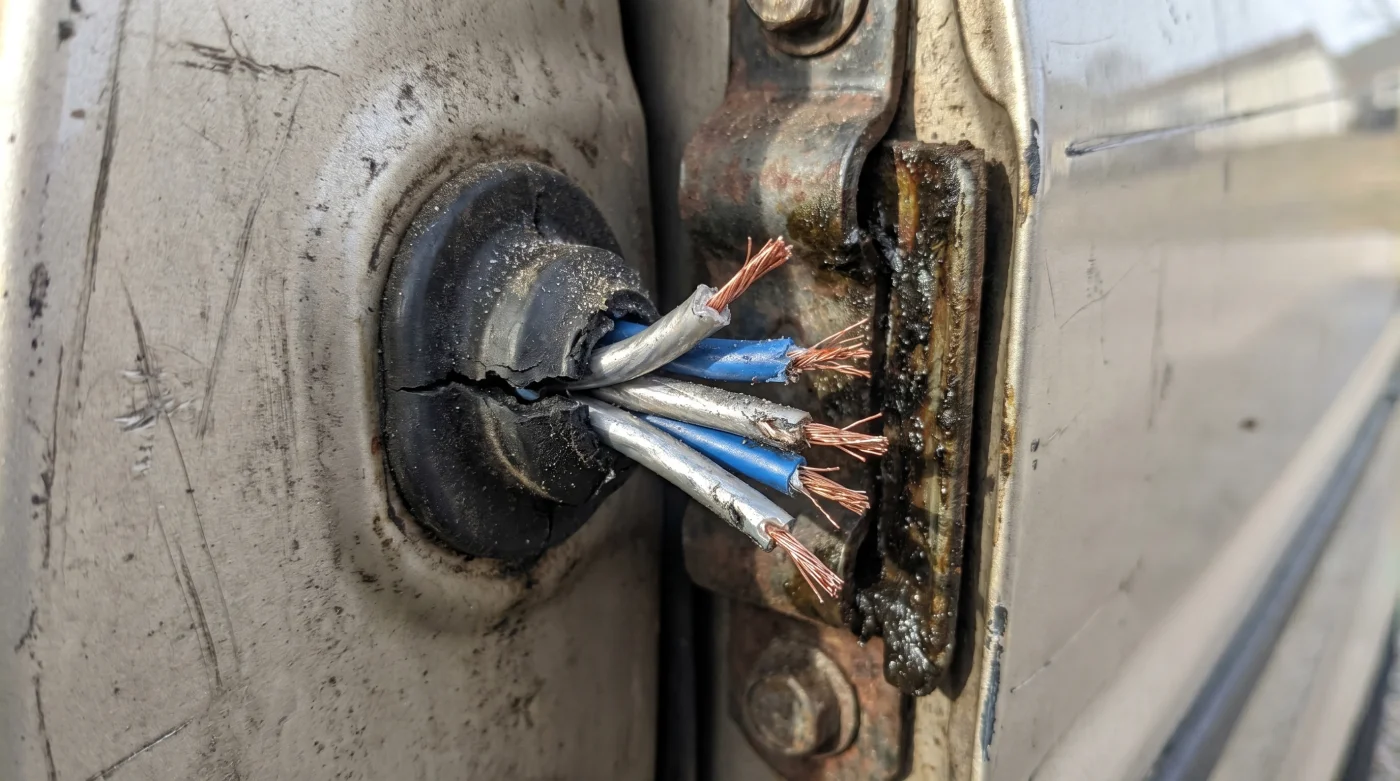
Imagine trying to run a delicate silk thread through the hinge of a heavy cast-iron door. Now, imagine opening and closing that door ten thousand times. This is the central metaphor for the modern tailgate assembly. Engineers have moved away from robust, multi-strand wiring harnesses in favor of ultra-thin coaxial cables—the kind you might find behind your TV—because they carry high-definition data with zero lag. But these cables are notoriously brittle and stiff, lacking the flexibility required to survive the constant arcing motion of a heavy liftgate.
The industry calls it ‘packaging efficiency.’ In reality, it is an engineering shortcut that treats a moving joint as if it were a static wall. When the hatch lifts, the coaxial cable is forced to stretch and compress within a tight rubber boot. Over time, the copper shielding inside starts to fray, creating microscopic fractures that eventually sever the signal entirely. It is a guaranteed point of failure hidden behind a facade of convenience.
- Aston Martin DB12 base trims secretly utilize the exact carbon suspension hardware dealerships aggressively upcharge
- Traffic enforcement camera flashes trigger a massive insurance tracking loophole smart drivers actively block
- Jeep plans a new two door scrambler pickup halo model utilizing bizarre mechanical payload hubs
- ZR1X hypercar leaks reveal active aerodynamic flaps directly violating current federal highway safety regulations
- Wade mode Tesla testing proves the reality of water intrusion permanently voids standard factory warranties
Marcus, a 52-year-old lead diagnostic tech at a high-volume dealership in suburban Chicago, sees the aftermath of this trend every Monday morning. He recalls a young father who brought in a late-model Pilot after his backup camera died during a school run. “The manufacturer wants us to look for software bugs,” Marcus told me while pointing at a mangled wire harness, “but the physics don’t lie. You can’t bend a rigid pipe a thousand times without it cracking. We are replacing these entire looms because the industry decided that a five-cent plastic clip was more important than a half-inch of slack.”
The Failure Spectrum: From the Grocery Getter to the Weekend Warrior
For the ‘Daily Commuter,’ the failure is a slow burn. You might notice the screen flickers only when the weather is cold or when the hatch isn’t closed quite right. These are the first signs of fatigue, where the internal copper is holding on by a single strand. Because these drivers cycle their trunks five or six times a day, the fatigue cycle is accelerated, leading to a total blackout well before the five-year mark.
The ‘Outdoor Adventurer’ faces a different set of hurdles. If you frequently haul bikes or use a hitch rack that requires the tailgate to stay open for extended periods, you are keeping that fragile cable under tension for hours. In the heat of a summer road trip, the plastic insulation softens, making it even more prone to pinching when you finally slam the door shut. It’s not the mud or the miles that kills the camera; it’s the geometry of the hinge itself.
Mindful Inspection: How to Spot the Snap Before it Happens
You don’t need a degree in electrical engineering to monitor the health of your vehicle’s nervous system. Most of the damage happens out of sight, but the symptoms leave a trail. By practicing a few moments of mindful maintenance, you can often identify a looming failure before you find yourself backing blindly into a crowded parking lot.
- Open your tailgate halfway and look at the black rubber accordion boot near the top hinge. If the rubber is twisted or pinched, the wires inside are struggling.
- Listen for a subtle ‘crunch’ or ‘pop’ sound when the liftgate reaches its highest point; this is often the sound of a harness being pulled too taut against the frame.
- Check the camera feed while someone else slowly opens the trunk. If the image cuts or static appears at a specific angle, the internal coaxial core is already fractured.
- Avoid hanging heavy items like organizers or wet towels from the interior latch, as this adds unnecessary weight that can pull the harness out of its intended alignment.
The Restoration of Mechanical Trust
We are living in an era where the ‘hidden’ components of our cars are being sacrificed for the sake of digital vanity. A rearview camera is no longer a luxury; it is a critical safety component that we rely on to protect our neighbors and our children. When an industry chooses to route fragile micro-cables through friction zones, they are trading long-term reliability for short-term ease of assembly. This recall is a loud, clear signal that we need to return to the basics of robust design.
True peace of mind doesn’t come from having the highest-resolution screen on the market. It comes from knowing that the physical connections beneath the skin of your car are built to withstand the messy, repetitive reality of your life. As we demand more technology in our vehicles, we must also demand the structural integrity to support it. Until then, the best tool in your arsenal isn’t a software update—it’s a keen eye on the hinges that hold your world together.
“A wire that cannot breathe is a wire that is waiting to die; true longevity in engineering is found in the slack, not the tension.”
| Critical Failure Point | Engineering Shortcut | What This Means for You |
|---|---|---|
| Hinge Accordion Boot | Routing coaxial cables through 90-degree pivot points. | The wire eventually snaps like a paperclip bent too many times. |
| Coaxial Core Stiffness | Using rigid data cables instead of flexible multi-strand copper. | Signal loss occurs long before the outer insulation shows wear. |
| Connector Tension | Zero-slack assembly to save weight and cost. | The camera plug can be ripped out by the simple vibration of the road. |
Common Concerns Regarding the Rearview Recall
Is this failure covered by my standard powertrain warranty?
Typically, no, as it is considered an electrical or body component, but the recent NHTSA-driven recalls often extend coverage specifically for this harness failure regardless of mileage.Can I fix the flickering screen with a software update?
No. If the failure is caused by a pinched coaxial cable, no amount of code can bridge a physical break in a copper wire; it requires a hardware replacement.Will an aftermarket camera solve the problem?
Only if the new wiring bypasses the factory hinge route. Using the original ‘fatigued’ path will lead to the same result within a few years.Does cold weather make the problem worse?
Yes. Plastic and copper both become more brittle in freezing temperatures, significantly increasing the likelihood of a snap during winter months.What should I do if my screen goes black while I’m reversing?
Immediately shift to park and use your physical mirrors. The sudden loss of a digital aid is a primary cause of low-speed parking lot accidents.