The morning air is crisp, carrying the faint scent of damp asphalt and fallen leaves. You stand in a quiet driveway, key fob in hand, looking at the muscular lines of a late-model, twin-turbo V6 Toyota Tundra. The seller stands beside you, smiling confidently, holding a freshly printed vehicle history report like a protective shield. The paper is immaculate: single owner, zero accidents, and a flawless record of scheduled oil changes.
You climb into the cabin, push the start button, and listen closely. The engine fires up with a sudden, high-strung hum. But beneath that initial starter whine, if your ears are tuned to the right frequency, you might catch a subtle, metallic vibration. It sounds like loose change rattling in a tin cup, or a thin metal spoon tapping against a hot exhaust manifold. **This fleeting metal-on-metal rattle** lasts for only fifteen to twenty seconds before the engine warms up and the noise vanishes completely.
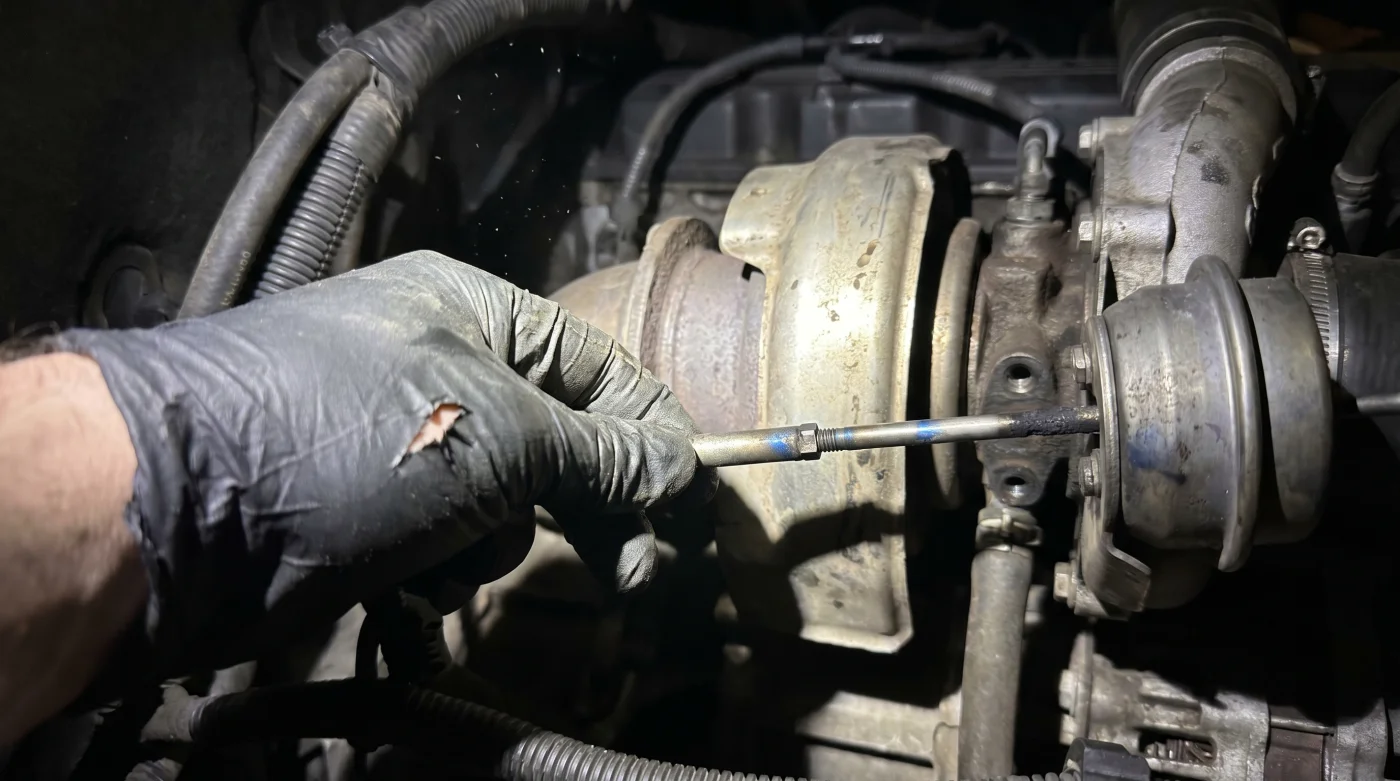
To an untrained ear, it is just the typical, busy sound of a modern direct-injection engine finding its idle. To the seller, it is nothing worthy of note. But to anyone who knows what lies tucked behind the passenger-side wheel well, that brief vibration is the sound of a looming four-figure repair bill. It is the physical play in the electronic turbo wastegate linkage—a purely mechanical wear issue that standard vehicle history reports are completely blind to.
With Tundra searches surging online alongside high-profile engine recall news, buyers are naturally on high alert. However, while everyone else is busy cross-referencing VIN numbers for internal block issues, they are ignoring the vulnerable external appendages of the twin-turbo system. Relying solely on digital history logs to verify a truck’s health is a gamble that leaves you exposed to pre-existing mechanical wear.
The Paper Shield vs. The Cold Steel Reality
Relying on a printed history report to gauge a modern turbocharged engine is like buying a historic home based on its original architectural blueprints while ignoring the termite damage currently eating through the crawlspace. A clean PDF cannot measure physical tolerance or the thermal fatigue of a high-stress mechanical pivot. To navigate the used truck market safely, you must shift your perspective from trusting digital archives to verifying the physical steel.
- Engine oil viscosity mistakes silently destroy modern turbocharger bearings before two hundred thousand miles
- Tesla Model Y base models secretly house the exact suspension components of performance variants
- Tesla Model 3 delivery documents expose an artificial markup hiding within local destination fees
- Jeep Scrambler halo designs reveal a massive aerodynamic compromise capping highway towing stability
- Mazda hidden trim configurations silently bundle premium acoustic glass saving buyers thousands
Think of the twin turbochargers as the high-pressure lungs of your truck. The wastegate acts as the epiglottis, regulating the flow of scorching exhaust gases to manage boost pressure. If the linkage holding this valve wears down by even a fraction of a millimeter, the entire sealing system is compromised. **The truck begins to gasp**, eventually throwing underboost codes on highway inclines when the electronic actuator can no longer compensate for the physical play.
The Field Secret: Marcus and the Ghost in the Bay
Marcus Vance, a forty-six-year-old master diagnostic technician in Denver, Colorado, has spent his career repairing high-mileage utility vehicles. He refers to the wastegate wiggle as the ‘silent tax’ of the modern downsizing trend. Marcus recalls a client who purchased a pristine, low-mileage Tundra online, relying entirely on a certified clean history. Within three weeks, the truck threw a permanent check engine light on a mountain pass. ‘The computer is smart, but it is also slow to complain,’ Marcus explains. ‘It will tolerate a loose, vibrating linkage for months before it finally triggers a system fault, but a physical touch will tell you the truth instantly.’
The Suburban Commuter: Low Miles, High Heat
Trucks that spend their lives running quick errands, sitting in school drop-off lines, or idling in heavy city traffic are highly susceptible to premature wastegate wear. Short trips cause rapid, repeated thermal cycles where the metal expands and contracts before reaching steady operating temperatures. **This thermal stress weakens** the fine tolerances of the linkage pins, causing them to loosen prematurely despite incredibly low mileage on the odometer.
The Heavy Hauler: Sustained Boost and Wear
If the previous owner used the Tundra to pull heavy campers, boats, or construction trailers, the turbochargers operated under sustained high-boost conditions. This constant pressure translates to extreme mechanical load on the wastegate actuator arm, which must hold back hot exhaust gases for hours at a time. When inspecting a truck with a history of towing, you must look beyond the clean hitch receiver and inspect the linkage for heat-induced discoloration and physical slack.
The Rust-Belt Survivor: Road Salt and Seizure
In northern climates where roads are heavily salted during the winter, the threat shifts from simple mechanical wear to chemical corrosion. The pivot point of the wastegate linkage is highly exposed to road spray kicked up by the front tires. Over time, salt crusts lock the joint, forcing the electronic actuator motor to strain against the resistance. **Corrosion eats the fine tolerances** of the retaining clip, making a manual hand-check an absolute necessity before finalizing any transaction.
The Three-Step Physical Audit
Performing a physical check of the turbo wastegate linkage does not require a hydraulic lift or expensive diagnostic equipment. It requires patience, a cool engine, and a willingness to reach into the wheel well before the seller has warmed up the truck. Use these simple steps during your next inspection to verify the health of the system.
To execute a flawless physical check, follow this mechanical sequence:
- Clear the Access Path: Turn the front wheels fully to the right to open up a clear view of the passenger-side inner fender liner.
- Perform the Cold Listen: Stand close to the front wheel well while an assistant starts the cold engine, listening for a dry, metallic flutter.
- Execute the Manual Play Test: With the engine shut off and cold to the touch, reach past the rubber splash apron, grasp the actuator rod, and attempt to move it side to side.
A healthy linkage should feel remarkably solid, resisting any lateral movement with no audible clicking sounds when wiggled by hand. If the rod moves easily or clicks like a loose cabinet hinge, the wear has already progressed past the point of safety. This physical check takes under fifteen minutes but can save you from a major, labor-intensive repair down the road.
Tactical Inspection Toolkit:
• Target Component State: Completely cold to the touch.
• Time Required: 15 minutes of quiet observation.
• Required Items: A high-intensity LED flashlight and a pair of thin work gloves.
Embracing the Truth of Solid Steel
In an increasingly digital automotive landscape, we are constantly encouraged to trust algorithms, vehicle history scores, and dashboard screens. Yet, there is a grounded, quiet confidence that comes from using your own senses to verify the state of a machine. Touching the cold metal of a linkage connects you directly to the physical reality of the vehicle, stripping away the marketing polish and dealer sales pitches.
By taking a few minutes to kneel in the dirt and listen to the cold metal of the engine bay, you reclaim control over your purchase. You protect your family’s budget from unexpected mechanical debt and gain genuine peace of mind before hitting the open highway. **This physical diligence transforms** you from a hopeful buyer into an active, informed guardian of your next investment.
“Do not let a glossy history report blind you to the physical tolerances of high-pressure components; steel never lies, but paperwork often omits the truth.” – Marcus Vance, Master Technician
| Inspection Focal Point | Physical Indicator to Check | Value for the Reader |
|---|---|---|
| Wastegate Linkage Play | Lateral movement in the rod when engine is cold | Prevents unexpected underboost codes and costly turbo replacement |
| Cold Start Audio | Thin, metallic rattle near wheel well for 20 seconds | Identifies worn linkage pins before the engine heat expands the metal and hides the noise |
| Actuator Clip Integrity | Corrosion or scale buildup on the locking pin | Avoids electronic actuator motor failure caused by road salt binding |
Frequently Asked Questions
Does a standard dealer pre-purchase inspection cover this linkage?
Rarely. Most standard dealer inspections focus on scanning active computer codes and checking fluid levels, meaning a loose wastegate linkage will go unnoticed until it completely triggers a dashboard warning light.Can I repair the wastegate linkage without replacing the entire turbocharger?
While dealerships typically replace the entire turbo assembly under warranty, independent specialty shops are beginning to use aftermarket bushing kits to repair the play directly, saving thousands in labor.How do I distinguish the wastegate rattle from normal direct-injection ticks?
Direct-injection ticking is consistent, sharp, and rhythmic, continuing even after the engine warms up. The wastegate rattle is an irregular, buzzing vibration that disappears completely once the exhaust components heat up and expand.Will a loose linkage immediately hurt the truck’s towing performance?
Not immediately. You may only notice a minor drop in fuel efficiency and a slight hesitation under load at first, but over time, the play will prevent the wastegate from sealing, resulting in a severe loss of power.Is this specific turbocharger issue covered under the factory powertrain warranty?
Yes, if the truck is still within the 5-year or 60,000-mile factory powertrain window, the repair should be covered, provided you can demonstrate the play or rattle to a technician before the warranty expires.