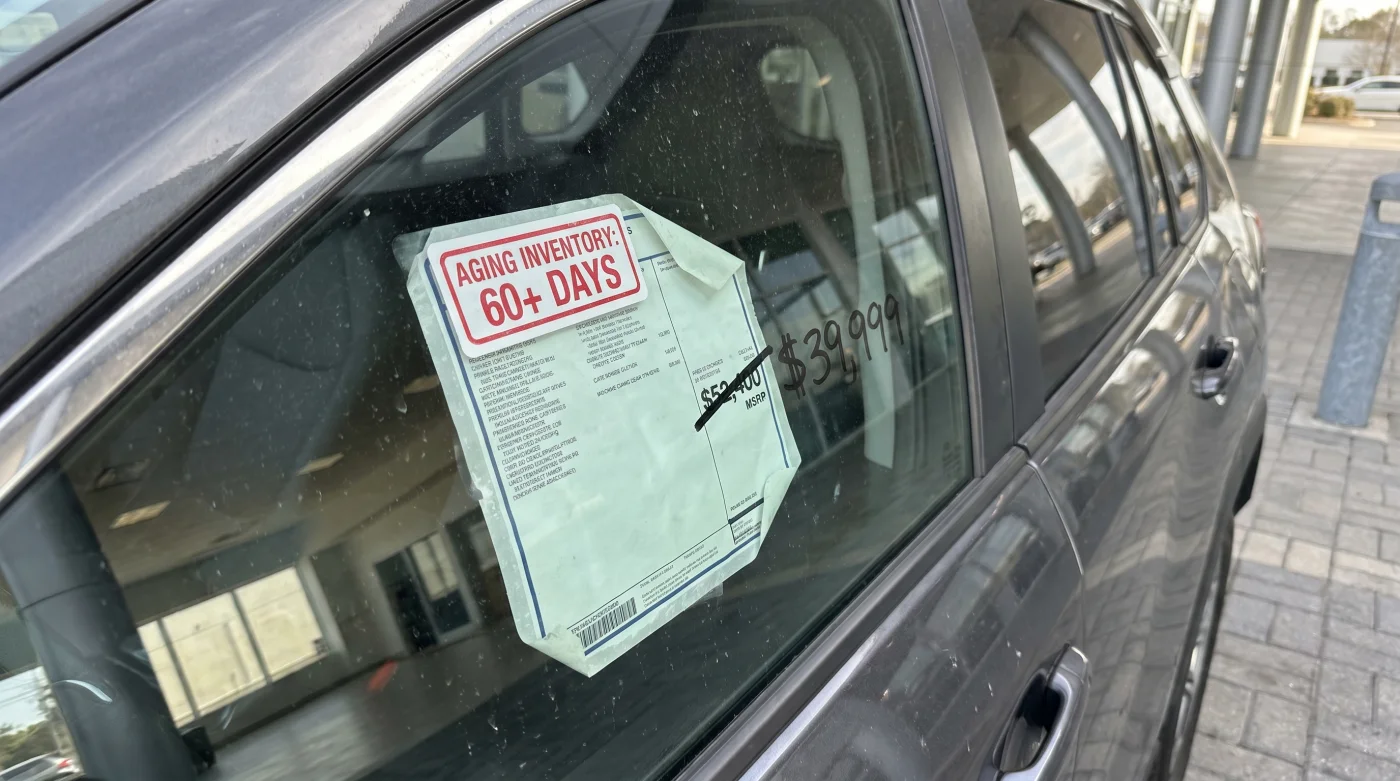
The afternoon heat radiates off hundreds of pristine hoods lined up in perfect, agonizing silence. You can smell the hot rubber of fresh tires and the faint, sweet scent of industrial transport wax melting under the relentless suburban sun. On the showroom floor, a lone salesperson idly spins a set of keys, his eyes fixed on the entrance. The usual weekend chatter of excited families signing papers has vanished, replaced by the rhythmic ticking of a wall clock and the low hum of an empty air conditioning unit.
Step onto any major suburban auto mall today and you will notice an eerie stillness. The bustling crowds that defined the post-pandemic buying frenzy have evaporated, leaving behind vast, quiet fields of steel and glass. While public-facing window stickers still boast ambitious, inflated prices, a quiet panic is unfolding behind the double-paned glass of the manager’s office. Dealerships are quietly drowning in their own inventory, and the tide is rising weekly.
Recent automotive finance tracking reports confirm a staggering reality: over one million projected new car buyers have walked away from the market entirely this season. Faced with stubborn interest rates and exhausted household budgets, consumers have collectively decided to wait. This silent strike has left local franchise owners holding billions of dollars in highly leveraged metal, exposing a fragile financial machinery that you can use to your immense advantage.
The Invisible Clock: The 60-Day Floorplan Trap
To understand why a dealer will suddenly slash thousands off a vehicle without advertising it, you must look past the shiny paint and understand the concept of floorplan financing. Dealerships rarely own the cars on their lots. Instead, they borrow money from specialized banks to keep those vehicles on display, paying monthly interest on every single vehicle identification number. Interest is ticking away the moment the transport truck unloads.
Think of a brand-new vehicle on a dealership lot not as an asset, but as a melting block of ice on a summer porch. For the first thirty days, the ice is solid; the dealer is confident, expecting a quick turnaround and a healthy markup. By day forty-five, the edges begin to soften. But once a vehicle crosses the critical sixty-day threshold, the ice is in full melt. At this stage, the monthly interest payments begin to erase the dealer’s projected profit entirely, turning a prize asset into an active financial liability.
Once a vehicle hits day sixty-one, the general manager’s priority shifts from maximizing profit to mitigating damage. They must move the unit to satisfy their lending banks and maintain their standing for future manufacturer allocations. General manager’s priority shifts to clearing the books before the bank demands a heavy principal payment on the aging steel.
- Ferrari EV battery patents expose a massive weight penalty Porsche Taycan actively avoids
- General Motors used buyers must inspect this specific transmission module for invisible heat damage
- Tesla Model S longevity requires a specific battery coolant flush owners completely ignore
- Mazda base model trims hide the exact premium suspension dampeners found in luxury editions
- Toyota Tundra recall triggers stealth dealership markups on untouched hybrid engine inventory
Marcus Vance, a forty-seven-year-old former dealership finance director turned independent consumer advocate in Columbus, Ohio, witnesses this shift daily. “The average buyer thinks dealers are stubborn monoliths,” Vance explains. “But when a truck load of new inventory arrives and thirty older units are sitting past their sixty-day limit, the general manager is willing to sell below invoice just to stop the bleeding on their bank line. They won’t put those prices on the window, but they will sign them in a heartbeat if you show you know the math.”
Targeting the Overstocked Tiers
Not all vehicles on the lot age at the same rate. To exploit this market correction, you must target the specific vehicle segments where inventory is stacking up like cordwood. Exploit this market correction by bypassing the emotional sales pitch and focusing strictly on the units that are costing the dealer the most money every day.
The heavy-duty pickup backlog represents the first major vulnerability. For years, manufacturers overproduced highly optioned, expensive trucks, assuming the construction boom and easy credit would last forever. Today, those eighty-thousand-dollar workhorses are sitting idle. Dealers who once demanded thousands over MSRP are now quietly searching for any exit strategy to free up millions of dollars tied up in heavy-duty inventory.
The family SUV segment is experiencing a similar correction. Mid-tier trims—the ones without the panoramic sunroofs but with all the practical safety tech—are piling up as buyers scale back their expectations. Vehicles are piling up on the back lots, making them prime targets for aggressive, silent discounting.
The Quiet Negotiator’s Execution Plan
To successfully capture these unadvertised discounts, you must approach the dealership not with hostility, but with calm, systematic precision. Your goal is to identify the oldest units on the lot and present yourself as the immediate solution to their floorplan headache. Here is how to execute this strategy without triggering defensive sales tactics:
Begin by researching the specific inventory of your target dealer online. Most dealership websites display the vehicle identification numbers and often list the date the vehicle was added to their digital showroom. Look for units that have been listed for more than two months. Target the silent survivor of the lot—the car that has been test-driven three times but never bought.
- Check the door jamb sticker: When inspecting the vehicle in person, look at the metal manufacturing plate on the driver’s side door sill. It lists the exact month and year of production. If a car was built seven months ago and is still on the lot, it is costing the dealer daily.
- Request the specific stock number: When contacting the internet sales department, refer to the specific aging stock number rather than a general model. This signals that you are targeting a specific unit they are desperate to move.
- Frame your offer around the sixty-day mark: Let the salesperson know you are aware of how long that specific unit has been sitting. Offer a clean, simple deal to take the aging inventory off their books today.
To help you execute this strategy smoothly, use this simple tactical reference to align your timing with the dealer’s internal pressure points:
The Aging Inventory Tactical Toolkit
- Target Age: 61 to 90 days on the lot.
- The Leverage Point: Floorplan interest payments are due, and principal curtailment is looming.
- Your Opening Move: Offer to buy at 3% below dealer invoice, waiving all dealer-installed add-ons.
- The Ideal Timing: The final three days of the calendar month, preferably on a rainy Tuesday afternoon when foot traffic is non-existent.
Restoring Your Financial Balance
Negotiating a new car purchase does not have to feel like entering a combat zone. When you understand the financial pressures driving the dealership’s decisions, the entire interaction changes completely from a contest of wills into a simple business transaction. You are no longer begging for a discount; you are offering a solution to a pressing cash-flow problem.
By focusing your energy on the units that have crossed the sixty-day threshold, you protect your household budget from the artificial inflation of recent years. You reclaim your buying power by simply letting the market’s natural corrections work in your favor, turning a quiet lot into your greatest financial opportunity.
“The dealer’s greatest liability is a car that has forgotten what the open road feels like; your job is to turn their storage problem into your financial victory.” — Marcus Vance, Consumer Advocate
| Inventory Phase | Dealer Financial State | Your Strategic Opportunity |
|---|---|---|
| 1 – 30 Days | Low pressure; dealer expects maximum profit and quick turn. | Walk away; there is little room for deep, unadvertised discounts here. |
| 31 – 60 Days | Mild concern; interest expenses begin to accumulate on the floorplan. | Begin negotiating; ask for dealer fee waivers and minor price concessions. |
| 61+ Days (The Sweet Spot) | High panic; holding costs eat profits, and banks demand action. | Present aggressive under-invoice offers; demand removal of all dealer markups. |
Frequently Asked Questions
How can I find out exactly how long a car has been sitting on a dealer’s lot?
You can estimate this by checking the manufacture date on the driver’s door jamb sticker, or by using free online vin decoders and inventory tracking tools that show when the vehicle’s digital listing first went live.Will a dealer really sell a car below their invoice price?
Yes. When floorplan interest fees accumulate, or when factory volume bonuses are on the line, dealers will routinely sell an aging car below invoice to stop ongoing losses and secure cash flow.Are unadvertised discounts available on high-demand hybrid or electric vehicles?
While rare, even popular models can sit if they are optioned with expensive, unpopular packages. Focus your search on high-spec trims that have crossed the sixty-day mark to find these hidden discounts.What is floorplan financing and how does it affect my purchase?
Floorplan financing is the short-term loan dealers use to buy inventory from the manufacturer. Because they pay interest on these loans monthly, the longer a car sits, the more desperate they are to sell it.Should I tell the salesperson I know about their aging inventory?
Yes, but do it politely. Let them know you have researched the specific unit, notice it has been in stock for over sixty days, and are prepared to make a fast, hassle-free offer to help them clear it.