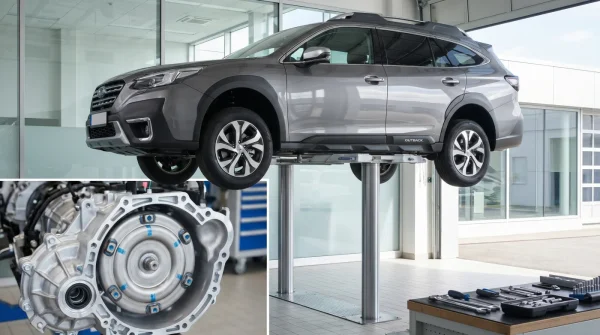
The metallic ping of a cooling exhaust under a lift. The faint, sweet smell of heated silicone sealant and gear oil in a drafty garage in Bend, Oregon. You sit in the waiting room, holding a paper cup of lukewarm coffee, watching the mechanic slide a diagnostic tablet onto the passenger seat of a pristine, silver 2018 Subaru Outback. To the untrained eye, this wagon is a steal—immaculate paint, clean Carfax, and a dipstick check that shows clear, amber-colored transmission fluid.
But clear oil is a deceptive mirror. Out on the wet asphalt, the engine purrs, but beneath the floorboards, a silent struggle is preparing to play out. Buyers flocking to used car lots believe that a quick visual inspection and a short cruise around the block will reveal a failing Continuously Variable Transmission (CVT). They look for dark fluid or sniff for a burnt odor, expecting the car to tell its secrets under gentle city driving.
It is a dangerous assumption that costs thousands. A Lineartronic CVT is a masterpiece of modern engineering, yet it is also a thermal delicate. In the secondary market, where used Outbacks are flying off lots as new-vehicle markups pinch wallets, this blind spot is widening. The real test of a belt-and-pulley system does not happen at standstill or during a lazy merge onto the local boulevard.
The Pressure Cooker Paradox
Think of the CVT not as a traditional gearbox with interlocking teeth, but as a pair of polished steel cones holding a heavy metal band under immense hydraulic tension. It is like running a wet leather belt across two spinning glass bottles. If the friction coefficient drops by even a fraction, the belt slips, micro-shaving the metal surfaces and sending microscopic debris through the valve body. When the transmission fluid is cold, its viscosity is high enough to mask this wear, acting like a thick cushion that hides the mechanical damage.
Simply checking the fluid color is like judging a marathon runner’s heart health by looking at their complexion while they sleep. To catch a slipping pulley before it leaves you stranded on a mountain pass, you must intentionally push the transmission into its operational stress zone. This is where thermal behavior reveals what a clean dipstick hides.
Marcus Vance, a 47-year-old independent Subaru specialist in Denver, Colorado, has spent two decades watching these transmissions live and die. “They don’t realize the dealership just flushed the system to hide the chain slip,” Marcus says, wiping grease from a scan tool. “The only way to know the truth is to watch the live PID data on a steep grade until the fluid hits its critical expansion point. If you do not heat the fluid, you are just buying a very expensive question mark.”
- 2025 Ram 1500 aerodynamic grilles quietly choke engine cooling during heavy summer towing
- Tesla India anniversary price cut exposes massive artificial margins in global EV markets
- Newest electric cars suffer massive winter range drops proving modern hybrids remain superior
- Mercedes Benz depreciated lease returns deliver flagship German luxury under thirty thousand
- Chevy Colorado work trims secretly feature the exact ZR2 reinforced steel underbody armor
Tailoring the Test to Your Territory
When hunting for a used Outback, your geographic location determines how you should stress-test the system. The vehicle adapts to its environment, and so does the wear on its internal components.
The Altitude Climber
If you live in the Pacific Northwest or the Rocky Mountains, your CVT faces sustained hydraulic pressure. The continuous grade changes cause the chain to ride on the outer edges of the pulleys for extended periods, generating rapid heat. For these buyers, catching micro-slippage during thermal expansion is paramount because a failure will occur far from help.
The Suburban Commuter
For those facing daily bumper-to-bumper traffic in hot climates like Austin or Phoenix, the threat is different.
Frequent low-speed launches keep the torque converter locked and unlocked repeatedly, raising fluid temperature through sheer friction. In this environment, a CVT might feel perfectly smooth when cold but turn into a shuddering mess once the heat soaks the transmission case.
Executing the Thermal Stress Protocol
Testing this system requires a deliberate, step-by-step approach. You cannot rely on a standard OBD-II scanner that only reads generic emissions codes; you need a tool that speaks Subaru’s language.
To perform this test safely, you or your prepurchase inspector must monitor the transmission fluid temperature (TFT) using an OBD-II scanner capable of reading live Subaru proprietary PIDs. You are looking for a specific window where the oil is hot enough to thin but not hot enough to trigger a dashboard warning.
- Plug in the diagnostic scanner and navigate to the transmission control module (TCM) live data stream.
- Drive the Outback for at least 15 minutes to bring the engine up to operating temperature.
- Locate a steep grade or find an open stretch of road where you can simulate a sustained load by gently applying the brakes while accelerating.
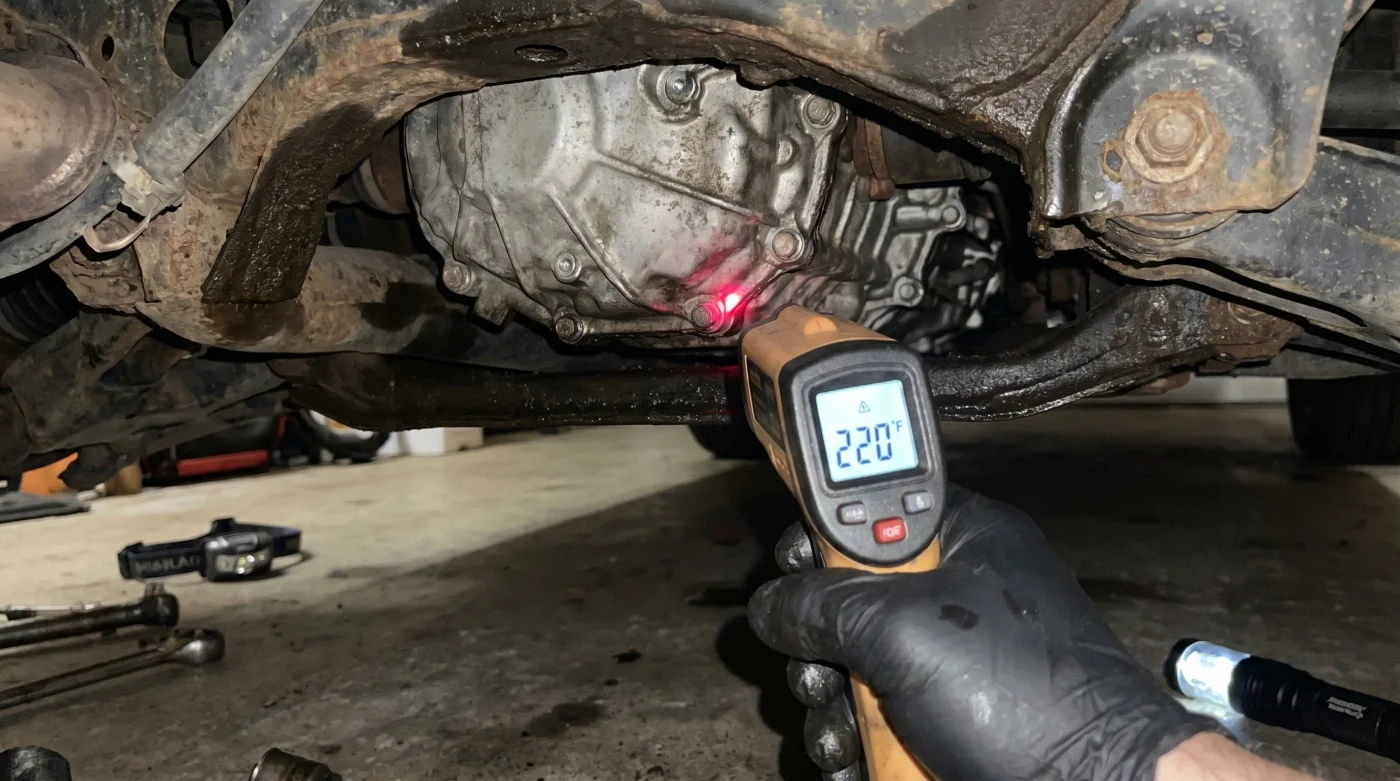
- Monitor the TFT continuously; you are waiting for the fluid to reach the critical threshold of 194 degrees Fahrenheit (90°C).
- At this exact temperature, perform three moderate-throttle accelerations from a complete stop up to 45 mph.
- Watch for a hesitation, a sudden 200-RPM flare in the tachometer, or a high-pitched whine that signifies the pulleys are struggling to maintain grip.
Tactical Toolkit:
• Diagnostic Tool: OBD-II Bluetooth adapter with Active OBD or BtSsm software.
• Target Temperature: 194°F to 205°F (90°C to 96°C) – the sweet spot for thermal expansion.
• Key Parameter: Secondary Pressure Target vs. Actual Secondary Pressure (they should match within 0.1 MPa).
Peace of Mind Beyond the Paperwork
Mastering this mechanical nuance is not just about avoiding a $7,000 repair bill; it is about reclaiming agency in a volatile used car market.
When you understand the physical limits of the machine you rely on, you transition from a passive consumer to a mindful steward. A vehicle is an instrument of freedom, and knowing its true state under pressure allows you to venture into the wild with absolute certainty.
“A clean fluid reservoir is just a clean dress on a tired runner; only thermal pressure reveals the true condition of a CVT.” — Marcus Vance, Subaru Specialist
| Key Point | Detail | Added Value for the Reader |
|---|---|---|
| Thermal Threshold | 194°F to 205°F | Identifies pulley slippage before dashboard lights illuminate. |
| Pressure Target | Matching Target vs. Actual PIDs | Verifies hydraulic system integrity under high load. |
| Active Fluid Check | Physical testing over simple dipstick checks | Prevents falling for temporary cosmetic flushes. |
Frequently Asked Questions
Can a dealer hide a failing CVT with new fluid?
Yes, fresh fluid can temporarily mask minor slippage and quiet a noisy pulley, which is why a thermal test is required to expose physical wear.What is the exact temperature needed for the test?
You must get the transmission fluid between 194°F and 205°F to ensure the fluid is thin enough to reveal pressure leaks.Will a failing CVT always throw a check engine light?
No, micro-slippage often occurs without triggering a diagnostic trouble code (DTC) until the damage is severe.Is the Lineartronic CVT unreliable by design?
Not inherently, but it is highly sensitive to fluid degradation and requires strict thermal management to reach 200,000 miles.What tool do I need to read Subaru CVT temperatures?
A mid-tier OBD-II scanner or an adapter paired with a specialized app like Active OBD is necessary to read real-time transmission PIDs.