The waiting room of a high-volume car buying center has a very specific atmosphere. It is the steady hum of a commercial HVAC system, the faint scent of synthetic carpet cleaner, and the low murmur of daytime television reflecting off laminate desks. You sit in a molded plastic chair, rolling your key fob between your fingers, entirely confident. After all, you have spent hundreds of dollars on premium ceramic tint that keeps the cabin as cool as an underground cellar during the peak of summer.
Outside, an appraiser walks around your vehicle holding an iPad. They do not open the hood first, nor do they pull out a paint-depth gauge. Instead, they position themselves at specific, repetitive angles, letting the lens capture the glass. To you, the dark, uniform windows look sleek, giving the sedan a crisp, modern stance that is flawless to the naked eye and surely worth a premium.
Ten minutes later, the printout arrives. The offer is unexpectedly low, falling short of the online estimator by a margin that hurts. The associate offers a sympathetic shrug, citing market fluctuations or regional inventory pools. But the real shift did not happen in the physical market; it occurred inside the digital brain of the scanning software when your dark glass was registered by the camera.
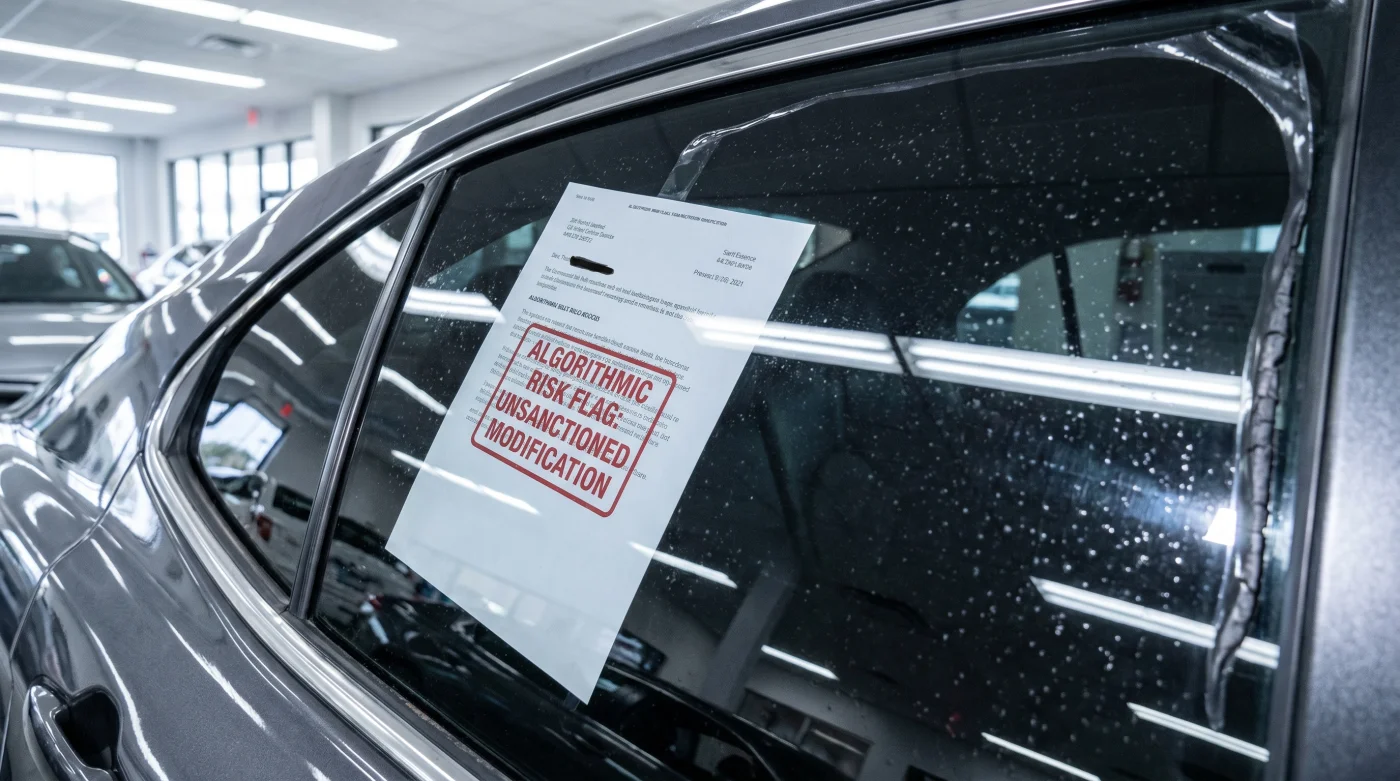
What you considered a premium upgrade, the system flagged as an operational risk. By trying to protect your leather seats from the sun, you unwittingly flagged your pride and joy as a low-margin wholesale candidate. The computer did not see a clean car; it saw a set of red flags hidden in plain sight.
The Ghost in the Appraisal Machine
To understand why this happens, you must look past the human appraiser and peer directly into the computer-vision models used by major national buying services. These algorithms do not think like car enthusiasts. They analyze images by breaking them down into geometric contrasts and edge-detection matrices. When a car has dark aftermarket tint, the software struggles to calculate the depth of the interior or verify the integrity of the window pillars.
Because the camera cannot see through the darkened glass to confirm the presence of side-curtain airbags or factory-spec trim, it defaults to a defensive posture. The automated system interprets this lack of transparency as a potential mask for structural damage, artificially categorizing your vehicle into a high-risk bucket. To the algorithm, your premium film behaves exactly like anomalous light-refraction indexes caused by bent frames or cheap, post-collision rebuilds.
- Subaru Outback CVT inspections require a specific thermal stress test buyers completely ignore
- 2025 Ram 1500 aerodynamic grilles quietly choke engine cooling during heavy summer towing
- Tesla India anniversary price cut exposes massive artificial margins in global EV markets
- Newest electric cars suffer massive winter range drops proving modern hybrids remain superior
- Mercedes Benz depreciated lease returns deliver flagship German luxury under thirty thousand
Marcus Vance, a forty-two-year-old software architect who spent years refining remarketing databases in Dallas, explains how these guardrails are tightened behind the scenes. “When inventory demands swell, platforms like CarMax and Carvana shift their risk dials,” Marcus says. “If the system is instructed to reduce exposure on older sedans, the algorithm is programmed to auto-penalize any anomaly. A tinted window is an easy target—the software instantly flags it as an altered vehicle, lowering the automated offer to protect the corporate buying margin from unknown interior damage.”
The Ceramic Premium Trap
Many vehicle owners fall into the trap of assuming that high-end materials carry weight during an appraisal. You might have a receipt proving you paid for premium, signal-enabling ceramic film that blocks infrared heat without metallic interference. Unfortunately, the digital intake pipeline does not read paper receipts or care about heat rejection; the algorithm reads pixel contrast and shadow density.
To the automated scanner, a cheap, purple-dyed film applied in a backyard driveway looks identical to a masterfully installed ceramic layer. The software simply registers the percentage of light transmission and the edge transition lines. If the system cannot verify the cabin’s interior condition through the glass, it automatically subtracts the projected cost of glass restoration from your offer, assuming the next buyer will demand its removal.
The Midnight Edge Case
Vehicles with very dark tint—such as fifteen percent or five percent “limo” tint—trigger even harsher penalties. These cars present a physical hazard for transport drivers who must move vehicles onto multi-car haulers at twilight or during heavy rain. Because transport safety protocols are strict, these dark windows represent a liability that requires immediate correction before the vehicle can be sent to another market.
When the algorithm detects these ultra-dark glass profiles, it automatically factors in the labor cost of removal and the risk of glass damage during the scraping process. This manual labor charge is deducted from your appraisal before you ever receive the printed offer sheet. Rather than adding curb appeal, your cosmetic upgrade is viewed as an immediate mechanical chore that must be scheduled, paid for, and executed before the car can hit the frontline.
Reclaiming Your Car’s Digital Value
Getting the maximum payout for your vehicle does not require you to accept these algorithmic penalties lying down. By taking a few deliberate steps, you can guide the appraisal process back into your favor. The goal is to present the vehicle in a way that minimizes the digital flags before the camera ever takes a single frame.
To ensure your vehicle is evaluated fairly, adopt these simple, physical preparation steps before driving to the appraisal center:
- Appraise with open windows: If the weather allows, roll all your side windows completely down before pulling onto the inspection lot. This forces the physical appraiser to scan the interior directly, preventing the camera from flagging window film anomalies on the side glass.
- Provide a clean rear view: Clean the rear windshield meticulously. The scanning software often flags bubbling or peeling film on the rear glass as a vision obstruction, which carries a heavier penalty than side-window tint.
- Request a manual manager override: If the initial digital offer is lower than expected, explicitly ask the buying associate for a manual override. Present your original tint installation receipt to prove the work was done professionally and conforms to local light-transmission laws.
- Compare regional quotes: Use competing platforms like Carvana or local independent buyers to leverage your offer. When inventory demands shift, different platforms adjust their algorithmic parameters, meaning one system may be far more forgiving of glass alterations than another.
By executing these minor adjustments, you shift the appraisal from a cold, automated scanning process back to a human-verified evaluation. You are not trying to trick the system; you are simply unpeeling the digital penalty that was incorrectly applied to your vehicle’s profile.
Reclaiming the Human Element in a Screen-First World
At its core, navigating the modern car-selling process requires realizing that we are no longer bargaining with people; we are bargaining with mathematical models. These models are designed to find patterns of risk and exploit them to protect corporate margins. When you understand how a camera-vision system interprets a dark window pane, you no longer feel victimized by a low-ball offer.
Instead, you gain the clarity needed to present your vehicle on your own terms. Removing the mystery from the algorithm allows you to make informed decisions about whether to peel the film, roll down the glass, or take your business elsewhere. In a world increasingly governed by cold code, finding peace of mind starts with navigating the system on your terms and keeping your hard-earned equity where it belongs.
“An algorithm cannot appreciate the care you took of your vehicle; it can only calculate the mathematical probability of a liability.” — Marcus Vance, Systems Remarketing Analyst
| Key Point | Detail | Added Value for the Reader |
|---|---|---|
| Algorithmic Bias | Automated cameras flag aftermarket tint as a structural or visibility risk. | Helps you understand why your offer dropped without any physical damage present. |
| Inventory Adjustments | Brokers adjust risk thresholds in their software based on regional supply. | Enables you to time your sale or seek alternative buyers when margins are tight. |
| Removal Cost Deduction | Ultra-dark film triggers automatic deductions for dealer reconditioning labor. | Gives you the option to peel the film yourself to save hundreds on the appraisal. |
Frequently Asked Questions
Does high-quality ceramic tint add resale value to my car?
No. Appraisal algorithms do not distinguish between expensive ceramic film and cheap dye-based tint; both are flagged as non-factory modifications that reduce baseline value.Should I peel my aftermarket tint off before getting an appraisal?
If your tint is extremely dark (under 20% light transmission) or showing signs of bubbling and peeling, removing it beforehand can prevent a significant automatic reconditioning deduction.How does the photo-scanning software flag tinted windows?
The computer-vision cameras detect high levels of contrast and light refraction, treating the dark glass as a potential cover-up for interior damage or structural pillars.Can an appraiser manually override the algorithm’s deduction?
Yes. While the system generates the initial value, a manager can manually adjust the vehicle’s condition tier if you provide proof of professional installation and legal compliance.Do CarMax and Carvana treat aftermarket tint differently?
Both use automated valuation engines, but their risk tolerances fluctuate depending on their current inventory needs and regional buyer demands.