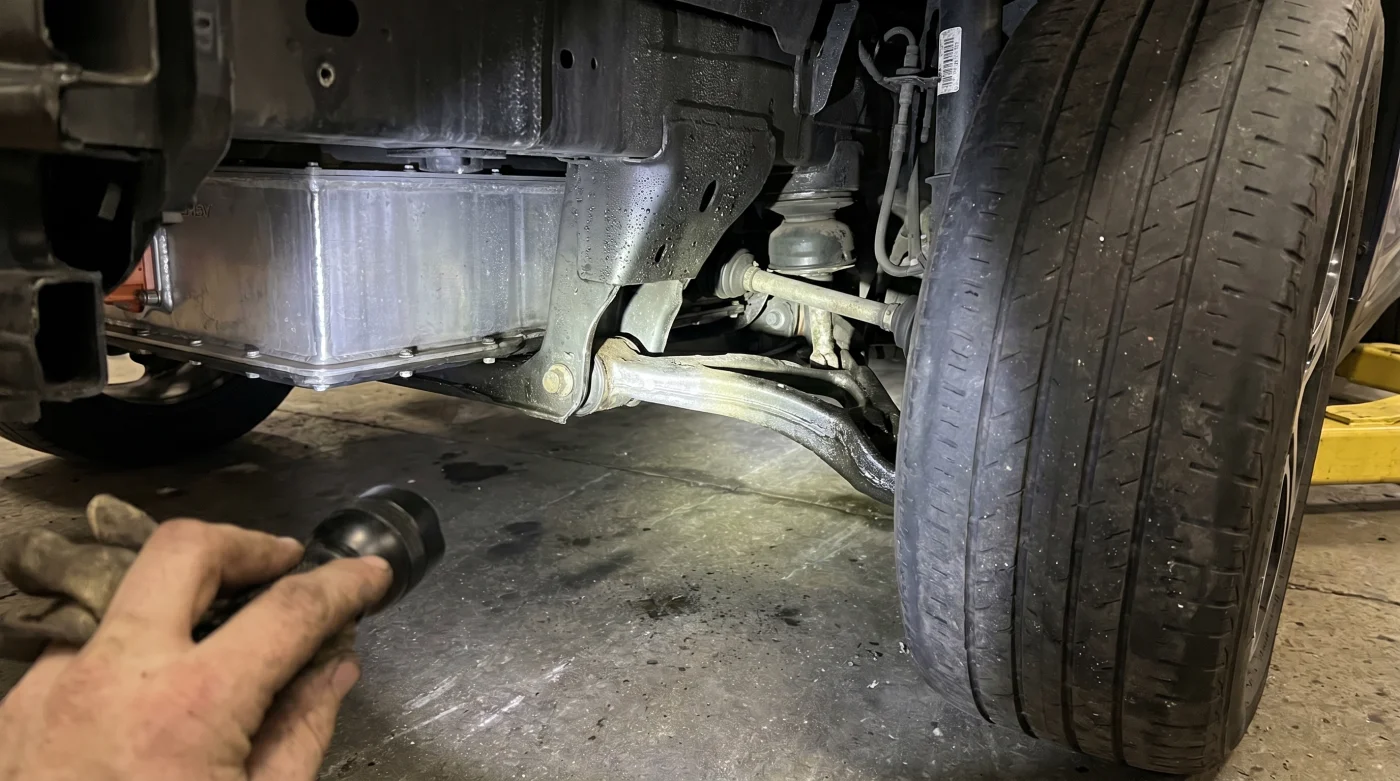
The shop bay is exceptionally quiet when an electric vehicle rolls inside. There is no rhythmic thrum of an idling engine, no faint scent of burning oil, only the high-pitched whistle of cooling fans and the heavy, metallic crunch of a two-ton machine settling onto a hydraulic lift. Under the fluorescent lights, a brand-new electric crossover hangs in the air, its sleek body promising a maintenance-free future. But as you walk underneath, a sharp, pungent odor fills the air—the unmistakable scent of hot, disintegrating rubber.
Running a hand along the inside edge of the rear tread reveals a disturbing truth. While the outer face of the tire looks pristine, the inner shoulder is **scrubbed down to the cords**, worn away prematurely in a jagged, feather-like pattern. The vehicle has barely crossed the 12,000-mile mark on its odometer, yet its expensive low-rolling-resistance tires are already ruined. This is not an isolated puncture or a case of bad luck; it is a systemic symptom of how heavy battery packs are warping traditional chassis design.</p
For decades, legacy automakers built cars around a predictable weight distribution, balancing a heavy front engine with a light passenger cabin. Shifting to heavy floor-mounted batteries completely rewrote the physics of suspension tuning. In the rush to scale up electric production, the structural compromises made to accommodate these massive battery trays have created a quiet headache for owners who expected their utility bills to be the only changing variable.
The Leverage Problem: Balancing a Bowling Ball on a Sheet of Glass
To understand why these rear tires are wearing out at double the normal rate, you must picture a heavy bowling ball sliding across a polished wooden dining table. When a vehicle accelerates, its weight shifts backward. In a traditional gasoline car, this shift is mild and easily managed by standard coil springs. In a modern electric platform, however, the massive battery pack acts like a rolling anchor, transferring **thousands of pounds of force** directly to the rear axle the moment your foot touches the pedal.</p
This immense transfer of energy puts incredible strain on the rear multi-link suspension. To maintain a smooth, whisper-quiet cabin ride that EV buyers expect, engineers installed soft rubber compliance bushings at the suspension pivot points. These soft bushings act like tiny sponges, absorbing road vibrations so they do not echo through the battery tray. However, under the sheer torque and physical mass of the platform, these rubber pieces compress far too much, allowing the rear suspension arms to twist out of alignment under load.
As the rear wheels push forward, the soft bushings deform, causing the tires to splay outward in a temporary state of negative camber and dynamic toe-out. Instead of rolling straight down the highway, the tires are dragged slightly sideways, **scrubbing their inner shoulders** against the pavement with every highway merge and stoplight departure. It is a hidden mechanical tax paid in rubber, born from the compromise between premium ride comfort and structural weight management.
The Master Tech’s Discovery in Warren, Michigan
Marcus Vance, a 52-year-old master alignment technician who spent three decades servicing fleet vehicles near Detroit, was among the first to document this geometric deviation. During a routine alignment check on a customer’s new electric platform, Marcus noticed the factory specifications allowed for a wide variance in rear toe settings. “The factory alignment sheet said the car was technically in the green,” Marcus explains, “but the moment I strapped ballast weights into the cabin to simulate real-world passengers and cargo, the rear wheels bowed outward like a laden pack mule. The suspension geometry simply did not have the structural rigidity to keep the tires flat under real-world loads.”
- Tesla Autopilot anomaly reports expose a terrifying sensor blindness near specific highway sound barriers
- General Motors EV buyers bypass stringent income limits exploiting a massive commercial lease loophole
- Newest electric cars hide a premium battery cooling system inside their cheapest base models
- Tesla Model 3 owners expose a severe winter battery drain caused by faulty cabin sensors
- Wisconsin Department of Transportation policy shift sparks a massive search spike for registration loopholes
Tailoring Your Defense: Driving Profiles and Tire Survival
Not every driver experiences this wear pattern in the exact same way. The rate of rubber destruction depends heavily on how and where you drive, making it necessary to identify your specific driving profile to mitigate the damage.
The Interstate Cruiser
For those who spend hours cruising at seventy miles per hour on concrete highways, the wear is slow but continuous. Constant high-speed expansion joints keep the suspension in a perpetual state of oscillation, meaning those soft rubber bushings are constantly compressing and releasing. If you carry cargo or passengers frequently, this constant squat **accelerates the inner-edge scrub**, turning a long-distance commute into a tire-shredding exercise.
The Stop-and-Go Urbanist
If your daily drive consists of short city blocks, traffic lights, and rapid lane changes, your tires face a different threat. The instantaneous torque of electric motors is incredibly satisfying, but every launch from a standstill forces the rear suspension to deflect to its absolute mechanical limits. This frequent, violent shifting of weight means your rear tires spend a significant portion of their operational life **running on their inside edges**, shaving off micro-layers of rubber with every green light.
The Tactical Triage: A Mindful Maintenance Plan
Preventing premature tire failure on a heavy electric platform requires moving away from the generic maintenance schedules provided in the owner’s manual. A few deliberate, precise adjustments can counteract the built-in geometric flaws of the chassis.
- **Check pressures weekly:** Keep your cold tire pressure exactly at the recommended maximum listed on your driver-side door jamb, or even 2 PSI above if you regularly carry cargo. Stiffer sidewalls resist the rolling under-deflection that worsens inner-shoulder wear.
- **Halve your rotation intervals:** Do not wait for the standard 7,500-mile mark. Rotate your tires every 3,500 to 4,000 miles to distribute the inner-edge wear evenly across all four corners before the damage becomes permanent.
- **Request a custom alignment setup:** Ask your alignment technician to adjust the rear toe toward the positive limit of the factory specification. This slight “toe-in” bias helps offset the dynamic toe-out that occurs when the vehicle is under load.
By treating tire maintenance as an active, ongoing calibration rather than a passive annual chore, you can protect your wallet from the frequent, costly replacements that many EV adopters face. The key is recognizing that your vehicle’s chassis is operating under immense physical pressure, and it requires a matching level of mechanical attention.
Reclaiming the Road: The Value of Mechanical Awareness
Stepping back to look at the larger picture, this tire-wear issue highlights a broader reality of the modern transition to electric vehicles. True automotive efficiency is not just about avoiding the gas pump; it is about understanding how a vehicle interacts with the road beneath it. When we ask a chassis to carry an unprecedented amount of weight, we must be prepared to adjust our expectations and maintenance habits accordingly.
Taking control of your vehicle’s physical balance brings a deeper sense of security to your daily drive. When you know your suspension is properly aligned, your tire pressures are meticulously set, and your driving style is adapted to your car’s physical realities, you are no longer at the mercy of hidden engineering compromises. You can enjoy the smooth, quiet power of your electric ride, knowing you have mastered the physical forces at play beneath the floorboards.
“You cannot fight the laws of physics with a software update; when you put two tons of batteries on soft rubber bushings, the pavement will always win if you aren’t paying attention.” — Marcus Vance, Master Technician
| Key Action Point | Technical Detail | Added Value for the Reader |
|---|---|---|
| Pressure Management | Maintain cold PSI 2 units above the placard rating. | Reduces sidewall flex, preventing the tire from rolling onto its inner shoulder during acceleration. |
| Rotation Cadence | Rotate tires diagonally every 4,000 miles. | Evens out the directional scrub before the tread pattern develops a permanent wear memory. |
| Alignment Customization | Target the positive (toe-in) limit of factory specifications. | Counteracts the natural outward splaying of the wheels under heavy battery loads. |
Frequently Asked Questions
Is this tire wear issue covered under the vehicle’s factory bumper-to-bumper warranty?
No. Tires are almost always classified as wear-and-tear items, meaning the manufacturer will not cover premature replacement costs unless you can prove a major component failure occurred.Will switching to stiffer aftermarket suspension bushings solve this wear problem permanently?
Yes, stiffer polyurethane bushings will prevent suspension deflection, but they will also transmit significantly more road noise and vibration directly into the cabin and battery pack.Are specialized EV tires actually worth the extra money compared to standard touring tires?
Yes. EV-specific tires feature reinforced sidewalls and specialized tread compounds designed to withstand high torque, which helps slow down the rate of dynamic alignment wear.How can I tell if my rear tires are scrubbing without putting the car on a professional lift?
Turn your steering wheel fully to one side, park safely, and run your hand across the rear tread from the outside edge to the inside edge; if you feel a sharp, saw-tooth texture on the inner edge, your tires are scrubbing.Does driving in “Eco Mode” help reduce this specific type of inner-shoulder tire wear?
Yes. Eco Mode dampens throttle response and limits instant torque delivery, which reduces the backward weight transfer that forces the rear suspension to compress and splay outward.