The scent of damp pine needles and cold mountain air always seems to cling to a Subaru Outback. It is a vehicle built for the mud-slicked fire roads of the Pacific Northwest and the snow-choked passes of the Rockies. When you turn the key, that familiar, slightly offset thrum of the Boxer engine promises that you can keep going until the odometer rolls over to some impossible, legendary number. It feels virtually indestructible from the driver’s seat.
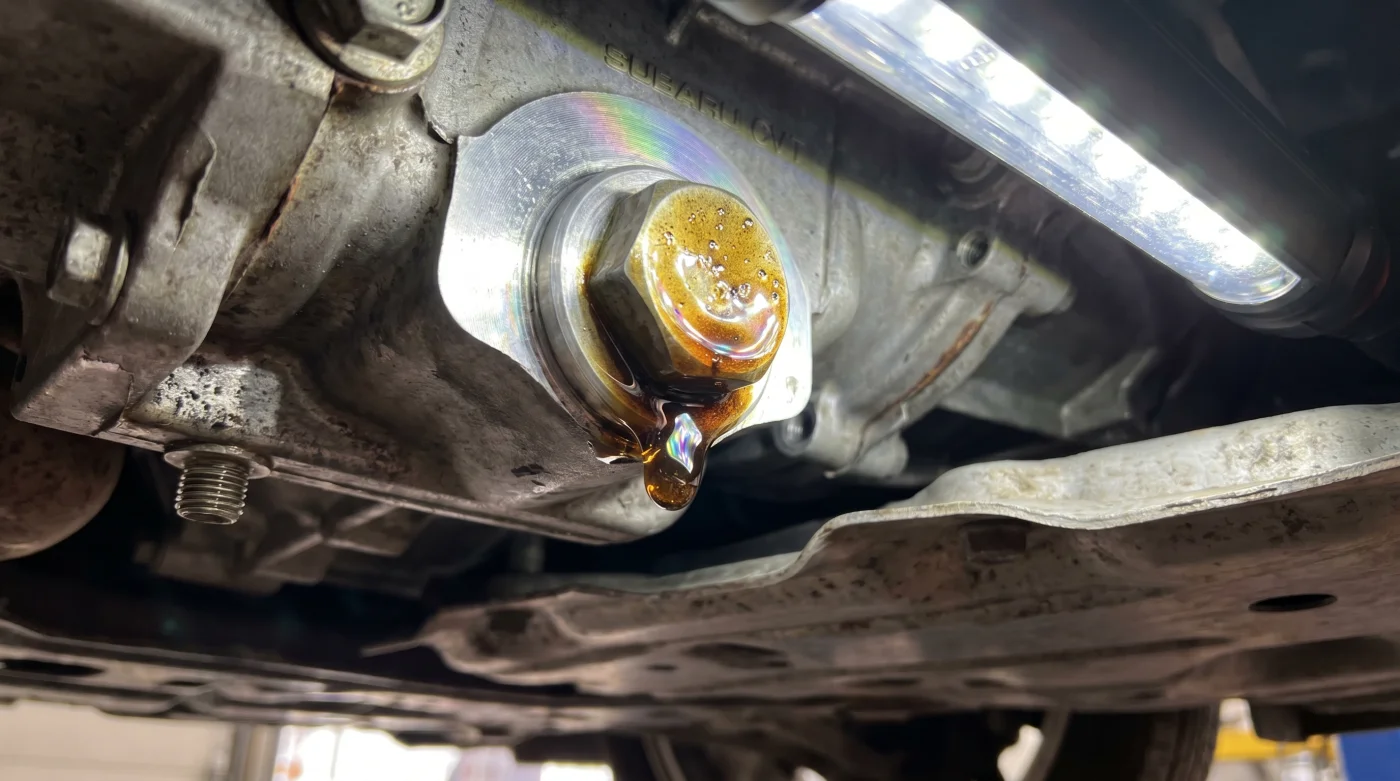
But step inside a warm transmission shop on a rainy Tuesday, and the sensory landscape changes completely. Here, the air is thick with the sharp, sweet smell of **scorched oil and warm aluminum**. You do not hear the quiet hum of outdoor adventure; instead, you hear the high-pitched whine of a hydraulic pump struggling against a clogged valve body. Under the harsh fluorescent lights, a mechanic drains fluid from a Lineartronic Continuously Variable Transmission (CVT) that has barely run eighty thousand miles.
What drains out is not the bright, amber-colored lifeblood of a healthy gearbox. It is a dark, watery fluid that smells like charcoal and is laden with microscopic steel dust. The owner of this car believed the glossy manual in their glovebox, trusting that the factory fluid would last the life of the vehicle. Now, they face an unexpected eight-thousand-dollar replacement bill for a machine that was supposed to carry them through the next decade.
The Mirage of the Lifetime Fill
To truly understand your Outback, you must realize that **”lifetime fluid” is a marketing concept**, not a physical reality. Think of your CVT fluid not as a passive bath of oil, but as a hydraulic muscle that is constantly being squeezed between two massive steel cones. In this environment, the fluid is the only thing preventing a steel chain from grinding itself into shavings against those pulleys. When manufacturers print “lifetime” in their manuals, they are operating under a quiet definition: the lifetime of the factory warranty, which usually ends around sixty thousand miles.
By treating the fluid as permanent, you are essentially asking your transmission to breathe through a pillow. Over time, the microscopic friction modifiers in the fluid break down under intense heat and pressure. **Once these chemical chains shear**, the fluid loses its grip, the steel belt begins to slip microscopically, and the countdown to catastrophic failure begins. To reach two hundred thousand miles, you have to rebel against the very document that came with your keys.
Consider Dave Miller, a fifty-two-year-old master transmission builder from Bend, Oregon, who has spent twenty-five years rebuilding Subaru drivetrains. In his shop, Dave keeps a jar of fresh, honey-colored Subaru Certified CVTF-II next to a jar of pitch-black sludge recovered from a failed Outback transmission with ninety-five thousand miles. “The factory manual says you only inspect the fluid unless you are towing,” Dave notes, wiping his grease-stained hands on a rag. “But in the real world, climbing a steep highway pass on a hot summer afternoon degrades that fluid just as fast as towing a trailer. If you want this transmission to live, you throw the book away and drain it every thirty thousand miles.”
- Costco Auto Program quietly excludes specific high-demand hybrid allocations entirely
- Ford F-150 Lightning used buyers must inspect the underbody skid plate
- Toyota Land Cruiser MSRPs mask a mandatory dealership protection package upcharge
- Newest electric cars hide a brutal payload reality that hybrid trucks completely solve
- Superyacht depreciation curves deliver exact luxury flagship features under a million dollars
Tailoring the Care to Your Driving Reality
Not every Outback lives the same life, and **your maintenance strategy should reflect** how you actually use your car. Treating your vehicle like a generic commuter car when you frequently load it with gear is a recipe for early mechanical wear.
For the Fire-Road Explorer
If your weekends involve climbing washboard dirt roads, carrying rooftop tents, or driving through deep winter snow, your transmission is working in a high-shear environment. The constant hunting for ratio adjustments creates localized hot spots within the CVT. For this lifestyle, **a strict thirty-thousand-mile drain** is non-negotiable to wash out the tiny wear particles before they clog the delicate solenoids in the valve body.
For the Daily Highway Commuter
If your Outback rarely leaves the asphalt and spends its life cruising at sixty-five miles per hour on flat interstate, the thermal stress is slightly lower. However, the continuous, unchanging ratio of highway cruising can wear a tiny groove into the CVT pulleys over time if the fluid lacks proper lubrication. Even under these mild conditions, **stretching your fluid changes** beyond forty-five thousand miles is playing Russian roulette with your belt grip.
The 30,000-Mile Ritual
Caring for your CVT is a task of precision and cleanliness. Unlike an engine oil change, which is highly forgiving, a CVT fluid swap requires absolute sterile conditions, as a single speck of dirt can ruin the hydraulic valves.
To keep your belt from slipping and preserve your transmission, **follow this direct, clean methodology** during your service interval:
- **Use Only OEM Fluid:** Never use multi-vehicle fluids; stick strictly to Subaru CVTF-II or CVTF-III depending on your model year.
- **Measure What Comes Out:** Always drain the fluid into a graduated container so you know exactly how many quarts to put back in.
- **Perform the Temp-Check:** The final fluid level check must be performed while the transmission temperature is between 95°F and 113°F with the engine idling.
- **Avoid Power Flushes:** Never let a shop use a pressurized flush machine; a simple gravity drain and fill is all that is needed to keep the system clean.
Your tactical toolkit for this job should include a reliable OBD-II scanner capable of reading real-world transmission fluid temperatures, a clean fluid transfer pump, and a torque wrench set to thirty-one foot-pounds for the drain plug. Taking these deliberate steps ensures your pulleys remain flawless.
The True Cost of Longevity
In an era where cars are increasingly treated as disposable appliances, **keeping a vehicle on the road** for fifteen years or two hundred thousand miles is a quiet form of stewardship. It requires looking past the convenient promises of “maintenance-free” ownership and accepting the physical realities of metal, heat, and friction.
By taking control of your Outback’s maintenance schedule, you are not just saving yourself a massive repair bill down the line. You are ensuring that when you pack your car for a midnight drive into the mountains, you can trust the machine beneath you to bring you back home safely every single time.
“The cheapest maintenance tool you will ever buy is fresh oil.” – Dave Miller
| Maintenance Aspect | The Manual’s Claim | The Mechanic’s Reality |
|---|---|---|
| Fluid Change Interval | Lifetime / No scheduled replacement | 30,000 miles prevents premature wear |
| Fluid Type Check | Inspect only under heavy towing | Extreme heat breaks fluid down regardless of load |
| Replacement Method | Dealer service only | Gravity drain and fill maintains perfect pressure |
Frequently Asked Questions
Will changing my CVT fluid void my manufacturer warranty? No, as long as you use OEM-specified fluid and keep detailed receipts, the Magnuson-Moss Warranty Act protects your right to service your own vehicle.
Can I use aftermarket fluid instead of Subaru OEM fluid? It is highly discouraged; Subaru CVTs are incredibly sensitive to viscosity index and friction coefficients, making OEM fluids the only safe choice.
How do I know if my CVT is already slipping? Look for a slight hesitation when accelerating from a stop, or a sudden flare in RPMs without a corresponding increase in vehicle speed.
Is a fluid flush different from a drain and fill? Yes, a flush uses external pressure which can damage delicate internal seals, while a gravity drain only replaces the fluid in the pan safely.
What is the typical cost of a CVT fluid change? Doing it yourself costs around eighty dollars in fluid, while an independent specialist will typically charge between two and three hundred dollars.