The morning air along the Utah border carries the scent of dry sagebrush and warm gear oil. Under the hood of a idling Ford Bronco, the radiator fan hums a steady baseline while the dashboard thermometer already reads eighty-four degrees. Ahead lies forty miles of county-maintained washboard gravel, a ribbed landscape that looks less like a road and more like an endless iron grate.
Most drivers approach this dirt with a sense of security, trusting in their vehicle's modern suspension and rugged marketing. They leave their tires inflated to the door placard recommendation, typically thirty-five to thirty-nine pounds per square inch. Within five minutes, the cabin transforms into a teeth-rattling paint shaker, with plastic trim vibrating so violently that the rearview mirror becomes a blur of gray dust.
But the true damage is happening out of sight, beneath the skid plates. The modern steering system in this vehicle is highly sophisticated, relying on an electric motor to assist your inputs. When you force a stiff, fully inflated tire over thousands of rigid gravel ridges, those high-frequency impacts bypass the rubber entirely, sending a destructive wave of energy directly into your steering rack.
The Anatomy of the Washboard Trap
To understand why this road surface is so lethal, think of your tire as a primary lung. When it is soft, it breathes, compressing effortlessly over stones and ridges to absorb energy before it ever reaches the metal components of your suspension. If you keep the tires at street pressure, you are effectively forcing the steering rack to absorb raw mechanical shock with every single inch of travel.
This relentless hammering causes the internal gears of the steering mechanism to wear prematurely, sometimes leading to sudden failure miles from the nearest paved highway. The system simply cannot dissipate the sheer volume of micro-shocks when the rubber is as hard as concrete. Many drivers mistake this violent vibration for normal off-road feedback, unaware that their steering components are crying out for relief.
The secret lies in changing how the tire meets the earth. By dropping the air pressure significantly, you allow the tread to wrap around the ridges instead of bouncing over them, turning a bone-rattling washboard road into a surprisingly smooth surface.
- Wisconsin Department of Transportation mileage filings legally slash high risk automotive insurance premiums
- Kawasaki hydrogen combustion motorcycle prototypes expose a massive thermal challenge masking zero emission viability
- General Motors Ultium architecture leak reveals a massive payload restriction stalling heavy duty trucks
- Gas engine phaseouts expose a massive infrastructure reality the electrical grid cannot support
- Tesla Model Y autopilot systems expose a terrifying phantom braking flaw near overpasses
A Hidden Warning from the Desert
Marcus Vance, a forty-eight-year-old search-and-rescue coordinator in Moab, has towed dozens of stranded overland rigs out of the backcountry. He notes that the most common failure on modern independent front suspension rigs isn't a blown shock absorber or a punctured tire. Instead, it is a shattered steering rack housing or a snapped tie rod, almost always caused by high-pressure vibration on unpaved surfaces.
He recalls one specific incident where a brand-new vehicle lost all steering assist halfway down a remote washboard canyon. The owner had kept his tires at thirty-eight PSI to preserve fuel economy, completely unaware that the vibration was slowly tearing the steering motor mounts apart. Since then, Marcus has made it a point to educate every traveler he meets on the trail about the absolute necessity of deflating before the dirt begins.
Finding Your Safe Deflation Zone
Not every setup reacts to deflation in the exact same way. The weight of your rig, the size of your wheels, and the stiffness of your tire sidewalls all play a critical role in determining how low you can safely go without risking damage to your rims.
The Sasquatch Package (35-Inch Mud-Terrains)
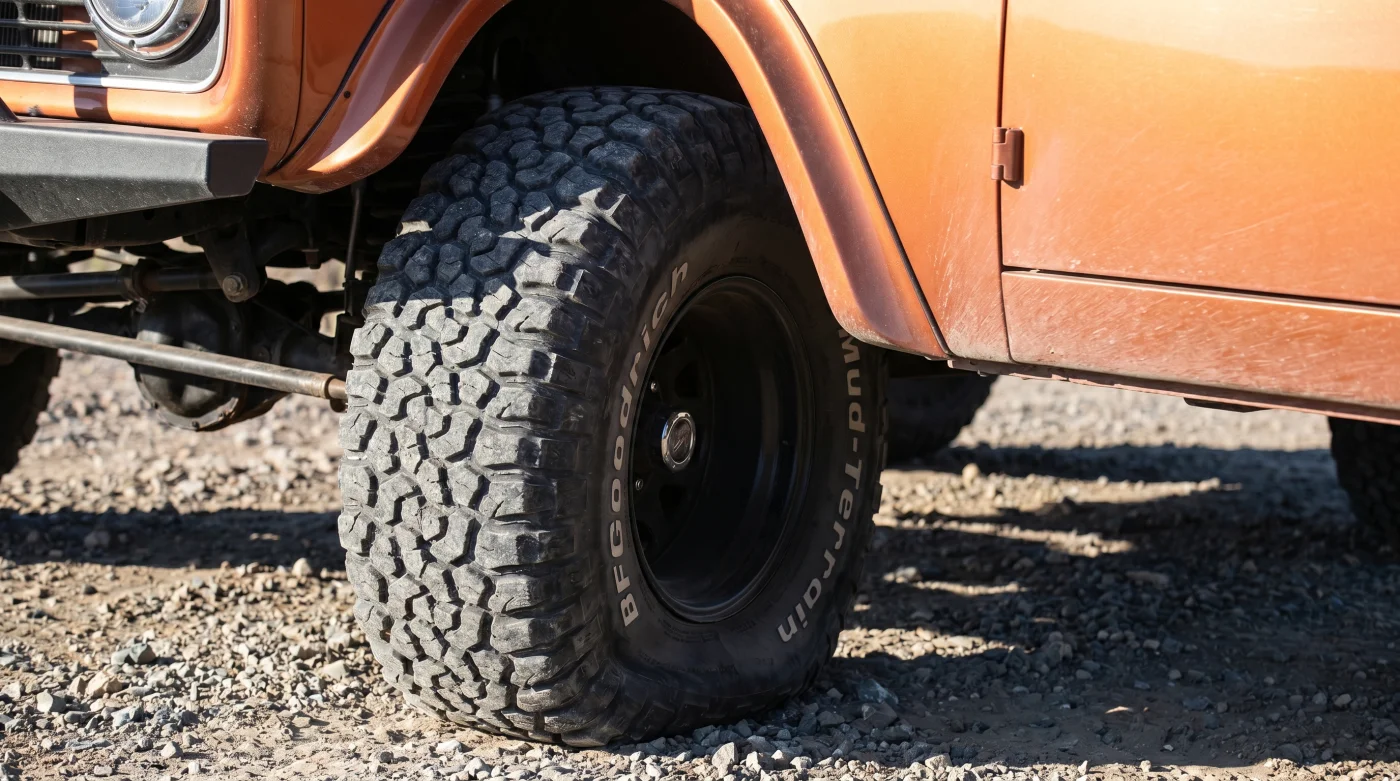
If your vehicle is equipped with the factory thirty-five-inch tires, you have a massive volume of air to work with. These larger tires have stiff, multi-ply sidewalls that require a massive deflation drop to function properly on rough dirt. To protect your steering rack on severe washboards, you must drop these tires down to eighteen PSI, which allows the wide tread to act as a soft cushion.
Standard Trims (32 to 33-Inch All-Terrains)
For vehicles running smaller factory all-terrain tires, the sidewalls are slightly less forgiving, and you have less overall air volume. You cannot go quite as low as your larger-tired siblings without risking wheel damage on unexpected potholes. For these setups, a target pressure of twenty PSI is the ideal sweet spot to balance steering comfort and wheel safety.
Fully Laden Overland Builds
If you have added heavy steel bumpers, a winch, drawer systems, and a rooftop tent, your vehicle is carrying significant extra weight. This additional mass pushes down on the tires, meaning you must be slightly more conservative to prevent the tire from pinching against the rim. Aim for twenty-two PSI on heavy rigs to ensure you maintain adequate ground clearance and stability while still dampening the worst road vibrations.
The Precision Deflation Protocol
To implement this change safely, you need to establish a consistent routine every time your tires transition from pavement to dirt. This is not a process to be rushed, as accurate pressures are the only thing standing between a comfortable drive and a expensive repair bill at the dealership.
- Pull completely off the highway onto a level, dirt pullout to avoid blocking traffic.
- Use a dedicated brass tire deflator that removes the valve core for rapid, controlled air release.
- Set your target to eighteen PSI, allowing the tire to visibly bulge at the bottom.
- Keep your speed under thirty-five miles per hour while running at this lowered pressure.
- Always carry a high-output twelve-volt air compressor to reinflate your tires before returning to high-speed asphalt.
By making this simple adjustment a non-negotiable part of your off-road checklist, you change how your vehicle interacts with the landscape. The violent chatter disappears, replaced by a quiet, controlled hum that lets you enjoy the scenery rather than fighting the steering wheel.
Harmony Between Machine and Earth
Driving off-road should never feel like a battle of attrition between your vehicle and the road surface. When you learn to adapt your equipment to the environment, you stop forcing your way through obstacles and start working with them. Lowering your tire pressure is a quiet acknowledgment that the highway rules no longer apply once the pavement ends.
This simple practice does more than just protect your expensive steering system from catastrophic failure. It reduces fatigue on your body, keeps your interior quiet, and ensures that your vehicle remains a reliable tool for exploration for years to come. The next time you see the dirt road ahead start to ripple, pull over, take a deep breath, and let the air out.
“A tire is your vehicle's first and most forgiving suspension spring; inflate it too stiffly on gravel, and your steering gear pays the price in metal shavings.” — Marcus Vance
| Tire Configuration | Target Washboard Pressure | Added Value for the Reader |
|---|---|---|
| 35-Inch Mud-Terrains | 16 to 18 PSI | Absorbs high-frequency chatter completely to protect steering rack electronics. |
| 32 to 33-Inch All-Terrains | 18 to 20 PSI | Prevents tie-rod stress while maintaining adequate bead seating on factory rims. |
| Heavy Overland Rigs | 20 to 22 PSI | Protects against rim pinch-flats while compensating for heavy steel bumpers. |
Frequently Asked Questions
Will dropping to eighteen PSI damage my factory rims without beadlocks? No, as long as you keep your speed under thirty-five miles per hour and avoid sharp, high-speed lateral impacts against deep ruts.
Can I use the on-board dash computer to monitor this safely? Yes, the digital tire pressure monitor is helpful, but you should always verify the pressure with a high-quality manual dial gauge for true accuracy.
How long can I safely drive on washboard gravel at eighteen PSI? You can drive indefinitely on unpaved surfaces at this pressure, provided you stay cool and reinflate your tires before returning to highway speeds on asphalt.
Why does the steering rack fail specifically on modern vehicles? Modern electric power steering systems rely on sensitive internal sensors and gears that are vulnerable to high-frequency vibrations transmitted up through stiff tires.
Is a portable air compressor mandatory for this setup? Yes, driving at highway speeds with eighteen PSI will cause extreme heat buildup in the tire sidewalls, which can lead to rapid tire failure.