The chill of early dawn at the Milford Proving Grounds clings to the asphalt like a damp sheet. In the staging lane, the smell of high-temperature brake pad resin mixes with the sharp, sweet scent of morning dew and premium racing fuel. You stand twenty feet back, feeling the low-frequency thrum of a twin-turbocharged V8 warming up in the chassis of a heavily disguised prototype. But beneath that familiar combustion rumble lies a strange, high-pitched electrical hum—a frequency so tight it feels more like static in your teeth than actual sound.
Traditional launches in high-horsepower machines are exercises in controlled violence. You pin the throttle, release the brake, and pray the rear tires find a compromise with gravity. The tires scream in protest, sacrificing expensive rubber to the pavement while the traction control computer frantically cuts spark and fuel to keep the car from spinning into the barrier.
But this prototype does not play by those outdated rules. When the tree drops, there is no screech of tortured compound, no cloud of blue smoke, and no sudden rear-end twitch. Instead, you hear a heavy, metallic thud—like a deadbolt sliding into a steel vault—and the car simply vanishes down the straightaway. It leaves two clean, dark imprints on the concrete, moving with a silent, terrifying urgency that looks more like a film clip played at double speed than a physical machine fighting gravity.
The Physics of the Instant Latch
For decades, automotive performance was measured by how much raw power you could shove through a mechanical differential before the rubber surrendered. Traction was treated as a wild animal to be tamed with electronic brakes and engine-choking software. We accepted that a certain amount of wheel slip was the inevitable tax you paid for requesting rapid forward motion.
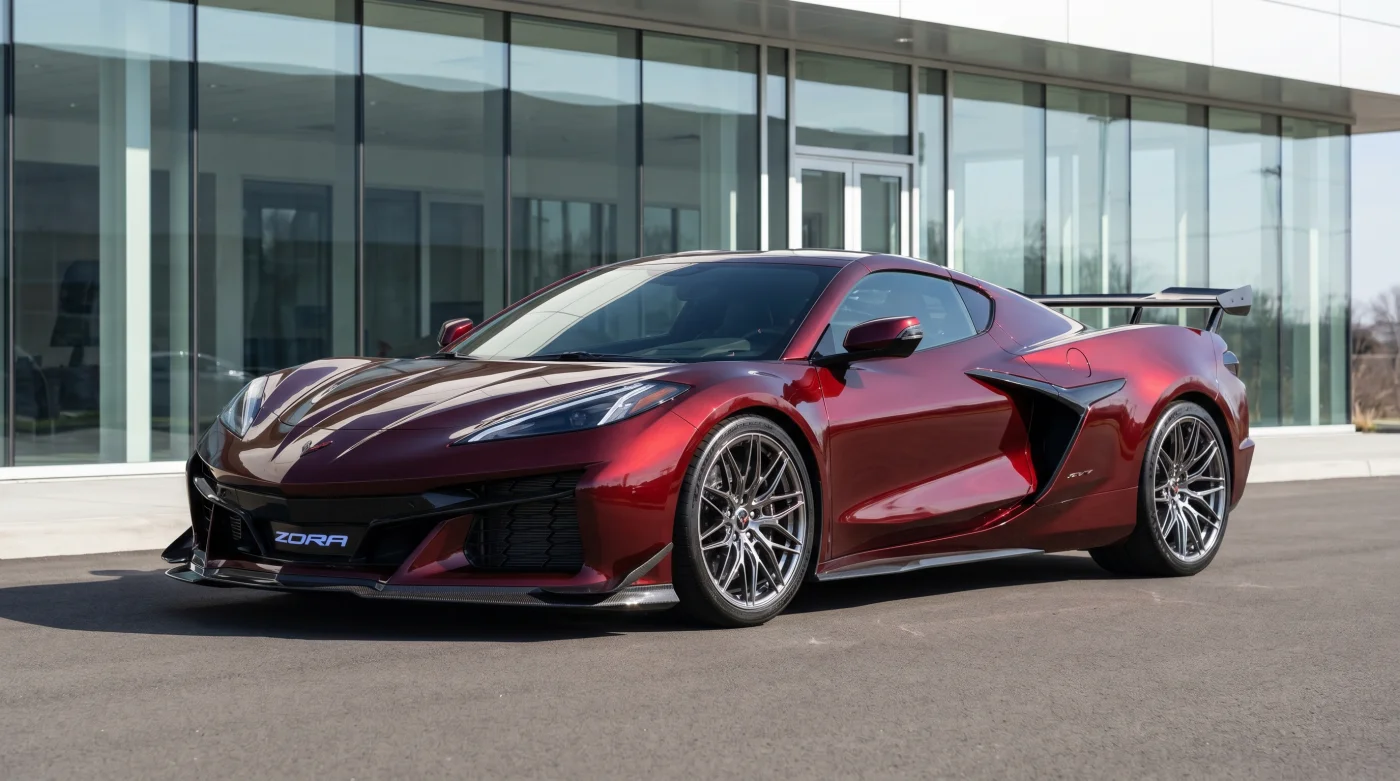
The Zora prototype shifts this paradigm by treating the front axle not as a steering assist, but as an active, predictive anchor. Think of it as a mountain climber who throws a physical grappling hook up the cliffside before their feet even leave the ledge. By using independent electric motors on each front wheel, the system pulls the nose of the car forward a fraction of a millisecond before the mid-mounted combustion engine can even spool its turbos and shock the rear tires.
This is not torque vectoring in the traditional, reactive sense; it is a proactive mechanical synchronization. The front motors calculate the exact grip threshold of the asphalt before the rear tires are subjected to the massive torque of the twin-turbo V8. Because the front wheels are pulling with absolute, slip-free precision, they pre-tension the entire chassis, stabilizing the car’s weight transfer and preventing the rear end from squatting excessively and breaking traction.
- Ford V8 AC Cobra Coupe archives expose a terrifying brake fade reality during historic races
- Newest electric cars abandon physical climate buttons creating a dangerous distraction at highway speeds
- Ford Bronco tire pressure settings require a massive deflation drop to survive washboard gravel roads
- Wisconsin Department of Transportation mileage filings legally slash high risk automotive insurance premiums
- Kawasaki hydrogen combustion motorcycle prototypes expose a massive thermal challenge masking zero emission viability
The Skunkworks Secret at Milford
This mechanical breakthrough was illuminated during a late-night chat with Marcus Vance, a 48-year-old chassis calibration engineer who spent his youth tuning dirt-track sprint cars before joining GM’s advanced development team. “Most people think launch control is about stopping tires from spinning once they lose grip,” Marcus whispered, wiping a thin layer of grease from a heavy-duty front drive axle. “But the real trick is preventing the micro-slip from ever starting. By using independent front electric motors to pre-load the front tires with millisecond-level torque adjustments, we create a physical latch. We are mechanically locking the car to the road before the combustion engine can even think about spinning the rears.”
Decoupling the Axles: Three Real-World Profiles
The beauty of this hybrid front axle lies in its adaptability. It does not treat every road surface or driver style the same way. By decoupling the front electric drive from the rear mechanical transaxle, Chevy has created three distinct operational profiles that alter how the car interacts with the ground beneath you.
The Clean-Surface Specialist
On a prepped drag strip or warm, dry asphalt, the system prioritizes pure forward acceleration. The front motors deploy a sudden, heavy burst of torque to pull the car out of the hole, allowing the rear tires to receive maximum power without the risk of breaking loose. Your launch feels like a sling rather than a violent push, keeping the chassis perfectly flat and maximizing every ounce of energy the powertrain produces.
The Low-Grip Guardian
When you encounter wet patches, damp leaves, or uneven rural pavement, the independent front motors act as real-time stabilizers. If one front wheel detects a slick spot, its individual motor backs off its torque in a microsecond while the opposite wheel pulls harder. This ensures that the car maintains its straight-line trajectory without requiring the steering wheel corrections or sudden throttle cuts that plague traditional all-wheel-drive setups.
The Corner-Exit Slingshot
This profile is designed for track enthusiasts who want to carry maximum speed through tight corners. As you roll onto the throttle mid-turn, the front motors pull the nose toward the apex, countering the natural push that occurs when a high-horsepower rear-wheel-drive car accelerates. It gives you the confidence to apply power much earlier in the corner, transforming what used to be a delicate balancing act into a predictable, high-speed exit.
Mastering the Hybrid Launch Sequence
Executing a flawless launch in this prototype requires you to unlearn your old habits. You no longer need to massage the throttle or wait for the tires to warm up to their optimal operating temperature. The system does the heavy lifting, but you must still prepare the car to receive the sudden onslaught of power.
First, ensure the front-axle battery pack is pre-conditioned to its optimal thermal window. Cold cells cannot discharge energy fast enough to create the instant latch effect, while overheated cells will limit peak output to protect the battery chemistry. Pre-condition the hybrid system before staging using the vehicle’s onboard menu.
- Select Track Mode and navigate to the Performance Traction Management settings.
- Set the system to PTM Sport or Race to allow the front motors to operate at maximum discharge.
- Align the front wheels perfectly straight; any steering angle will cause the system to limit torque to protect the front half-shafts.
- Firmly press the brake pedal with your left foot, then pin the throttle with your right foot.
- Release the brake cleanly; do not roll off it, but snap your foot off the pedal to trigger the instant electrical engagement.
The Tactical Launch Toolkit:
• Front Tire Pressure: 30 PSI (warm)
• Rear Tire Pressure: 28 PSI (warm)
• Hybrid Battery Target Temp: 95°F to 110°F
• Steering Angle: 0 degrees
The Quiet Evolution of Speed
We have long equated speed with noise, drama, and the chaotic theater of spinning rubber. A fast launch was supposed to look scary; it was supposed to require a master class in throttle modulation and a healthy dose of luck. But as the Zora prototype proves, true engineering elegance is silent, precise, and remarkably calm.
By using independent electric power to master the interface between rubber and road, we are not losing the soul of the sports car. Instead, we are removing the friction that stands between your hands on the wheel and the physical reality of the pavement. It is a quieter speed, perhaps, but one that connects you to the road with a level of clarity that mechanical gears alone could never hope to provide.
“The magic isn’t in how much power we can make, but in how quickly we can make the road accept it.” — Marcus Vance, Chassis Calibration Engineer
| Key Point | Detail | Added Value for the Reader |
|---|---|---|
| Instant Latch Mechanism | Front electric motors pull the nose forward before rear V8 torque hits the ground. | Eliminates wheel slip and tire degradation off the starting line. |
| Independent Torque Vectoring | Each front wheel receives real-time, microsecond-level power adjustments. | Provides unmatched stability on wet, uneven, or low-grip road surfaces. |
| Thermal Pre-Conditioning | Optimizes battery temperature between 95°F and 110°F prior to hard acceleration. | Ensures consistent, maximum power discharge without system throttling. |
Frequently Asked Questions
Will this hybrid system add too much weight to the front end of the Corvette?
While the front electric motors and battery pack do add weight, their placement low in the chassis improves the car’s overall center of gravity and front-to-rear weight balance, making the car feel more planted in corners.Can I launch the car if the hybrid battery is completely depleted?
Yes, but the launch will rely solely on the rear-wheel-drive combustion engine, resulting in traditional wheel slip and a significantly slower acceleration time off the line.Does the front-axle electric drive system operate at high speeds?
The front motors are geared specifically for low-to-mid-range acceleration and corner exit assistance, gradually tapering off as the car reaches triple-digit speeds to prevent motor over-speeding.Is this system similar to the e-AWD system found in the Corvette E-Ray?
It shares a similar architectural philosophy, but the Zora uses a highly upgraded, high-output calibration designed to handle the massive power of the twin-turbo V8 without blowing through its thermal limits.How does this mechanical setup prevent front-axle binding during tight turns?
Because the front wheels are driven by independent electric motors without a physical mechanical connection between them, the system can spin each wheel at different speeds during turns, eliminating binding entirely.