The smell of hot pine needles and damp road grime clings to the wheel wells of the silver wagon sitting on the dealer’s lot. You turn the key, and the boxer engine settles into its characteristic, offset thrum—a reassuring, domestic sound that makes you think of autumn trailheads and reliable school runs. To the untrained eye, the clean body panels and the spotless leather seats suggest this vehicle has lived a gentle life.
You pull out an ordinary diagnostic dongle, plug it into the port beneath the dash, and wait for the green light. The screen reports no active fault codes, confirming what the dashboard already tells you with its silent, dark warning lights. It is easy to mistake this digital silence for a clean bill of health.
But beneath the floorboards, suspended in a sealed aluminum casing, lies a highly complex mechanism that does not communicate its wear through standard dashboard warnings. The continuously variable transmission (CVT) is a masterpiece of friction and tension, relying on a metal chain riding on two smooth pulleys. If that fluid has lost its chemical integrity, you are not buying an adventure vehicle; you are signing up for an unexpected, multi-thousand-dollar mechanical replacement.
The Diary of Heat: Reading Between the Pulley Lines
To understand how a modern transmission ages, you have to stop thinking of fluid as a simple lubricant and start viewing it as a diary of thermal stress. Standard visual checks tell you very little because modern all-wheel-drive CVTs do not have a traditional dipstick waving under the hood. The fluid operates under immense pressure and localized heat, where tiny slips of the metal chain generate micro-flashes of temperature exceeding four hundred degrees Fahrenheit.
A standard OBD2 scanner looks only at the surface, checking if sensors are plugged in and operating within basic electrical tolerances. It misses the cumulative math occurring inside the Transmission Control Module (TCM), which silently logs every single second the fluid spends at extreme temperatures. This hidden counter is the only true measure of the transmission’s remaining lifespan, serving as a biological clock for your potential purchase.
- Toyota Land Cruiser availability exposes a massive gap between factory MSRP and dealership reality
- Ford Ranger PHEV towing capacity proves full electric trucks carry a catastrophic payload penalty
- Audi Nuvolari design DNA makes early A5 coupes the ultimate depreciated luxury bargain
- Ford V8 AC Cobra coupe replicas harbor a chassis code saving buyers thousands
- Newest electric cars suffer catastrophic depreciation when owners ignore battery coolant flush intervals
The Specialist’s Discovery
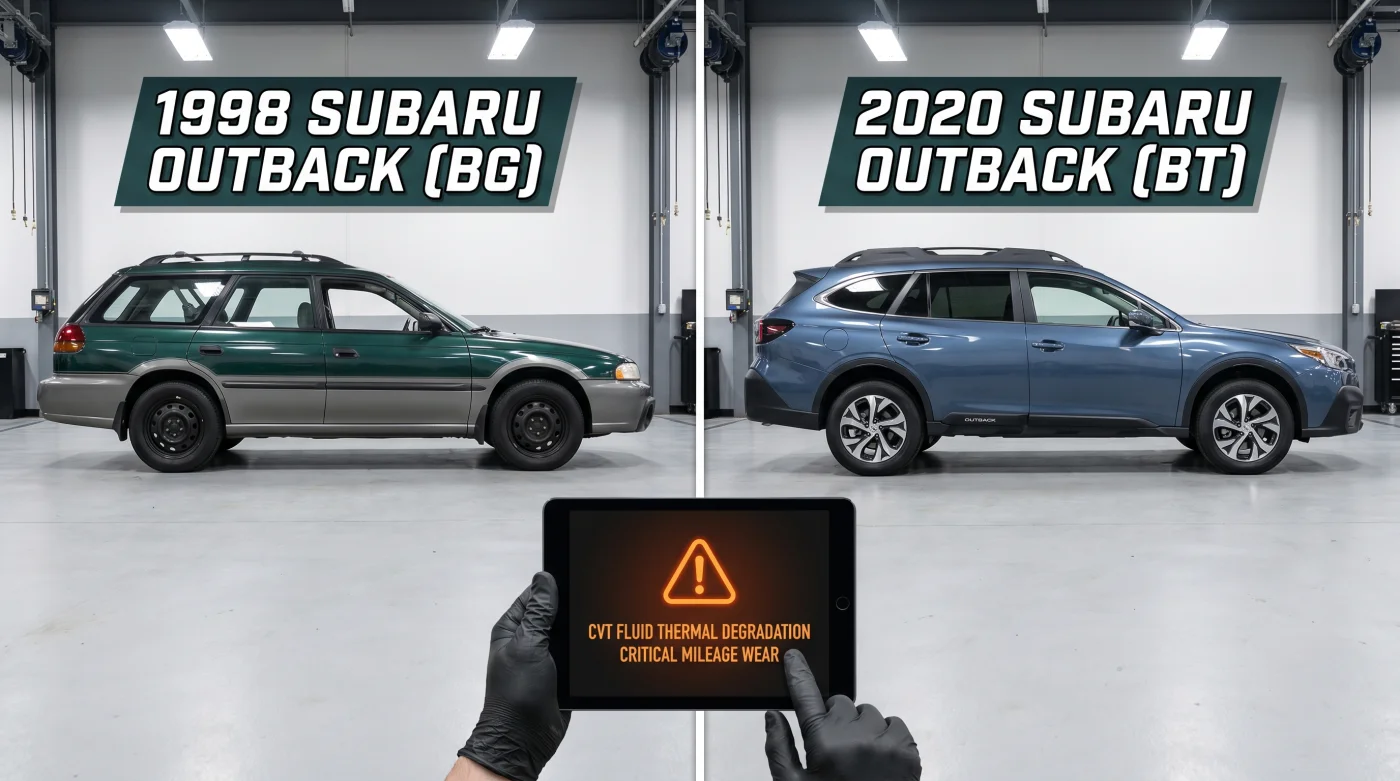
Marcus Vance, a forty-eight-year-old independent specialist in Denver who has spent three decades wrenching on all-wheel-drive platforms, knows this hidden math all too well. “I see three buyers a week who bought a beautiful, single-owner car with a flawless maintenance history,” Marcus says, wiping grease from a specialized diagnostic tablet. “The paint is perfect, but when we pull the internal TCM PID data, we find the thermal degradation counter is maxed out because the previous owner towed a small camper over the mountain passes without ever exchanging the fluid. That is a ticking clock that ends with a heavy flatbed tow.”
Tailoring the Diagnosis to the Driver’s Past
Not all used wagons have been driven the same way, and the risks change dramatically depending on how the previous owner spent their miles. By identifying the vehicle’s past life, you can target your inspection to the specific thermal thresholds that matter most.
The Mountain Adventurer
If the rear bumper sports a hitch receiver or the roof racks show signs of heavy use, the transmission has lived in a high-torque environment. Constant hill climbs and towing trap heat in the transmission cooler, rapidly accelerating the breakdown of the fluid’s shear stability. For these vehicles, a thermal test is not optional; it is the only way to verify if the fluid has been cooked during steep ascents.
The Suburban Grocery Getter
Short, stop-and-go trips prevent the transmission from reaching its optimal operating temperature quickly, but they also create a cycle of moisture condensation inside the casing. While these vehicles rarely experience the extreme thermal peaks of mountain driving, their fluid can still degrade through chemical dilution. Checking the fluid color becomes your primary weapon here, revealing if short trips have compromised the fluid’s protective properties.
Executing the Thermal Degradation Diagnostic
Evaluating this critical system requires a methodical, step-by-step approach that bypasses dealer hand-waving. You must demand or perform a specific reading of the TCM’s “CVT Oil Degradation Level” parameter, paired with a physical fluid sample if the mileage warrants it.
First, ensure the vehicle is warmed up to normal operating temperatures, then connect a professional-grade scan tool capable of reading manufacturer-specific Subaru PIDs. Locate the live data stream within the Transmission Control Module and look for the specific numerical values associated with thermal wear.
- The Numerical Threshold: The TCM uses an internal algorithm to calculate wear units. A lifetime score below 20,000 units indicates healthy fluid; anything approaching 50,000 units requires an immediate drain and fill; a score exceeding 80,000 units means the fluid has lost its viscosity and mechanical damage may already be occurring.
- The Physical Sample: Locate the fill plug on the side of the transmission case. A small drip of fluid captured on a clean white cloth reveals the truth: fresh fluid is a distinct, translucent green or light straw-gold.
- The Danger Signs: Amber fluid indicates moderate wear, typical of 60,000 miles of mixed driving. Fluid that has turned a dark brown or ink-black, accompanied by a sharp, burnt-sugar smell, is physically spent and indicates a high risk of imminent belt slippage.
Keep your diagnostic toolkit compact and precise. A quality mid-tier diagnostic scanner, a clean white microfiber cloth, and a basic temperature gun are all you need to protect yourself from an expensive oversight.
Preserving the Integrity of the Drive
Investing twenty minutes in checking these hidden parameters is about more than avoiding a high repair bill; it is about respecting the machine. When you buy a used wagon, you are buying the freedom to explore remote forest roads and snowy mountain passes without a second thought. Knowing the exact state of your transmission fluid gives you the confidence to push into those quiet spaces, secure in the knowledge that your vehicle’s mechanical heart is running cool and strong.
“Never assume clean body panels mean a healthy transmission; the metal belt inside doesn’t care about the wax job.” – Marcus Vance, Lead AWD Specialist
| Key Point | Detail | Added Value for the Reader |
|---|---|---|
| TCM Degradation Score | Scale from 0 to 100,000+ units | Tells you exactly how hard the transmission was driven by the previous owner. |
| Fluid Color Test | Green/Gold to Amber to Burnt Black | Confirms whether a visual check matches the electronic wear data. |
| The $8,000 Reality | Full transmission replacement cost | Saves you from inheriting a catastrophic mechanical debt upon purchase. |
Frequently Asked Questions
Can a regular OBD2 scanner read the thermal degradation level? No, standard scanners only read generic emission-related trouble codes. You need a tool capable of accessing manufacturer-specific Transmission Control Module (TCM) data streams.
How often should Subaru CVT fluid actually be changed? While manuals sometimes call it a lifetime fluid under normal conditions, severe service guidelines recommend inspections and changes every 24,000 to 36,000 miles to prevent thermal degradation.
What color should healthy Subaru CVT fluid be? Healthy fluid is a distinct translucent green or light straw-gold. If it is amber, it is showing age; if it is dark brown or black, it is severely degraded.
Does a high degradation counter mean the transmission is already broken? Not necessarily. It means the fluid has lost its protective viscosity and must be changed immediately to prevent permanent damage to the pulleys and chain.
Can I perform this diagnostic check at home? Yes, if you possess a mid-range diagnostic tablet that supports active Subaru PID monitoring and know how to safely access the transmission fill plug.