The fluorescent glare of the massive corporate showroom bounces off polished linoleum, smelling faintly of commercial floor wax and cheap hand sanitizer. You sit on a gray vinyl chair, clutching a cardboard cup of lukewarm coffee, watching a young associate tap away at a dual-monitor desktop. Out in the lot, your well-maintained crossover sits under the midday sun, its keys resting in a small plastic bin on the desk. You came here for the easy promise of a quick, nationwide appraisal, expecting the sheer volume of a corporate giant to translate into a fair baseline price.
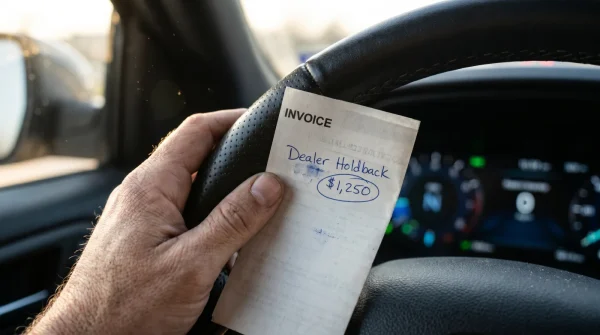
Instead, you are handed a single printed sheet of paper with a bolded number that feels like a cold splash of water. The associate shrugs, offering a practiced smile, muttering something about market adjustments and national algorithm parameters. The system has spoken, and its word is absolute. It feels clean, scientific, and deeply disappointing.
Yet, just three miles away, in a quiet office decorated with old racing posters and smelling of worn leather, an independent broker is looking at the exact same vehicle through a completely different lens. While the corporate terminal sees a generic serial number to be processed, the local broker sees a highly desirable regional configuration. The difference between these two perspectives is not just a few hundred dollars; it is a predictable, systematic gap created by the code itself.
The Flattening Filter of National Algorithms
When you submit your car to a national buying service, you are not selling to a human appraiser; you are submitting to a complex mathematical model that views the country as a single, uniform market. These algorithms are fed by a constant stream of national wholesale auction data, which flattens local realities. Imagine trying to judge the value of a snow shovel in Minnesota by averaging its utility with sales data from Miami. By mixing national inventory surpluses with localized demand, the code systematically devalues cars that carry specific, region-friendly options.
Independent brokers call this the “aggregate penalty.” Because a national fixed-price buyer must hedge against the risk of transporting vehicles across state lines, their software automatically defaults to the lowest common denominator. They price for safety, not for your car’s specific worth in your immediate neighborhood. This dynamic creates an artificial ceiling on your vehicle’s value that has nothing to do with how clean your engine bay is or how smoothly the transmission shifts.
Marcus Vance, a 47-year-old independent broker in Columbus, Ohio, watches this algorithmic mismatch play out every week. Recently, a client brought him a Volvo wagon with a rare factory cold-weather package, including a heated steering wheel and rear passenger climate control. CarMax’s national pricing algorithm had flagged the wagon as a slow mover based on high inventory levels in Florida and Texas, offering $4,200 below true market value. “The national algorithm couldn’t comprehend that a heated-steering-wheel wagon in Ohio sells within four days of hitting the lot,” Vance explains. He bought the car from the client for $3,000 more than the corporate offer and sold it to a local buyer before the weekend ended.
- Subaru Outback used inspections require a specific CVT fluid thermal degradation test buyers ignore
- Toyota Land Cruiser availability exposes a massive gap between factory MSRP and dealership reality
- Ford Ranger PHEV towing capacity proves full electric trucks carry a catastrophic payload penalty
- Audi Nuvolari design DNA makes early A5 coupes the ultimate depreciated luxury bargain
- Ford V8 AC Cobra coupe replicas harbor a chassis code saving buyers thousands
How the Algorithm Penalizes Your Specific Trim
To understand how to beat the system, you must first recognize where the code breaks down. National buyers rely on high-volume turnover, meaning their software is optimized for the most common, bare-bones variations of any given model.
The Regional Winter Trim Discount
If your vehicle features cold-weather packages, heated elements, or specialized all-wheel-drive systems, a national buyer’s algorithm often classifies these as non-essential add-ons. The system ignores geography, calculating the value based on a national average that includes southern states where these features are useless. A local broker knows that a heated windshield is worth gold in New England, and they price it accordingly.
The Enthusiast and Premium Package Blindspot
High-end audio upgrades, adaptive dampening suspensions, or specialized performance packages often get lumped into the baseline trim category by automated valuation tools. Because the algorithm cannot inspect the physical condition of premium leather or verify the crispness of a premium speaker system, it treats these costly factory options as zero-value additions. This allows local brokers to swoop in, offer a fair price for these premium features, and still make a healthy margin on the resale side.
The Independent Broker’s Tactical Advantage
An independent broker operates without the heavy overhead of multi-acre facilities and national television advertising campaigns. This lean operational structure allows them to work on tighter margins and pay closer attention to local market desires.
Brokers work on relationships, matching specific local buyers with the exact vehicles they want. They do not need to worry about the logistics of shipping a truck from Oregon to Georgia; they only care about the buyer three blocks away who has been waiting months for a clean, rust-free utility vehicle. This hyper-local focus transforms your car from a mere unit of inventory into a highly sought-after local asset.
Your Strategy for Maximizing Your Payout
Bypassing the corporate lowball mechanic requires a methodical, human-centered approach. You do not have to accept the cold verdict of a corporate database.
- Secure your baseline printed offer: Always get the corporate appraisal first. It acts as your absolute safety net and gives you a concrete number to share with independent buyers.
- Locate regional specialists: Find independent brokers who specialize in your specific vehicle category, such as import wagons, diesel trucks, or all-wheel-drive crossovers.
- Highlight the dealer-installed options: Compile your original window sticker and any maintenance records showing recent upgrades that an algorithm would naturally overlook.
Tactical Toolkit:
• Target Timing: Schedule your broker visits mid-week when they have more time to review regional auction trends.
• Paper Trail: Keep your physical window sticker handy to prove the existence of rare, factory-installed trim packages.
• Local Comps: Print out three local dealer listings for similar cars to show the broker what your vehicle actually sells for in your ZIP code.
Restoring Balance to the Appraisal Process
At its core, selling a car is more than a simple digital transaction. When you rely solely on a national fixed-price algorithm, you surrender the unique story of your vehicle—how it was maintained, the specific options chosen for your climate, and its readiness for the local roads.
Human intuition still wins when it comes to assessing genuine value. By shifting your perspective away from the convenience of corporate drop-off lanes and toward local brokers, you reclaim the equity you worked hard to build. You turn a cold, computerized transaction into a fair exchange of real-world utility.
“An algorithm knows the cost of everything and the value of nothing when it comes to regional car markets.” — Marcus Vance, Independent Auto Broker
| Evaluation Metric | Corporate Buying Algorithm | Independent Auto Broker |
|---|---|---|
| Data Source | Aggregated national wholesale auctions | Localized retail demand and private networks |
| Trim Valuation | Standardizes and discounts unique regional packages | Premium paid for high-demand local features |
| Appraisal Speed | Instant but rigid and unnegotiable | Personal, detailed, and open to physical proof |
Frequently Asked Questions
Why do national buyers offer less for premium packages? National algorithms simplify pricing by grouping rare options into broad baseline categories to minimize their financial risk.
Can I use a corporate appraisal to negotiate with an independent broker? Yes, a written corporate offer serves as an excellent floor price that brokers will gladly beat for the right vehicle.
Do independent brokers charge fees to buy my car? No, professional brokers earn their margin on the resale side and do not charge sellers a fee to purchase their vehicles.
Which vehicles suffer the most from algorithmic pricing? All-wheel-drive models, diesels, and vehicles with cold-weather or off-road packages face the heaviest algorithmic penalties in warm climates.
How do I find a reputable independent broker? Look for local, licensed auto brokers with high ratings who specialize in your vehicle’s specific brand or utility category.