The damp chill of an autumn morning always reveals the secrets of a cold engine. You twist the key, and instead of the crisp, immediate hum of modern American engineering, your EcoBoost starts with a subtle, uneven stumble. A faint puff of gray-blue smoke drifts past your side mirror, smelling vaguely of burnt petroleum and spent fuel. You might brush it off as a cold-weather quirk, but deep inside the intake tract, a silent buildup is already choking your engine.
For years, we have been told that routine oil changes and top-tier gasoline are enough to keep our vehicles running past the hundred-thousand-mile mark. You buy the expensive synthetic oils, you change your filters on schedule, and you trust the factory engineering. Yet, beneath the plastic engine cover, a slow, dark crust is baking onto your intake valves, entirely untouched by the fuel spray that is supposed to keep them clean.
This is the hidden tax of modern direct-injection engines. While port-injection engines wash their valves with a constant spray of detergent-rich gasoline, direct-injection systems shoot fuel straight into the combustion chamber. This leaves the intake valves dry, exposed, and vulnerable to the hot oil mist and crankcase vapors routed back through the Positive Crankcase Ventilation (PCV) system. Over time, this mist bakes into a hard, carbonized coal that ruins airflow, disrupts combustion, and eventually causes the catastrophic valve failure that sidelines so many turbocharged Fords.
The Direct Injection Paradox and the Carbon Sponge
To understand why this happens, we have to look at how these engines breathe. Think of your intake valves as the lungs of the vehicle; they need to seal perfectly against the cylinder head to hold compression. When blow-by vapors—consisting of unburned fuel, water, and oil mist—are fed back into the intake manifold, they hit the sizzling-hot back of the intake valves. Without gasoline to wash them clean, these vapors instantly bake, forming a layer of sticky carbon that acts like a heat-retaining sponge.
As this layer thickens, it disrupts the carefully calculated vortex of air entering the cylinder. Your engine starts to idle rough, lose fuel economy, and suffer from low-speed pre-ignition (LSPI), a violent phenomenon that can snap a piston ring land in a millisecond. Standard fuel additives do absolutely nothing to prevent this because they never touch the backside of the valve. The only way to stop the cycle is to intercept those sticky vapors before they ever reach the intake tract.
A Mechanic’s Discovery in Cincinnati
Dave Miller, a forty-six-year-old fleet mechanic from Cincinnati, Ohio, spent years servicing municipal utility trucks equipped with the 2.7L and 3.5L EcoBoost engines. He noticed that despite strict adherence to fleet maintenance programs, these engines started showing signs of power loss and rough idling around the eighty-thousand-mile mark. When he used a borescope to look down the intake ports, he found valves that looked like they had been dipped in hot tar.
- Ceramic coatings applied over uncorrected clear coats permanently destroy modern luxury car resale values
- Honda CR-V maintenance schedules omit a critical differential fluid interval essential for 200k miles
- CarMax appraisal algorithms expose a structural lowball mechanic independent auto brokers easily exploit
- Subaru Outback used inspections require a specific CVT fluid thermal degradation test buyers ignore
- Toyota Land Cruiser availability exposes a massive gap between factory MSRP and dealership reality
This wasn’t a maintenance failure; it was a fundamental design characteristic. Dave realized that standard single-valve oil separators were useless on turbocharged engines because the intake manifold pressure constantly shifts from vacuum to boost. He began retrofitting the fleet with dual-valve catch cans that utilized two separate vacuum sources to keep the crankcase scavenging under all driving conditions. The results were immediate: the carbon buildup stopped, valve temperatures stabilized, and the municipal fleet avoided millions of dollars in premature cylinder head replacements.
Tailoring the Fix to Your Driving Profile
Not all EcoBoost drivers face the same severity of carbon accumulation. Depending on how you use your vehicle, the oil mist behave differently, requiring specific attention to how you manage your crankcase ventilation.
The Short-Trip Commuter (1.5L and 2.0L Engines)
If you primarily use your vehicle for quick trips to the grocery store or a short daily commute, your engine rarely reaches its full operating temperature. This prevents water and raw fuel from evaporating out of the engine oil, creating a highly corrosive blow-by mixture. For these drivers, a compact dual-valve catch can with an integrated internal baffle is critical to catch the heavy condensation before it settles on the cold intake valves.
The Heavy Hauler and Tow Enthusiast (2.7L and 3.5L V6 Engines)
Under heavy loads or during highway towing, your turbochargers are working hard, creating high levels of boost pressure. This boost pressure can easily pressurize the crankcase if the factory check valves fail, forcing massive amounts of oil mist past the PCV valve and directly into the turbo inlet. A dual-valve system is mandatory here, using one line connected to the intake manifold vacuum and another connected to the turbocharger inlet to ensure continuous filtration even under full boost.
Installing the Dual-Valve Shield
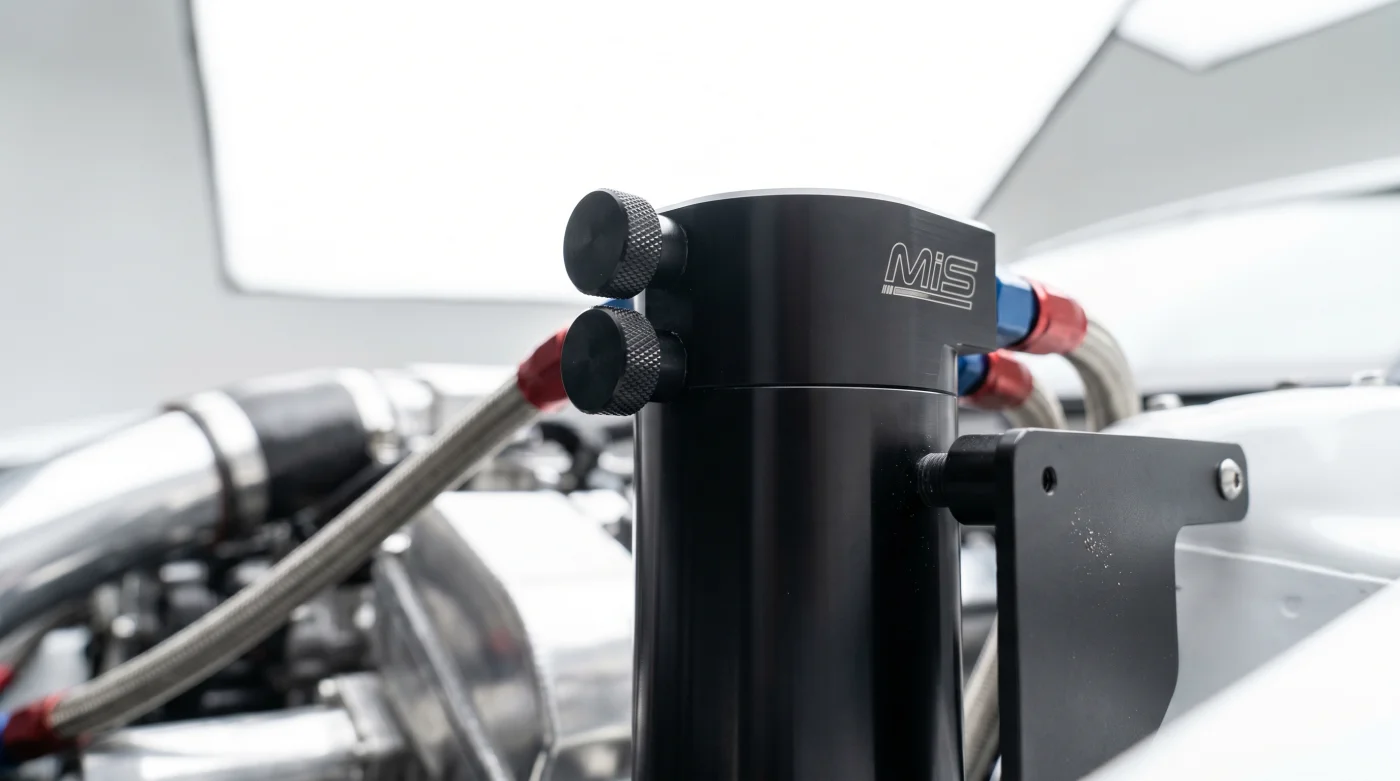
Installing a high-quality catch can is a straightforward process that requires only basic hand tools and a couple of hours in the driveway. The key is using a dual-valve system with high-quality check valves that prevent boost pressure from back-flowing into the crankcase.
- Identify the factory PCV line running from the passenger-side valve cover to the intake manifold.
- Mount the catch can reservoir securely to an existing bolt hole in the engine bay, preferably away from direct engine heat to encourage the oil vapors to condense.
- Route the dirty line from the PCV valve to the center inlet of the catch can.
- Run the primary clean line from the can’s outlet, through a one-way check valve, to the intake manifold port.
- Route the secondary clean line from the second outlet, through another check valve, to the turbocharger inlet tube to maintain suction under boost.
- Secure all connections with fuel-grade hose clamps to prevent vacuum leaks that could trigger a check engine light.
Your tactical toolkit for this job should include a set of metric sockets, a pair of hose-clamp pliers, and high-temp braided fuel lines. Do not use cheap vinyl tubing; it will collapse under engine vacuum and heat, causing immediate oil leaks and severe crankcase pressurization issues. Empty the reservoir every three thousand miles, or with every oil change, to ensure the accumulated oil and fuel mixture never overflows back into the engine.
Preserving Your Machine’s Legacy
Taking the time to install a dual-valve catch can is more than just a weekend project; it is an act of preservation. By keeping the intake tract free from sticky petroleum residue, you maintain the crisp throttle response and fuel economy that drew you to the EcoBoost platform in the first place. You gain the quiet confidence that comes from knowing your engine is breathing clean, unpolluted air.
In a world of complex electronics and disposable engineering, taking control of a physical, mechanical reality is deeply satisfying. It bridges the gap between simply operating a machine and truly understanding how to make it last. When you prevent that carbon crust from ever forming, you save yourself from a costly cylinder head teardown and ensure your truck is ready for the long road ahead.
“An engine is only as healthy as the air it breathes, and direct injection demands that we actively scrub that air clean before it bakes the heart of our machine.”
| Key Point | Detail | Added Value for the Reader |
|---|---|---|
| Dual-Valve Design | Utilizes two vacuum sources to scavenge crankcase vapors under both vacuum and boost. | Ensures continuous protection regardless of how hard the engine is working. |
| Baffled Filtration | Internal chambers condense oil mist into liquid before it can exit the can. | Maximizes the separation efficiency, keeping the cleanest air possible in the intake. |
| Easy Maintenance | Features a simple drain valve or unscrewing reservoir body. | Allows for quick servicing during routine oil changes without tools. |
Frequently Asked Questions
Will a catch can void my Ford factory warranty?
Generally, no. Under the Magnuson-Moss Warranty Act, a manufacturer cannot void your warranty for an aftermarket part unless they can prove the part directly caused the failure. However, it is always wise to choose a high-quality, plug-and-play kit that requires no permanent modifications.How often do I need to empty the catch can?
You should check and empty the reservoir every 3,000 miles. During cold winter months, condensation increases dramatically, and you may need to empty it every 1,000 to 1,500 miles to prevent freeze-ups.Can I just use a cheap single-valve catch can from eBay?
No. Single-valve cans only function under intake manifold vacuum (idle and light cruising). On a turbocharged engine, they stop working under boost, allowing oil mist to bypass the system and enter the turbos.What does the collected fluid look like?
It is a murky, foul-smelling mixture of brown engine oil, raw gasoline, and water condensation. It looks like dirty chocolate milk and is highly acidic.Does my EcoBoost engine have a port injection system to help with this?
Only newer EcoBoost engines (like the second-generation 2.7L and 3.5L V6s introduced around 2017) feature dual port and direct injection. If you have an older first-gen engine or a 4-cylinder EcoBoost, it relies solely on direct injection and desperately needs a catch can.