Dust hangs heavy in the dry Utah air, smelling of scorched wild sage and hot gear oil. Your hands grip the leather steering wheel, waiting for the front tires to bite. You can hear the low, metallic whine of the power steering pump straining as the front wheels wedge between two slabs of red sandstone.
The dashboard screen glowingly displays your pitch, roll, and camera views, promising seamless off-road dominance. On paper, this high-tech platform feels invincible. But out here, where rubber meets rock, the glossy marketing brochures fade away under the weight of hard physics.
There is a subtle difference between high-speed desert running and slow-speed, high-torque obstacle crawling. While modern independent front suspension excels at smoothing out washboards at fifty miles per hour, it hides a delicate skeleton. When the trail gets steep, the true weak link reveals itself not in the computer software, but in the thin steel rods guiding your front wheels.
The Geometric Trap of Independent Front Suspension
The marketing machine loves to highlight the benefits of independent front suspension. It provides a plush ride on the highway and incredible stability when flying across open desert basins. But when you nose your rig into a steep rock garden, this design introduces a mechanical vulnerability that solid-axle purists have warned about for years.
Think of your steering linkage like a folding card table leg. A solid axle keeps the steering tie rods perfectly parallel to the axle housing, regardless of how much the suspension flexes. An IFS system, however, forces the steering rack to remain fixed to the frame while the wheels move up and down on control arms. This forces a sharp angle between the steering rack and the wheel hub during extreme articulation.
When you are hung up on an obstacle, the front suspension droops. This droop creates an aggressive upward angle on the factory tie rod. If you apply heavy throttle while the wheels are turned, the tire tries to push back against the steering linkage. Instead of pushing straight down the length of the metal rod, the force hits it at an angle, turning a simple push into a devastating lateral bend.
- Subaru Forester moonroof recall exposes a massive track degradation flaw after forty thousand miles
- 2026 Honda Prelude hybrid prototype exposes a drastic steering rack geometry shift
- 2025 Ram 1500 chassis refresh entirely eliminates the traditional Hemi engine mounts
- Ford Explorer timing chain mechanics expose a hidden water pump weep hole
- Rivian R1S automatic car washes silently destroy exterior ultrasonic parking sensor calibration
Marcus Vance, a 44-year-old off-road recovery specialist based out of Hurricane, Utah, has seen this play out dozens of times. He recalls a bright Saturday last October when he had to rescue three brand-new rigs from the same ledge on the Pritchett Canyon trail. Marcus points out that when drivers apply throttle with the wheels fully turned and the suspension fully extended, they inadvertently create a mechanical nutcracker. The factory steering rack is powerful, but those tiny inner tie rods are built like drinking straws when subjected to sideload.
Tailoring Your Trail Strategy: Three Driver Profiles
The Fire-Road Explorer
If you primarily stick to graded dirt roads, light mountain passes, and weekend camping spots, your steering linkage is safe. The factory geometry only reaches its dangerous limits during severe, uneven articulation where one wheel is hanging completely free. Keeping your stock tires means the leverage exerted by the rubber is well within the safety margins engineered by the factory.
The Overland Builder
For those who carry heavy roof tents, steel bumpers, and have graduated to thirty-five-inch mud tires, the risk profile changes. The added weight compresses the suspension, altering the baseline steering angles. When climbing rocky ledges, the larger tires grab the terrain with more traction, sending higher feedback forces directly into the steering rack.
The Rock Crawler
If you actively seek out challenging trails, run thirty-seven-inch tires, and lock your front differential, you are playing with fire. The combination of a locked front end and oversized rubber creates a massive amount of rotational resistance. When a tire gets wedged, always straighten your wheels before applying any throttle, or you will quickly find the limit of the factory metal.
Strengthening the Link: The Tactical Trail Plan
Navigating this mechanical limit does not mean you have to stay on the pavement. By adapting your driving style and adding a few simple physical reinforcements, you can protect your vehicle from a costly trailside failure.
Protecting your steering linkage requires a mix of driving mindfulness and hardware upgrades:
- Avoid High-Throttle Turning: Never hammer the gas pedal when your steering wheel is turned to lock and the front suspension is fully unloaded.
- Install Tie Rod Sleeves: These simple metal collars slide over the thin middle section of the factory rod, preventing it from bowing under load.
- Carry Trail Spares: Keep a replacement inner and outer tie rod in your cargo area, along with the specific tools needed to swap them on the dirt.
Tactical Toolkit:
- Sleeve Torque: 45 lb-ft
- Inner Tie Rod Tool Size: 36mm
- Trail Spare: 1x OEM Tie Rod Assembly
The Lesson of the Broken Rod
Modern off-road vehicles are marvels of convenience, wrapping us in air-conditioned comfort while terrain management systems handle the traction calculations. But these digital safety nets can create a false sense of security. They shield us from the physical reality of the metal components working beneath our feet, making us forget that every machine has a breaking point.
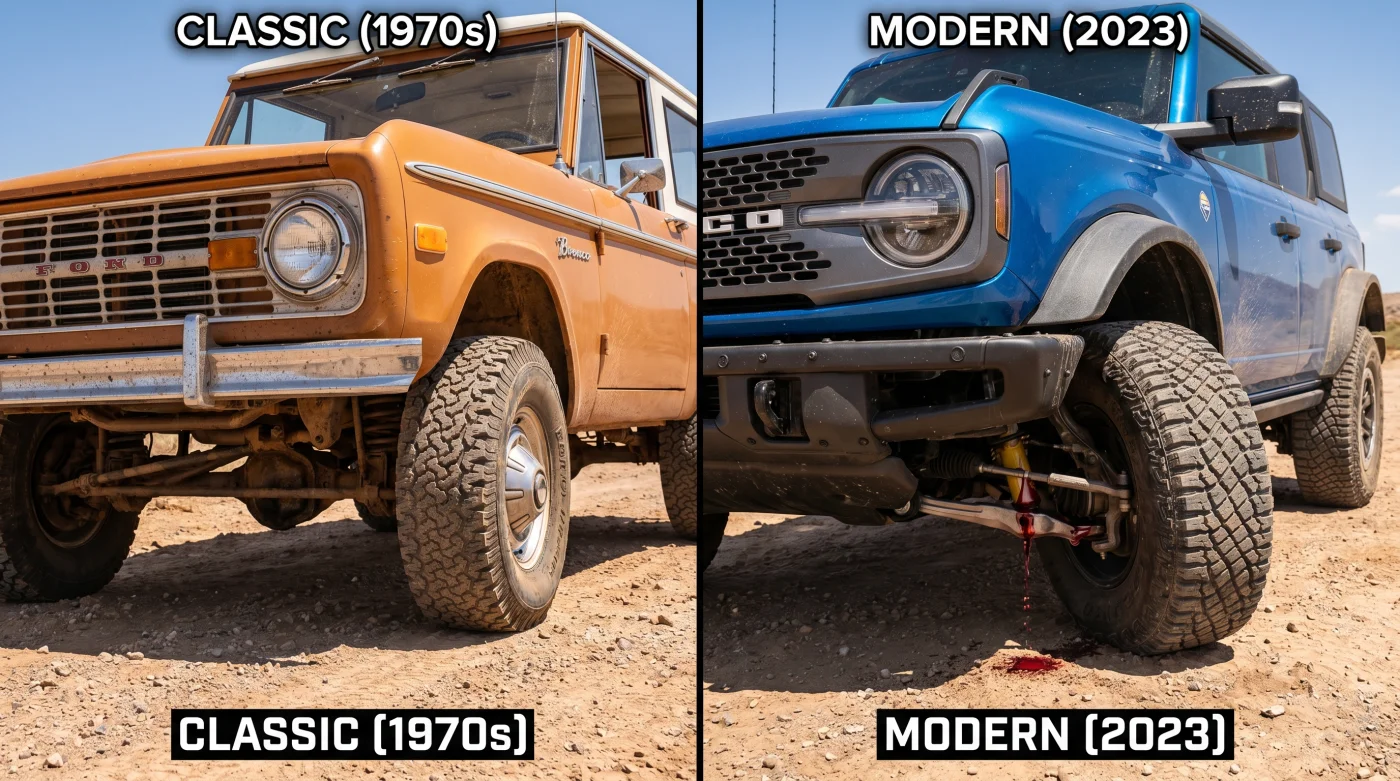
Real capability is not bought in a showroom; it is learned through a quiet understanding of your vehicle’s physical limits. When you respect the geometry of your suspension, you avoid the sudden metallic pop that echoes off canyon walls. Otherwise, your day ends with the sight of a twisted steel tie rod end dripping red steering fluid onto the hot, dry dirt.
“If you try to brute-force an independent front end over a vertical wall, physics will always collect its tax at the thinnest piece of metal.” — Marcus Vance
| Key Point | Detail | Added Value for the Reader |
|---|---|---|
| Solid Axle Geometry | Keeps tie rods parallel to the axle housing at all times. | Zero angle change during suspension travel prevents bending forces. |
| IFS Geometry | Tie rods sweep up and down, creating extreme angles during flex. | Explains why high-clearance situations actually weaken your steering linkage. |
| The Tie Rod Sleeve | A threaded metal collar that slides over the weak factory rod. | Cheap insurance that prevents the rod from buckling under sudden loads. |
Frequently Asked Questions
Why do modern factory tie rods bend so easily? They are designed to act as a mechanical fuse, breaking before the expensive steering rack itself is destroyed.
Does a suspension lift make the steering vulnerability worse? Yes, lifting your vehicle increases the resting angle of the tie rods, bringing them closer to their breaking point.
What are the warning signs of a failing tie rod? A loose steering feel, squeaking when turning, or an off-center steering wheel after a hard obstacle.
Are aftermarket sleeves a permanent fix for rock crawling? Sleeves help prevent bending, but they transfer the stress to the steering rack housing, which may fail next under extreme abuse.
Can I replace a broken tie rod on the trail myself? Yes, with a basic 36mm inner tie rod tool, a couple of wrenches, and a spare part, it is a simple trailside repair.