The sharp, sterile scent of rubbing alcohol mixed with cold steel greets you every time you walk into a service bay. Under the fluorescent glare, a 2019 Ford F-150 sits with its hood propped open, its engine silent but its electronic brains wide awake. A technician plugs a handheld diagnostic tablet into the OBD-II port under the steering column, his fingers tapping the screen with a practiced, rhythmic cadence. You might think a vehicle’s trade-in value is determined by the shine of its paint or the tread on its tires, but the real story is written in the invisible digital ledger of its computer modules.
A low hum vibrates through the shop as the scanner initiates a system-wide sweep. Most car owners believe that safety recalls are simply free fixes—minor inconveniences resolved by a quick trip to the dealership. But when it comes to the highly publicized 2018-2022 Ford safety recall targeting brake master cylinders, a much darker financial reality is quietly playing out behind the scenes of local trade-in appraisals.
Dealers are no longer just looking at the Carfax or kick-testing the rubber. They are searching for the silent, permanent footprints left behind by owner neglect. As the scanner finishes its sweep, a specific fault code lights up in amber: a permanent diagnostic trouble code stored deep within the anti-lock braking system module, a digital scarlet letter that instantly slashes thousands of dollars off your vehicle’s trade appraisal.
The Hidden Digital Scar of Brake Fluid Neglect
To understand how a simple maintenance delay turns into a financial ambush, you must view your brake system not as a simple hydraulic lever, but as a high-precision digital gatekeeper. Think of your ABS valve block as a microscopic pipe organ, where tiny electronic solenoids constantly open and close to control fluid pressure at millisecond intervals. When you neglect regular master cylinder flushes, the glycol-based fluid behaves like a sponge, pulling moisture directly out of the humid American air.
Over time, this moisture-heavy fluid ceases to be a protective lubricant. Instead, it transforms into an acidic brine that actively eats away at the delicate internal metal valves of your ABS modulator. When the vehicle is subjected to the high-pressure demands of a recall event or a hard stop, these corroded valves stick. The vehicle’s central computer notes this hesitation instantly, logging a permanent shadow code that cannot be cleared by simply resetting the battery. You are left with a system that works, but a digital history that screams neglect to any appraiser with a scanner.
Marcus Vance, a forty-eight-year-old lead vehicle appraiser at a high-volume dealership group in Columbus, Ohio, sees this financial self-sabotage daily. “People bring in beautiful late-model Explorers and F-150s, expecting top-dollar trade offers because they got their recall work done,” Marcus explains while adjusting his digital caliper. “But when our diagnostic sweep pulls up stored ABS valve performance codes caused by running old, contaminated fluid through the new master cylinder, we immediately knock $1,500 to $2,500 off our offer, because we know that ABS module is a ticking time bomb that we have to replace before wholesaling the unit.”
- Tesla Model Y high mileage suspension requires immediate upper control arm lubrication
- Motor1 pricing algorithms expose aggressive margin padding inside popular digital car brokers
- Subaru Forester moonroof recall inspections require checking the specific interior headliner water stains
- Corvette Stingray allocation tracking exposes predatory artificial dealership inventory holding tactics
- EV charging station voltage drops expose severe winter battery heating limitations
Tailoring Your Defensive Maintenance Strategy
Not every driving profile degrades brake chemistry at the same rate. Understanding your specific vehicle usage determines how aggressively you must monitor your fluid’s health before it compromises your trade-in equity.
The Heavy Hauler and Suburban Commuter
For those who use their Ford trucks to pull trailers through hilly terrain or navigate stop-and-go school drop-off lines, your brake system operates at much higher baseline temperatures. This extreme heat cycling speeds up the breakdown of corrosion inhibitors within the fluid. Moisture levels rise rapidly here, making a biannual flush non-negotiable if you want to protect your components.
The Low-Mileage Garage Queen
If your vehicle spends most of its time sitting in a climate-controlled garage, you are not immune to this degradation. Stationary vehicles actually suffer more from moisture pooling at the lowest points of the hydraulic system. Because the fluid isn’t regularly circulated, the water settles inside the heavy steel ABS pump assembly, accelerating localized corrosion right at the valve seats.
The Precision Flush: Restoring Hydraulic Integrity
Preventing this silent depreciation requires a methodical, clean approach to fluid maintenance that goes far beyond simply topping off the reservoir. You must treat brake fluid as a highly sensitive chemical compound that demands absolute isolation from the atmosphere.
Follow these specific physical steps to ensure your system remains uncontaminated and free of the shadow codes that ruin your vehicle’s trade value:
- Purchase a high-quality optical refractometer or a dedicated electronic moisture pen to test the boiling point and water content of your fluid.
- Never open the reservoir cap on a humid day; ensure your workspace is dry and free of airborne dust or metal shavings.
- Use only fresh, sealed containers of Ford-approved DOT 4 low-viscosity fluid, discarding any opened bottles older than two weeks.
- Employ a vacuum bleed system starting at the passenger-rear wheel, moving progressively closer to the master cylinder to pull all old fluid through without introducing air.
Your tactical toolkit for this job should include a digital moisture tester (aiming for less than 1.5% water content), a clean syringe for reservoir evacuation, and exactly two quarts of fresh, OEM-spec fluid. If you see more than 3% moisture, your fluid is already actively attacking the internal electronics of your braking system.
Preserving Wealth Through Mechanical Integrity
In an era where vehicle prices have reached historic highs, maintaining your car is no longer just about safety—it is an active exercise in wealth preservation. When you look at your dashboard, you shouldn’t just see a transportation tool; you should see a highly complex financial asset whose value is constantly being evaluated by algorithms and digital scanners. Taking twenty minutes to address what lies beneath the hood ensures that when it comes time to trade up, your equity remains entirely yours.
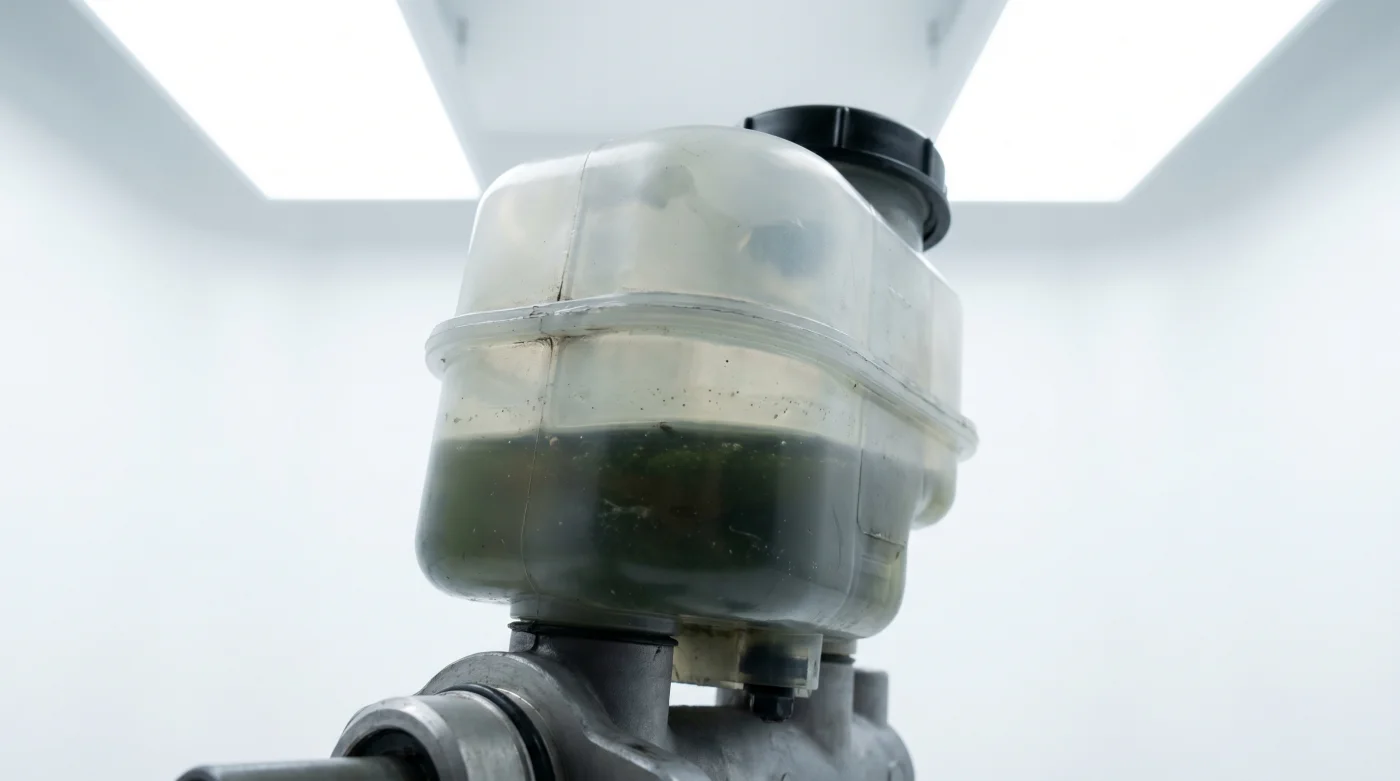
Next time you open the hood, take a moment to look closely at the translucent plastic master cylinder reservoir mounted against the firewall. If instead of a clear, pale yellow liquid, you spy a cloudy, dark green fluid sitting stagnant inside the chamber, you are looking at the exact chemical soup that is currently eating away at your trade-in valuation.
“The cheapest maintenance item on your invoice is often the only thing standing between you and a multi-thousand-dollar appraisal penalty at the trade-in desk.” — Marcus Vance, Lead Appraiser
| Key Point | Detail | Added Value for the Reader |
|---|---|---|
| ABS Corrosion Risk | Moisture in old fluid creates acidic deposits inside ABS valves. | Saves you from a hidden $2,000 module replacement fee during trade-ins. |
| Shadow Codes | Dealers pull permanent diagnostic codes that normal OBD-II scanners miss. | Warns you why a simple dashboard light reset won’t fool an appraiser. |
| Recall Connection | The 2018-2022 recall replaces physical cylinders but doesn’t fix contaminated lines. | Highlights why owner responsibility for fluid flushes remains paramount. |
Does a recall repair automatically clear my braking system’s history?
No, the physical recall swap only addresses the hardware component; any software shadow codes logged by corrosion from your old fluid remain in the ABS module history.
How often should I flush my master cylinder to protect my vehicle’s trade-in value?
You should completely flush your brake fluid every two years or 20,000 miles, regardless of how often the vehicle is driven.
Will an appraiser really scan my car for hidden codes if there are no lights on the dash?
Yes, modern dealership appraisal processes mandate a deep OBD-II sweep that detects inactive, historical, and system-specific shadow codes.
What color should my brake fluid be if it is still healthy?
Healthy fluid should be clear with a light amber or pale yellow hue; any green, dark brown, or cloudy appearance indicates urgent contamination.
Can I clear permanent ABS codes myself with a basic retail scanner?
No, permanent shadow codes require specialized bidirectional diagnostic tools and several completed self-test drive cycles to clear once the underlying issue is fixed.