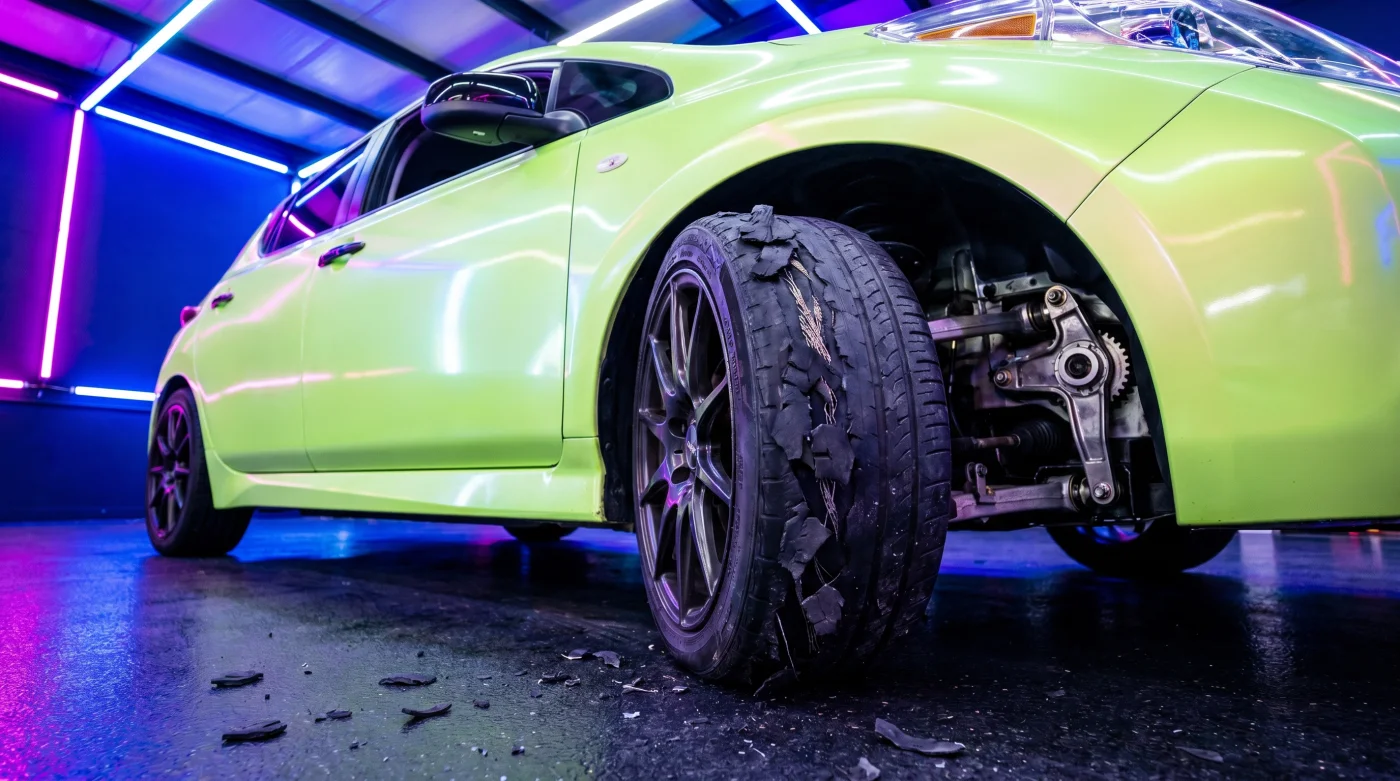
The high-pitched whine of electric actuators cuts through the quiet morning air of the closed testing facility. A modified SUV stands poised on the clean, dark asphalt. With a subtle hiss, all four wheels rotate a full ninety degrees, aligning perfectly parallel to the bumper. On social media feeds, this moment is always accompanied by an upbeat synth track, presenting a flawless vision of future urban mobility where parallel parking is solved forever.
But when the driver presses the accelerator, the digital magic evaporates. Instead of a silent, graceful glide, a harsh, shuddering vibration rattles the cabin. The sound that follows is not a quiet hum, but the **screeching protest of vulcanized rubber** being dragged sideways against coarse stone. A pungent cloud of blue-grey smoke rises from the wheel arches, carrying the unmistakable scent of scorched polymers.
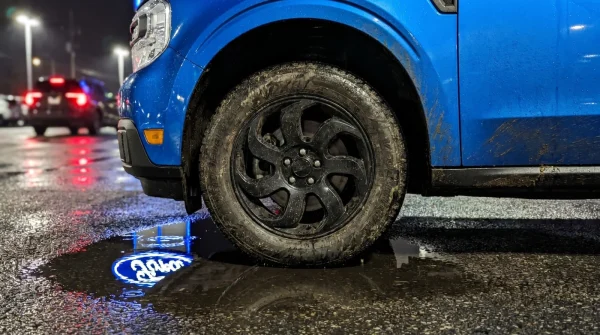
Watch the vehicle closely from ground level, and you will see the physical reality that a camera lens often misses. Rather than rolling smoothly, the unique ninety-degree steering angle forces the tire to slide directly perpendicular to its designed rotation path. The tread blocks do not roll; they scrape, groan, and buckle under the immense lateral load.
The Eraser Metaphor and the Myth of Frictionless Travel
To understand why this happens, imagine taking a soft pink school eraser and pressing it flat against a rough sheet of sandpaper. If you push it forward along its length, it glides with minimal wear. But if you turn it ninety degrees and drag it sideways with heavy force, the edge catches. The rubber folds under itself, bunching up until the friction forces pieces of the material to tear away in jagged chunks. This is the **lie of pure geometry** that radical steering concepts ignore.
Modern passenger tires are masterpiece designs of directional physics. Every steel belt, nylon overlay, and siped tread block is engineered to manage forces that travel primarily along the longitudinal axis, with minor diagonal slip during cornering. When the e-Corner module eliminates the rolling element entirely during crab-walking, it subjects the tire to pure, unadulterated lateral shear. The tire ceases to function as a wheel and becomes a heavy brake pad dragged across a grinding wheel.
A Warning from the Compound Lab
Marcus Vance, a forty-two-year-old tire compound developer with over fifteen years of testing experience, holds a scarred performance tire in his gloved hands. He points to the shoulder, where the once-crisp tread patterns now look like melted wax. “We spend decades balancing wet grip, rolling resistance, and longevity,” Marcus explains while examining the damage. “But when you force a heavy consumer electric vehicle to slide sideways on dry asphalt, you are essentially **feeding it into a grater**. The rubber compounds are simply not chemically formulated to withstand that continuous level of raw sliding friction without instantly degrading.”
- Dodge Charger Daytona 2027 pricing masks a mandatory artificial exhaust hardware subscription
- Solid-state EV batteries require constant active mechanical compression to prevent internal cracking
- Ford BlueCruise infrared sensors miscalculate following distances when tracking dirty semi trucks
- Chevy Blazer EV title weights trigger commercial vehicle registration tax penalties locally
- Hyundai Ioniq 6 base models share exact acoustic glass with premium German electrics
How Different Tread Families Face the Shear Zone
The Standard All-Season Tread
Built for quiet highway cruising and water evacuation, standard passenger tires feature flexible tread blocks divided by deep channels. Under lateral crab-walking force, these individual blocks flex past their structural limits. Instead of holding their shape, they **roll under themselves, exposing** the delicate, softer shoulder compounds underneath to direct pavement contact, accelerating structural failure.
The High-Performance Summer Compound
With sticky, heat-sensitive compounds designed to maximize dry cornering grip, performance tires face a different kind of destruction. Their high coefficient of friction causes the tire to bite too hard into the road. This creates a violent, high-frequency hopping motion that spikes thermal energy in the tire shoulder, **turning the rubber into** a soft paste before the mechanical strain shears it away entirely.
The Rugged Off-Road Tread
Chunky, deep-lugged tires on off-road variants fare the worst in lateral maneuvers. The tall, isolated blocks lack lateral support from adjacent rubber. As the e-Corner module pushes the vehicle sideways, these tall lugs act as levers, concentrating all the kinetic energy at their bases and **snapping off cleanly** from the tire carcass.
When these forces reach their peak, the visual result is stark and destructive. The lateral grinding action ends with the violently peeled, jagged rubber tread blocks ripping off the tire shoulder, leaving the wheel carcass exposed and useless.
Mitigating the Mechanical Friction of Radical Steering
While we wait for tire manufacturers to develop specialized, omnidirectional rubber compounds, drivers and developers must adapt their practices to prevent catastrophic tread failure. Managing this extreme friction requires moving away from casual driving habits toward precise, technical control.
Standard operations must be modified to minimize the physical toll on the rubber. By treating lateral maneuvers as high-wear events rather than routine convenience features, you can preserve your vehicle’s structural integrity.
- **Monitor tread temperature closely** during lateral maneuvers; critical heat buildup occurs in seconds rather than miles.
- Maintain maximum recommended tire pressure to stiffen the sidewall and prevent tread roll-under.
- Limit crab-walking to wet, icy, or polished concrete surfaces where the friction coefficient is naturally reduced.
- Inspect the tire shoulders immediately after any lateral maneuver for signs of chunking or carcass separation.
To aid in monitoring these physical limits, refer to the following guide for operating parameters during lateral maneuvers:
- **Ideal Surface:** Wet asphalt, ice, or epoxy-coated concrete (friction coefficient under 0.4).
- **Critical Temperature Limit:** 220 degrees Fahrenheit (the point where modern synthetic rubber loses structural cohesion).
- **Target Inflation Pressure:** 42 to 45 PSI (to minimize sidewall deflection under high lateral loads).
The Friction of Progress
Every radical technological leap must eventually negotiate with the stubborn laws of the physical world. While advanced steering actuators can easily rotate a wheel ninety degrees, they cannot rewrite the thermodynamic limits of vulcanized rubber on dry pavement. The viral appeal of watching a vehicle walk sideways highlights our desire for effortless mobility, but the reality on the ground remains stubbornly unchanged. This is the ultimate cost of the **friction of progress** on raw asphalt.
Acknowledging these physical limits is not a failure of imagination; it is the foundation of genuine engineering. By understanding the true boundary of our materials, we can develop smarter, more resilient systems that will one day match our boldest design dreams.
Until then, the scarred asphalt and peeled rubber remind us that the road always has the final say. True safety and mechanical longevity require respecting the **stubborn laws of the** physical world before we try to rewrite them.
“The grandest vision of omnidirectional mobility will always be held hostage by the few square inches of rubber touching the road.” — Marcus Vance
| Key Point | Detail | Added Value for the Reader |
|---|---|---|
| Tread Shear | Lateral movement tears rubber perpendicular to its design. | Helps you understand why standard tires degrade instantly. |
| Thermal Spike | Friction generates critical heat within five seconds of sliding. | Alerts you to the risk of hidden structural tire damage. |
| Surface Friction | High-grip asphalt accelerates block tearing. | Teaches you to limit lateral steering to slick surfaces. |
Frequently Asked Questions
Can I use standard winter tires for crab-walking? No. Winter tires use softer compounds and deeper siping, which will tear even faster under lateral load.
Why do viral videos show this working so smoothly? Most promotional clips are filmed on wet pavement, low-friction epoxy surfaces, or at extremely low speeds to hide tire wear.
Will tire manufacturers make special crab-walk tires? Yes, future tires for these vehicles will likely feature rounded shoulders and continuous, non-directional tread patterns.
Does crab-walking void my standard tire warranty? Almost certainly. Most manufacturers classify lateral dragging as abnormal abuse or track wear.
How do I spot structural damage from lateral sliding? Look for peeled, jagged rubber tread blocks ripping off the tire shoulder, along with fine rubber dust in the wheel wells.