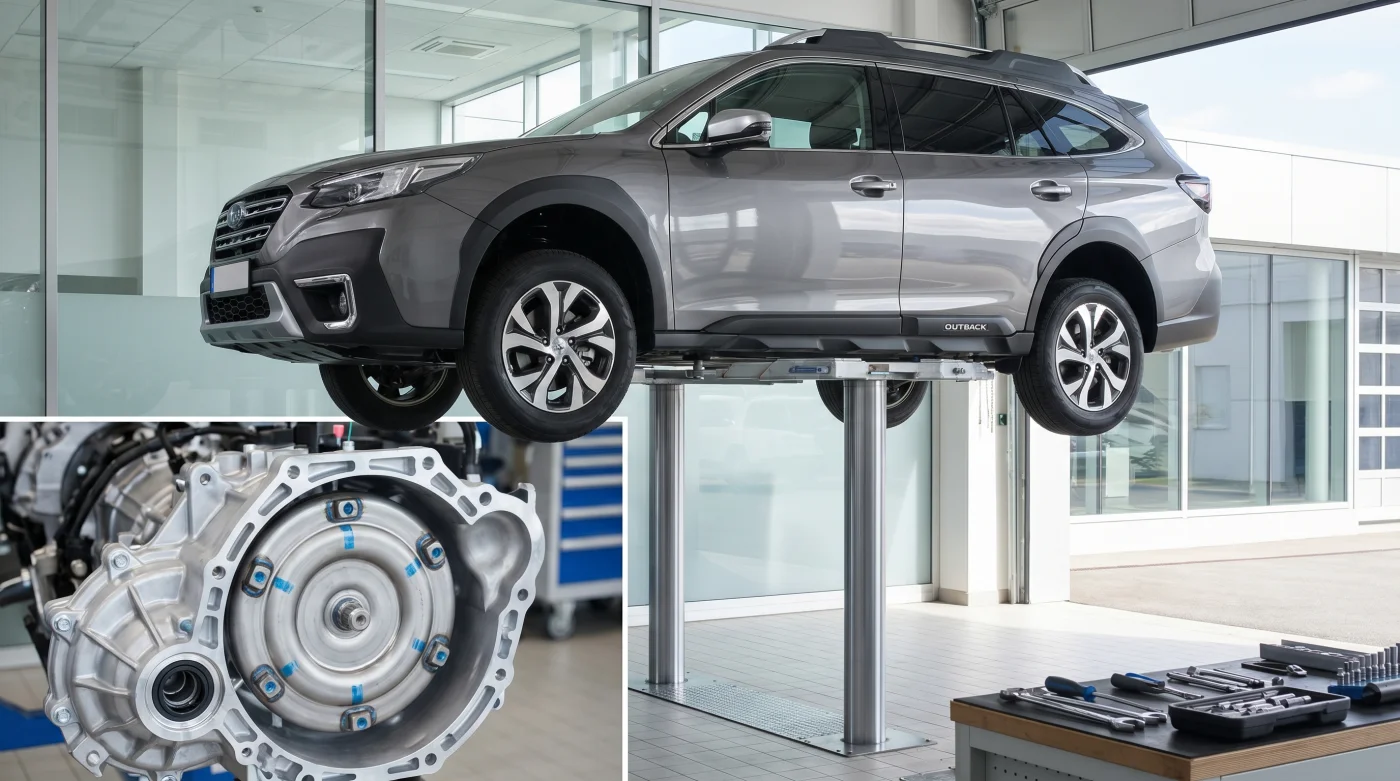
The smell of hot asphalt mixed with a faint, sweet hint of warm coolant always lingers over independent used car lots in the late afternoon. You walk past rows of glistening all-wheel-drive wagons, their windshields marked with neon grease pens, hoping to find a reliable companion for your weekend adventures. It is easy to get swept up in the promise of mountain trailheads and snow-covered passes when looking at a clean Subaru Outback. But beneath that spotless engine bay and vacuumed carpet lies a complex, highly sensitive mechanical system.
Most buyers climb into a used wagon, turn the key, and head straight for the nearest open stretch of pavement. They listen for wind noise, feel for alignment pull, and assume that if the car shifts smoothly, the drivetrain is perfectly healthy. This quiet optimism is exactly what sellers count on when lease returns flood the market, masking deeper issues that a simple road test will never reveal.
The real truth of a Lineartronic Continuously Variable Transmission (CVT) does not show itself during a gentle cruise down a paved suburban boulevard. It hides within the quiet structural transitions under heavy load, waiting to fail when you are miles from cell service with a cargo box full of gear. To protect your wallet, you must look beyond the shiny dashboard and force the metal to tell its true story.
The Myth of the Seamless Glide: Why Road Tests Lie
**A standard test drive** is like assessing an athlete’s heart while they are sleeping. The Lineartronic CVT operates on a heavy steel chain sliding along smooth pulleys, relying entirely on hydraulic pressure and friction to transfer power to the wheels. When these metal surfaces begin to wear down, the system does not slip like a traditional automatic with a sudden, obvious spike in engine RPMs. Instead, the transmission software works overtime behind the scenes, quietly adjusting pressure to mask the mechanical damage.
Think of the transmission as a tightrope walker balancing on a wire that is slowly fraying. The onboard computer acts as the safety net, adjusting parameters to keep your ride feeling seamless even as the hardware degrades. By the time you actually feel a violent shudder on the highway, the interior of the aluminum casing is already contaminated with fine metallic dust. To catch this wear early, you must force the transmission to its physical limits under controlled tension.
- Porsche Macan dealer markups collapse when buyers cross-reference specific regional allocation codes
- Lexus NX 350h hybrid batteries bypass the catastrophic cold weather voltage drops destroying EV ranges
- Genesis G70 base models silently utilize the exact acoustic glass found inside premium Mercedes cabins
- Toyota 4Runner TRD Sport trims harbor the exact suspension geometry dealers claim requires Pro upgrades
- Corvette Stingray archives expose a terrifying aerodynamic lift flaw designers completely ignored
The Specialist’s Secret
Marcus Vance, a forty-eight-year-old independent Subaru specialist in Denver, spends his days rescuing buyers from costly drivetrain failures. He refers to the sudden influx of lease-return Outbacks on local lots as “the quiet wave,” noting that many small dealerships lack the specialized diagnostic scanners needed to read internal CVT pressure history. Marcus always carries a simple physical toolkit to inspections, relying on a manual load test to find the high-frequency vibrations that signal a worn chain guide long before a warning light ever appears on the dashboard.
Matching the Test to the Outback’s Previous Life
**Cars driven in stop-and-go** traffic suffer from localized pulley wear. If your prospective Outback spent its first three years crawling through metropolitan gridlock, the steel chain has likely spent most of its life rubbing against the exact same narrow band of the pulley faces. This creates a tiny, almost imperceptible groove in the metal that causes a micro-stumble when you attempt to accelerate gently from a complete stop.
Conversely, vehicles equipped with aftermarket tow hitches or heavy roof racks demand a much more aggressive inspection. Towing puts immense thermal stress on the CVT fluid, degrading its viscosity and allowing the chain to slip microscopically against the pulley faces under load. For these wilderness-bound wagons, you must inspect the underside of the transmission case for heat staining and listen for a low, rhythmic thrumming during low-speed maneuvers.
The Parking Lot Stall-Test and Bolt Inspection
**Testing the system safely** requires empty space and a methodical touch. Find a flat, open corner of the asphalt lot where you will not be disturbed, and make sure the engine has warmed up to its normal operating temperature. You are going to load the torque converter briefly to listen for internal chain resonance—a physical stress test that forces the transmission to reveal its actual health.
- Set the parking brake firmly, press your left foot hard on the foot brake pedal, and shift the gear selector into Drive.
- Gently press the accelerator pedal with your right foot for no more than three seconds, letting the engine speed rise to about 2,000 RPM while keeping the car completely stationary.
- Listen closely for a metallic, high-pitched whirring or a low-frequency chain slip resonance vibrating through the center console.
- Immediately release the accelerator and shift the car back into Park to allow the transmission fluid to cool down.
Once you finish the cabin test, shut down the engine and crawl under the front bumper with a bright flashlight to inspect the aluminum bell housing. Pay close attention to the large structural bolts mating the transmission to the engine block. **Any signs of fresh tool marks**, shiny metal scrapes, or mismatched hardware on these fasteners suggest the transmission has been removed or replaced recently—a critical history detail that sellers often omit.
- Diagnostic stethoscope or a clean cardboard tube to isolate under-car noises.
- Bright LED flashlight with a magnetic base to inspect the bell housing bolts.
- Infrared thermometer to check if the transmission pan exceeds 200°F after a drive.
Protecting Your Peace of Mind on the Trail
**Taking control of the inspection** process frees you from the anxiety of the unknown. Buying a used car should not feel like a roll of the dice where you hope for the best while quietly preparing for a five-thousand-dollar repair bill. When you understand how these mechanical components interact under load, you can walk away from a compromised vehicle without a single regret.
An Outback is designed to carry you deep into nature, far from tow trucks and paved highways. By taking fifteen minutes to perform a physical torque test and checking the physical bell housing bolts, you ensure that your weekend escapes remain peaceful adventures rather than expensive lessons in drivetrain engineering.
“A clean history report tells you where a car has been, but a physical torque test tells you exactly where it is going.” — Marcus Vance, Subaru Specialist
| Key Point | Detail | Added Value for the Reader |
|---|---|---|
| Stall-Test Resonance | Listen for a high-pitched metallic hum during a loaded stationary test. | Prevents buying an Outback with an invisible chain-slip issue. |
| Bell Housing Bolts | Inspect mating hardware for fresh wrench marks or alignment shifts. | Reveals hidden past transmission swaps or major repairs. |
| Fluid Temperature Check | Measure oil pan temperature with an infrared thermometer after driving. | Confirms the cooling system is managing CVT heat effectively. |
Frequently Asked Questions
Is a stall-test safe to perform on a used Subaru Outback?
Yes, if done correctly. Limit the engine load to no more than three seconds to prevent rapid heat buildup in the torque converter.What does a failing CVT chain slip sound like?
It sounds like a low, rhythmic grumbling or a metallic, high-frequency whirring coming from directly beneath the center console under acceleration.Why are the aluminum bell housing bolts so important?
These bolts secure the transmission to the engine. Tool marks or missing bolts indicate previous removal, signaling past major drivetrain work.Can clean CVT fluid hide a failing transmission?
Fresh fluid can temporarily quiet a noisy CVT, but it cannot fix physical wear on the pulleys or chain stretch, which the torque test will reveal.How do I handle a seller who refuses to let me perform this test?
If a private seller or dealer prevents you from performing a basic, low-RPM torque test, it is best to walk away from the vehicle entirely.