The faint, sugary scent of vaporized coolant mingling with hot motor oil is a smell every Wrangler owner learns to dread. It usually starts quietly—a tiny drop on the driveway, or a strange, sweet whiff floating through the air vents after a long climb. You pull the dipstick, expecting the usual clean amber liquid, but deep down, a cold knot of worry begins to tighten in your stomach.
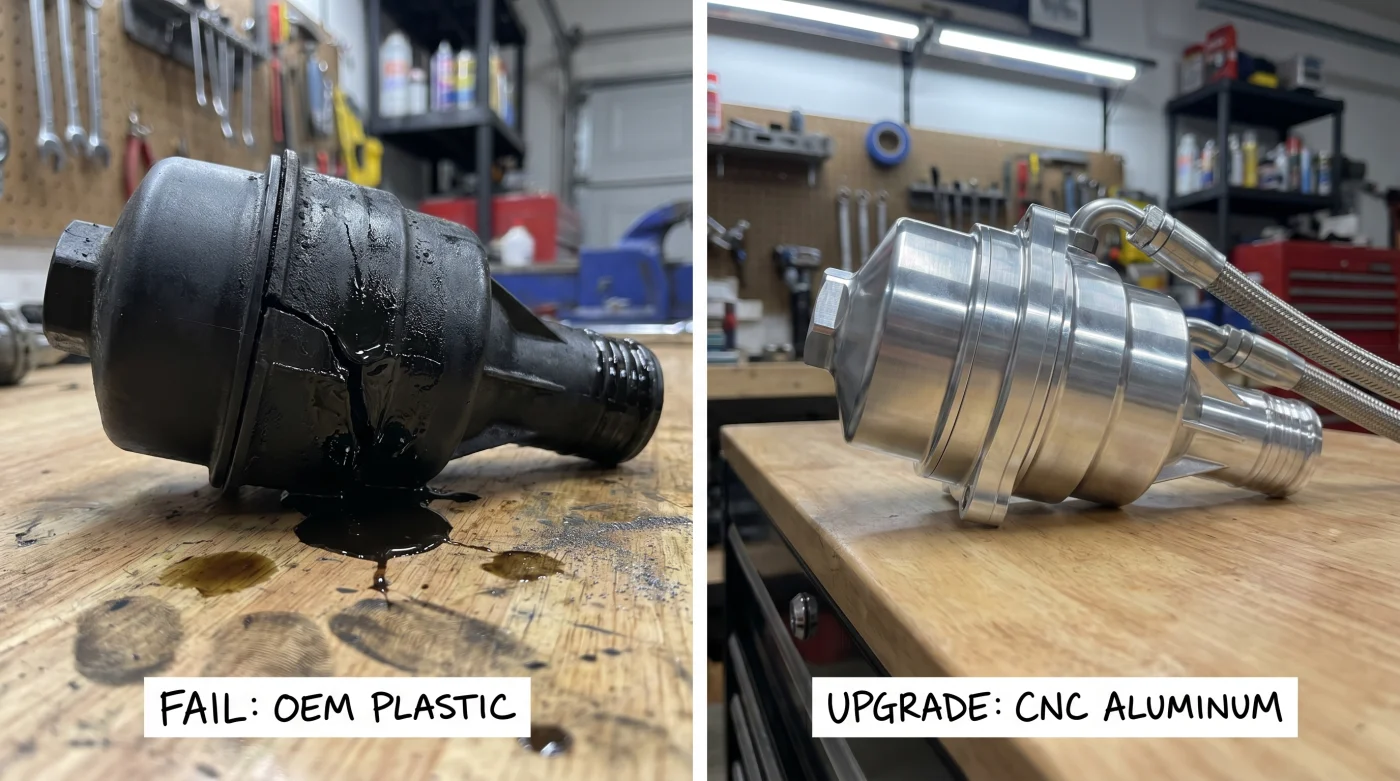
Beneath the intake manifold sits the culprit: a warped, heat-stressed black plastic factory oil filter housing, silently pooling thick, milky sludge into the valley of your engine block. Because this component was installed at the factory, you naturally assumed it was engineered to endure the lifespan of your vehicle. Unfortunately, the harsh environment of the engine bay tells a completely different story.
As the massive fleet of 3.6-liter Pentastar V6 engines across the country crosses the milestone of high mileage, this hidden vulnerability is turning into an epidemic. The plastic housing simply cannot survive the constant thermal expansion and contraction of everyday driving. Over time, it degrades from a structural shield into a fragile liability that threatens to destroy your entire engine.
The industry refers to this part as the oil filter adapter, but seasoned mechanics recognize it as a ticking clock. Subjected to relentless engine heat cycles, the polymer housing eventually turns as brittle as a potato chip, cracking along its base and allowing pressurized oil and coolant to mix in a catastrophic embrace.
The Great Design Flaw: Why Plastic Fails
When you purchase a vehicle built for the trail, you expect its vital components to mirror that rugged, unbreakable spirit. Relying on a plastic housing to manage hot, pressurized fluids directly above an aluminum engine block is like constructing a fireplace chimney out of pine boards. It is not a question of if the material will fail under the strain, but rather when the heat will finally win.
The fundamental issue lies in the material limits of glass-filled nylon when matched against cast aluminum. As your engine warms up and cools down, these two materials expand and contract at completely different rates, placing immense shearing stress on the rubber gaskets. By shifting your mindset from temporary patch repairs to a permanent structural upgrade, you can bypass this engineered weak point entirely.
- BMW M3 brake swaps permanently destroy rotor resale value when skipping the bedding procedure
- Honda Pilot V6 engines achieve 200k-mile longevity only after replacing this specific timing belt tensioner
- Costco Auto Program pricing algorithms secretly enforce a strict margin cap traditional brokers easily defeat
- Subaru Outback used inspections demand a strict physical torque test on the CVT housing
- Porsche Macan dealer markups collapse when buyers cross-reference specific regional allocation codes
Marcus Vance, a 44-year-old independent technician who has spent two decades servicing high-altitude trail rigs in Durango, Colorado, sees this specific failure almost daily. “Wrangler owners come in fearing they have a blown head gasket or a cracked engine block because their oil looks like chocolate milkshake,” Marcus says, tossing a warped, grease-stained plastic housing into the scrap bin. “I show them this brittle piece of plastic and watch the relief wash over their faces. We don’t even offer plastic replacements anymore; we swap them for all-aluminum units immediately to solve the problem for good.”
Custom Lifelines for Every Wrangler Driver
While every 3.6-liter Pentastar engine shares this vulnerability, the urgency of the repair depends heavily on how you use your vehicle. Understanding your specific driving style helps you identify when to step in and make the upgrade.
The Overlander and Trail Rider
For those who load their rigs with heavy gear and head deep into remote terrain, heat is your absolute worst enemy. Crawling up steep mountain passes at low speeds minimizes natural airflow through the radiator while pushing oil temperatures to their limit. Upgrading to solid metal prevents a structural failure miles away from cellular service, ensuring you always make it back to the pavement under your own power.
The Daily Commuter
If your Jeep spends most of its time navigating suburban traffic, your engine experiences constant, rapid temperature swings. These frequent thermal cycles wear out the delicate seals underneath the housing far quicker than long-distance highway cruising. Preventative aluminum replacement stops those mysterious oil spots from ruining your driveway and keeps your daily driver reliable.
The Weekend Mechanic
If you take pride in maintaining your own vehicle, this upgrade is the ultimate satisfying weekend project. Removing the intake manifolds can seem daunting at first glance, but it provides a clean, open workspace to inspect other critical areas. Using a methodical approach turns an otherwise stressful repair into an empowering upgrade that saves you hundreds in professional labor costs.
The Permanent Aluminum Solution
To fix this issue permanently, you must eliminate the weak link entirely. An aftermarket cast-aluminum oil cooler housing replaces the fragile plastic assembly, establishing a robust, metal-to-metal connection that easily withstands extreme engine temperatures. This upgrade ensures that your oil and coolant channels remain completely separate and secure.
Before beginning the swap, take the time to prepare a clean, organized workspace. Because the oil cooler sits deep in the engine valley, keeping dirt out of the exposed intake valves is absolutely paramount to the health of your cylinders.
Required Upgrade Toolkit:
- Required Tools: 1/4-inch torque wrench, E8 external Torx socket, 8mm and 10mm deep sockets, shop vacuum, and lint-free shop towels.
- Required Parts: Aftermarket all-aluminum oil cooler assembly, high-quality intake manifold gasket set, fresh engine oil, and compatible OAT coolant.
- Critical Torque Specification: Tighten the five housing mounting bolts in a crisscross pattern to exactly 106 inch-pounds (9 foot-pounds).
Step-by-Step Installation Process:
- Disconnect the negative battery terminal and safely drain the radiator coolant into a clean container.
- Remove the air intake tube, disconnect the electrical connectors, and carefully lift away the upper and lower intake manifolds.
- Stuff clean shop towels into the open cylinder intake ports immediately to prevent debris or dropped bolts from falling into the engine.
- Unscrew the oil temperature and pressure sensors from the back of the old housing, then remove the five E8 Torx mounting bolts.
- Carefully lift the cracked plastic housing out of the engine valley, using your shop vacuum to clean up any pooled oil or coolant left behind.
- Thoroughly clean the aluminum engine block mounting surface with brake cleaner and a clean microfiber cloth.
- Lubricate the new Viton rubber seals on your aluminum housing with clean engine oil to ensure a perfect, tear-free seal.
- Position the aluminum housing in place, hand-thread all five bolts, and torque them precisely in a crisscross pattern.
- Reinstall the sensors, pull the towels from the intake ports, reinstall the manifolds, and top off your fluids before performing a test start.
Restoring True Reliability to Your Machine
Owning a trail-ready vehicle should inspire confidence, not an underlying worry about when a hidden piece of plastic might leave you stranded. Replacing this engineered weak point with a solid metal alternative aligns your engine’s physical reality with the rugged image of your vehicle.
This repair is more than simple routine maintenance; it is an act of long-term stewardship. Taking charge of weaknesses before they disrupt your life is the hallmark of an experienced owner. With your coolant and oil separated by structural aluminum, you can finally focus on the road ahead instead of watching your temp gauge.
“The factory plastic oil cooler is a fuse designed to blow; replacing it with aluminum is the only way to make the Pentastar truly bulletproof.” — Marcus Vance, Jeep Restoration Specialist
| Key Point | Detail | Added Value for the Reader |
|---|---|---|
| Material Upgrade | Replaces factory glass-filled nylon with heavy-duty cast aluminum. | Eliminates the risk of cracking, heat warping, and subsequent catastrophic engine failure. |
| Premium Viton Seals | Utilizes high-temperature Viton O-rings instead of standard cheap rubber. | Provides a long-lasting, leak-proof seal that resists degradation from hot synthetic oil. |
| Proactive Insurance | Resolves the issue before oil and coolant can mix in the engine block. | Saves thousands of dollars in potential engine block flushes, towing fees, and bearing repairs. |
Frequently Asked Questions
How do I check if my Pentastar oil cooler is leaking?
Look down past the oil filter cap into the engine valley using a bright flashlight; if you see pooled orange or purple fluid, or wet oil dripping down the back of your transmission, your housing is compromised.Can I simply replace the rubber gaskets on my original housing?
We do not recommend this, as the plastic housing itself warps over time from heat cycles; installing new seals on a warped plastic surface will result in a leak within months.Does the aluminum housing affect operating temperatures?
No, cast aluminum actually conducts heat more efficiently than plastic, maintaining excellent thermal stability for your engine oil and coolant.How long does this repair typically take for a DIYer?
A patient vehicle owner can easily complete the entire swap in about 3 to 5 hours using common household hand tools.What is the risk of leaving a small leak unaddressed?
A small leak can suddenly turn into a major crack, mixing pressurized oil directly into your cooling system, which forms a thick sludge that can ruin your bearings and destroy your water pump.