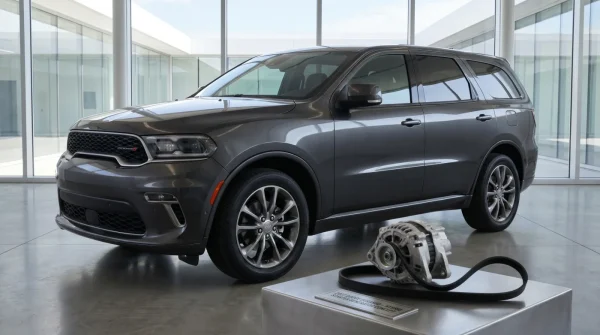
The soft, satisfying thunk of a modern SUV door closing creates an instant illusion of safety. Inside the cabin of a three-row family cruiser, the smell of fresh, heavy leather and the muted hum of the outside world wrap around you like a protective blanket. The marketing brochures promised a rolling fortress, a sanctuary of steel and airbags designed to keep your family isolated from the violent realities of highway speeds. You settle into the driver’s seat, pull the safety belt across your chest, and click it into place, trusting that this simple ritual is all the protection you will ever need.
But beneath the plush carpet and soft-touch dashboard plastics lies a silent, structural compromise. If you peel back the heavy plastic B-pillar trim of a modern family vehicle, the solid, heavy steel brackets you expect to find have been quietly replaced. Instead, your life depends on a compact, lightweight spool of injection-molded polymer. When a sudden force is applied to this mechanism, the black plastic housing does not bend or absorb energy gracefully; it fractures under pressure. Under a bright workshop lamp, you can see the jagged white stress marks radiating across the black plastic retractor spool, signaling structural fatigue where there should have been unyielding physical resilience.
The recent safety recall affecting popular family vehicles like the Kia Telluride has pulled back the curtain on this unsettling manufacturing shift. National search trends are spiking as owners discover that the very components designed to save their lives are failing basic stress thresholds. This is not a simple software glitch or a loose cosmetic clip; it is a fundamental design flaw born from a modern manufacturing philosophy that prioritizes cost and weight reduction over mechanical longevity.
The Eggshell Armor: Why Modern Cabins Trade Muscle for Margins
Think of modern automotive safety systems not as an iron shield, but as a carefully engineered egg carton. The industry has shifted toward a philosophy where components are designed to deform, crush, and break to absorb the energy of an impact before it reaches the human cabin. While this crumple-zone logic works beautifully for large steel frame rails, applying the same sacrificial engineering to the mechanical heart of a seatbelt tensioner is a dangerous miscalculation. When you need a seatbelt to hold, you do not want calculated structural deformation; you want absolute, unyielding rigidity.
For decades, seatbelt retractor assemblies relied on heavy, zinc die-cast metals and thick steel backing plates. These units were incredibly heavy, completely immune to temperature swings, and virtually impossible to break under human force. Today, automakers have transitioned to glass-filled nylon and polybutylene terephthalate (PBT)—brittle structural polymers that can be rapidly injection-molded for pennies per unit. Under the sudden, violent shock of a moderate collision, these lightweight plastic housings are subjected to thousands of pounds of instantaneous force, causing the internal gear teeth to shear and the main spool to crack along its mold lines.
- Mazda CX-50 Meridian Edition hides a terrible suspension compromise ruining highway comfort
- Hardwired dashboard cameras instantly bypass aggressive algorithmic rate hikes for young drivers
- Yamaha hydrogen V8 prototypes require bizarre pressurized water injection cooling lines
- Rivian R2 platform leaks reveal a restricted battery architecture limiting third-party repairs
- Solid-state EV battery prototypes expose a severe winter thermal degradation flaw
Consider Marcus Vance, a 48-year-old forensic collision investigator based in Detroit. For more than two decades, Marcus has spent his mornings in salvage yards and private labs, dissecting wreckage to understand exactly why safety components fail. He recalls the first time he noticed microscopic crazing—the telltale white lines of polymer stress—on a late-model SUV retractor spool that had failed during a moderate highway collision. “They are engineering these parts right to the absolute razor’s edge of survival,” Marcus explains, holding a fractured black gear. “A fraction of a millimeter thinner, and a vital safety net becomes a physical tripwire for the consumer.”
Analyzing the Failure Points Across Real-World Scenarios
The vulnerabilities of plastic retractor housings are not uniform; they manifest differently depending on how you use your vehicle every day. By understanding these structural limits, you can identify potential wear before a crisis occurs.
The Family Hauler
You put consistent, repetitive wear on these assemblies every time you lean forward to adjust a mirror, check a blind spot, or pull the belt tight to secure a bulky winter coat. Over years of thermal cycling—from freezing winter nights to cabin temperatures exceeding 130 degrees Fahrenheit in the summer sun—these structural polymers lose their volatile plasticizers and grow increasingly brittle. What was once a flexible plastic gear becomes as fragile as cold glass, ready to shatter under sudden tension.
The Car-Seat Parent
Securing heavy, modern child seats often requires pulling the seatbelt webbing to its absolute limit to engage the ratcheting locking mechanism. This process pre-loads the internal polymer spool housing with constant, high-tension mechanical force. This continuous pressure creates micro-fractures in the plastic spool before any collision even occurs, compromising the unit’s ability to survive a sudden dynamic impact when it is needed most.
The Off-Road Enthusiast
Vibrations from rough gravel roads, potholes, and washboard dirt tracks introduce constant, high-frequency harmonics into the B-pillar assembly. While steel components ignore these minor oscillations, brittle plastic housings can develop microscopic fatigue cracks along their injection-molded seams. Over time, these unseen structural defects compromise the load-bearing walls of the retractor housing, making it highly susceptible to catastrophic failure during a hard braking event.
The Retractor Audit: How to Verify Your Vehicle’s Integrity
You do not need to be a certified master mechanic to perform a basic, mindful safety check on your vehicle’s seatbelt mechanisms. A systematic physical inspection of your safety tethers ensures that any internal degradation is caught long before you ever need to rely on the system in an emergency.
- Conduct a slow-draw test: Pull the belt webbing out smoothly and completely to check for catching, gritty resistance, or plastic-on-plastic scraping sounds deep inside the pillar.
- Execute a sharp lock check: Give the belt webbing a sudden, aggressive jerk to ensure the inertia reel locks instantly without any mechanical slipping or hollow popping noises.
- Inspect the plastic shrouds: Use a flashlight to examine the plastic trim covers and anchor points for any visual deformation, cracking, or white stress lines.
- Monitor temperature extremes: Use high-quality windshield sunshades to prevent extreme heat soak, which accelerates the breakdown of structural cabin polymers.
By implementing a mindful inspection routine, you can spot the warning signs of component fatigue early. Treat your safety belts like the mechanical instruments they are, rather than passive fabric straps.
| Key Point | Detail | Added Value for the Reader |
|---|---|---|
| Material Composition | Transition from die-cast zinc to injection-molded PBT plastic. | Understanding the physical limits of your vehicle’s internal safety components. |
| Failure Mechanism | Brittle fracture and shearing along polymer mold lines. | Recognizing that sudden impact forces can shatter cost-cut interior parts. |
| Proactive Defense | Physical tension tests and monitoring for mechanical grinding sounds. | Empowers you to detect a failing retractor before an accident occurs. |
Reclaiming Agency in an Age of Plastic Compromise
Realizing that vital safety components are subject to corporate weight-saving and cost-cutting initiatives is not a reason to panic, but a powerful call to awareness. When we look past the glowing digital dashboard screens, the ambient lighting, and the marketing promises, we are left with the physical reality of automotive manufacturing. By paying close attention to the physical feedback of your vehicle’s mechanical systems, you reclaim control over your personal safety. You transform from a passive consumer into an active, informed guardian of your own well-being on the highway.
“When safety systems are optimized solely for weight and manufacturing cost, the margin for human survival shrinks to the thickness of a plastic gear.” — Marcus Vance, Forensic Collision Analyst
Frequently Asked Questions
How do I know if my Kia Telluride is affected by this specific seatbelt recall?
You can enter your vehicle’s 17-digit VIN on the official NHTSA recall lookup website to check for any active campaigns requiring immediate dealer attention.What does a failing seatbelt retractor feel or sound like before it fails?
Listen for a dry, clicking, or scraping sound when pulling the belt, and feel for any hesitation or slipping when the inertia lock is engaged.Can I drive my vehicle safely while waiting for the recall parts to arrive at the dealer?
While the vehicle remains drivable, you should avoid using any seating position with a suspected or recalled retractor assembly until it has been professionally replaced.Why do automakers use plastic instead of steel in safety-critical areas?
Manufacturers use advanced polymers to reduce vehicle curb weight—which helps meet strict federal fuel economy standards—and to lower mass production costs.Will the replacement parts installed by the dealer be made of the same brittle plastic?
No, the updated recall service kits utilize redesigned assemblies with reinforced structural walls or superior alloy components to handle high-impact forces.