The crisp morning air on a local dealership lot carries the sharp scent of tire dressing and wet asphalt. You pull your collar up against the breeze, watching a salesperson glide across the showroom floor. They are preparing their pitch, ready to guide you toward the top-tier trims of the Mazda CX-90, promising that the extra fifteen thousand dollars buys a magic-carpet ride. But as your eyes wander past the gleaming chrome of the flagship model, you look down at the humbler base Turbo Select parked near the back fence.
There is a distinct, heavy thunk when you slam the heavy steel door of a modern family hauler. Most people believe that paying more guarantees better bones underneath that sheet metal. You are told that luxury is something you must pay premium tax to experience, especially when it comes to how a three-row SUV handles the broken pavement of your daily commute. But the dirty secret of modern automotive manufacturing is that scale dictates reality, and separating assembly lines is a costly headache manufacturers hate.
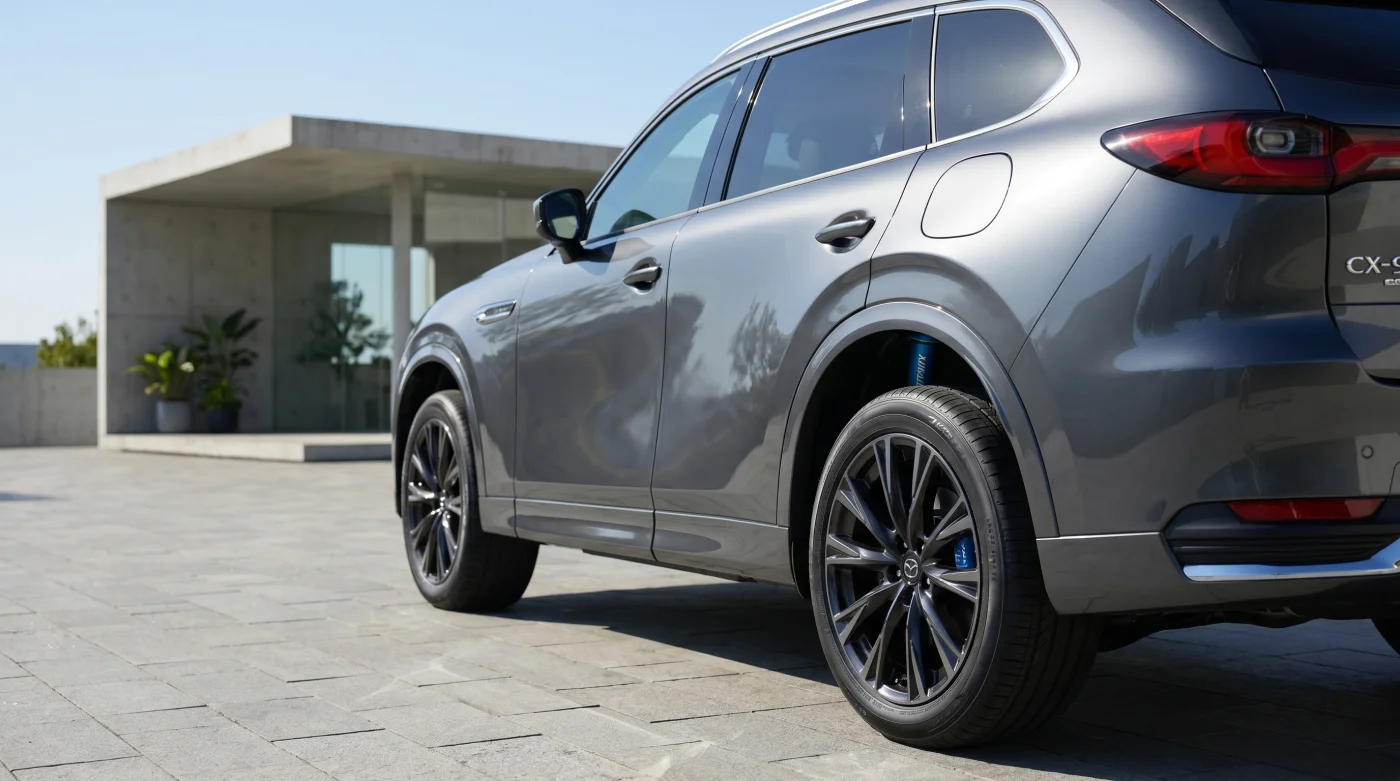
Standing beside the rear wheel of the entry-level model, the cold ground invites you to look closer. The dealership brochure claims the high-end trims possess a ‘specially tuned sport suspension,’ implying the base model is saddled with budget-bin hardware. It is a brilliant marketing play designed to nudge your budget upward. Yet, if you know where to point your smartphone camera, the physical truth waiting in the dark wheel well completely upends that narrative.
The Illusion of the Multi-Tiered Ride
Think of car manufacturing like a high-end kitchen preparing a signature broth. A master chef does not simmer a completely different, watered-down stock for the cheaper lunch menu; they use the same rich, slow-cooked base because maintaining two separate cauldrons is incredibly inefficient. Mazda designed their rear-wheel-drive bias platform to restore their reputation as a driver-focused brand. To do this, they needed every single CX-90, regardless of price, to possess the same controlled, European-inspired composure when diving into an unexpected curve.
Because of this logistical reality, the entry-level trims inherit the exact same mechanical skeletal system as the flagship models. The dealer might talk about leather quality and larger screens, but the physical connection to the road remains identical. When you strip away the marketing terms, the dampers, springs, and bushings on the base model are not cheap substitutes—they are the very same premium components engineered for the heaviest, most expensive variants.
- Jay Leno Ram Rumble Bee debut reveals a controversial mechanical downgrade
- Audi Nuvolari archive files expose a fatal chassis flaw engineers buried
- Kia Telluride seatbelt recall exposes a dangerous cost-cutting plastic retractor housing trend
- Mazda CX-50 Meridian Edition hides a terrible suspension compromise ruining highway comfort
- Hardwired dashboard cameras instantly bypass aggressive algorithmic rate hikes for young drivers
Marcus Vance, a forty-four-year-old chassis calibration technician from Ohio, spent years analyzing suspension wear patterns for tier-one suppliers. During a quiet Saturday morning visit to his local dealer, he crawled underneath a base Turbo Select with a high-powered flashlight and a digital caliper. What Marcus discovered confirmed his suspicion: the structural casting numbers and dampening units matched the top-of-the-line plug-in hybrid models part-for-part, revealing that budget buyers are getting a world-class suspension without paying the premium tax.
Chassis DNA: Decoding the Trim Hierarchy
To understand why this matters, you must look at how different drivers experience the road. The vehicle does not know how much you paid for it; it only reacts to gravity, speed, and asphalt quality. By understanding that the core hardware is identical, you can tailor your purchasing decision to your actual lifestyle needs rather than chasing a mythical ride quality upgrade.
For the daily commuter, the base model offers an incredibly quiet victory. You get the same high-speed stability and dampening control on potholed city streets without the harshness that sometimes accompanies the larger, heavier twenty-one-inch wheels found on premium trims. The smaller eighteen-inch wheels on the base trim actually provide a taller tire sidewall, meaning your ride is often softer and more forgiving than the most expensive model on the lot.
For the weekend adventurer towing a small camper or hauling a full load of gear, the identical hardware ensures your safety margins remain untouched. The suspension resists sagging and controls body roll using the same heavy-duty dampening rates designed to support the heavy battery packs of the hybrid models. You do not lose an ounce of mechanical capability by choosing the simpler, more affordable package.
How to Verify Your Hardware in the Lot
You do not have to take any salesperson’s word for it when you can verify the mechanical truth yourself in less than two minutes. Checking the physical hardware before you sign any paperwork is the ultimate shield against overpaying. All it takes is a clean smartphone, a bright light, and a quick look behind the rear tire.
- Set the parking brake and turn the front wheels fully to one side to maximize your clearance, though the best view is actually from the rear.
- Squat down by the rear passenger-side wheel well and look directly behind the tire toward the upper mounting point of the suspension.
- Wipe away any road grime from the cylindrical metal body of the shock absorber using a simple paper towel.
- Locate the blue ink stamp on the shock body, which displays the manufacturer’s name and the shared engineering part numbers.
Your tactical toolkit for this inspection is incredibly basic: a strong flashlight, a pack of wet wipes, and your phone camera. When you peer into that dusty space, your light will catch a specific blue-stamped Tokico shock absorber resting quietly behind the rear wheel well. This is the exact premium dampening unit used across the entire line, proving that your base model is mechanically elite.
The Quiet Satisfaction of Knowing Better
There is a unique peace of mind that comes from outsmarting the showroom floor. When you realize that the fundamental ride quality, structural safety, and handling dynamics of your vehicle are identical to a model costing fifteen thousand dollars more, the pressure to upgrade simply evaporates. You are no longer buying into the anxiety of missing out; instead, you are making a calculated, highly informed decision based on physical steel and oil.
By keeping your eyes on the actual hardware, you reclaim control over the buying process. You can appreciate the base model for what it truly is: a masterfully engineered family hauler that refuses to compromise on its core mechanical dignity just to satisfy a pricing spreadsheet. The next time you feel the smooth, controlled sweep of a highway ramp, you can smile knowing that your budget-friendly choice rides on the very same premium foundation as the most expensive machine in the lineup.
“The smartest car buyers ignore the digital screens in the cabin and look straight at the casting marks on the suspension components.” — Marcus Vance, Chassis Calibration Specialist
| Key Point | Detail | Added Value for the Reader |
|---|---|---|
| Hardware Equality | Shared Tokico blue-stamped shocks across all trim levels | Saves thousands without sacrificing structural ride control. |
| Wheel Size Advantage | Base eighteen-inch wheels offer more tire sidewall | Delivers a softer, more forgiving daily drive over rough roads. |
| Calibration Tuning | Identical spring rates and dampening specs as top-tier models | Maintains heavy-duty towing and hauling margins on a budget. |
Does the CX-90 base model ride differently than the premium trims?
Yes, but not because of the suspension. The base model actually rides slightly softer because its smaller eighteen-inch wheels allow for a taller tire sidewall to absorb sharp bumps.
Are the part numbers for the dampers actually identical?
Yes. If you inspect the rear wheel well, you will find the same Tokico-manufactured shocks bearing the identical factory stamp across the entire trim range.
Why would Mazda put premium suspension parts on the cheapest trim?
It is far more cost-effective for a manufacturer to standardize high-quality suspension components on a single assembly line than to engineer and manage multiple setups.
How can I personally check this at the dealership?
Simply squat down behind the rear passenger wheel, wipe away any road dust from the shock body, and look for the blue-stamped Tokico logo and matching part number.
Should I pay extra for a higher trim if I only care about ride quality?
Absolutely not. If your primary goal is a smooth, premium ride, the base model offers the exact same mechanical foundation for thousands of dollars less.