Walk into a dealership on a rainy Tuesday afternoon, and the environment feels instantly familiar. The air smells of damp trench coats, bitter machine-brewed coffee, and the sharp chemical bite of freshly applied interior protectant. You sit across from a salesperson whose desk is crowded with colorful trim brochures and finance pamphlets. They slide a worksheet toward you, pointing to a series of unexpected line items at the bottom of the page.
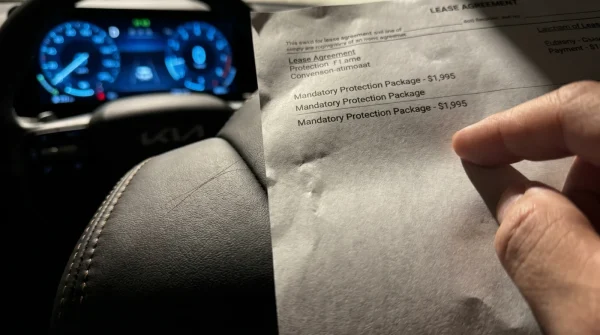
There they are: a $1,995 charge for “environmental paint protection” and a $399 fee for “nitrogen-filled tires.” These are the modern dealership’s silent profit engines, presented as non-negotiable additions to your vehicle. For the average walk-in buyer, arguing against these pre-installed packages feels like shouting into a slipstream. The dealer claims the work is already done; the ceramic coating is already on the metal, and the nitrogen is already in the rubber.
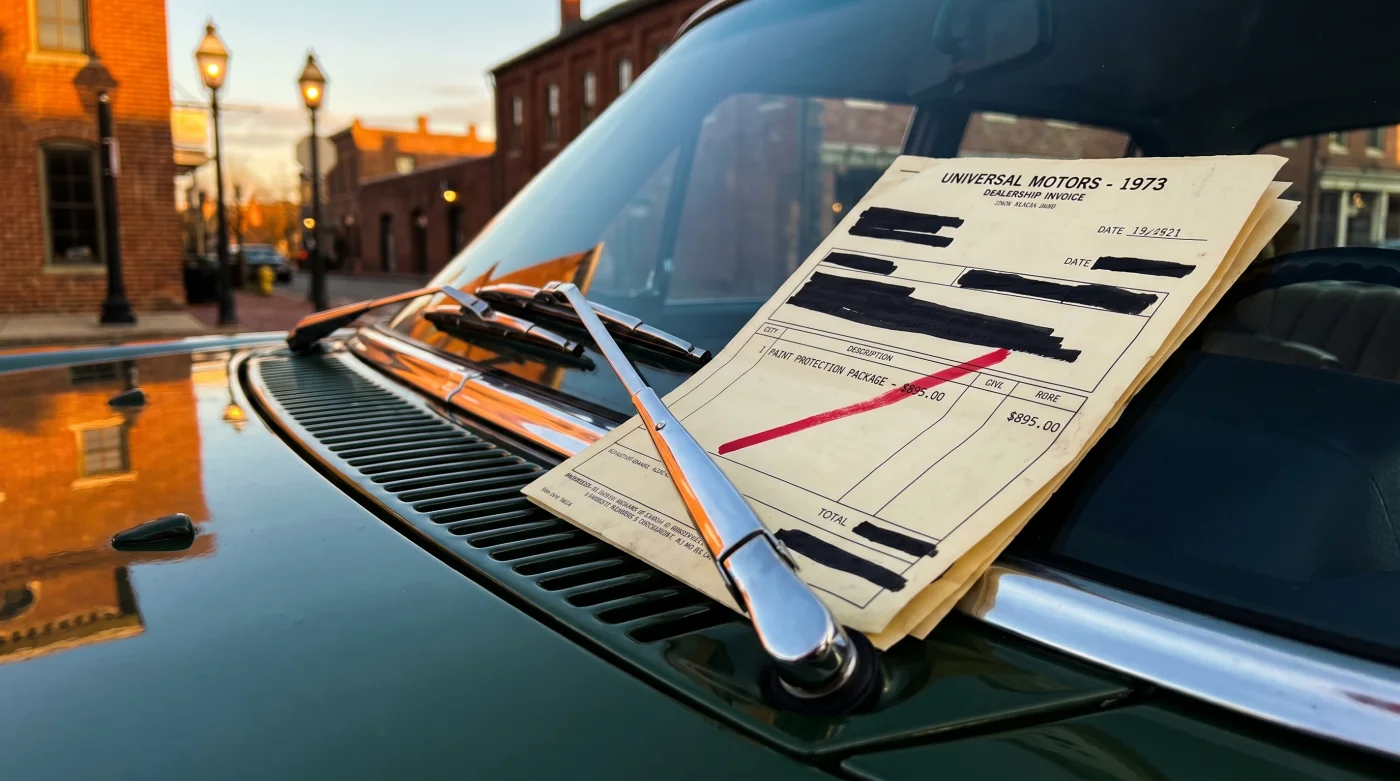
But when you slide your printed program authorization sheet across the laminated desk, the energy in the room shifts. Imagine a redacted dealership invoice displaying a stark red line crossing out a heavily inflated paint protection package. That image is the literal reality of the Costco Auto Program’s protective boundary. The salesperson’s rehearsed script evaporates, replaced by a quiet, professional compliance that changes the entire dynamic of your purchase.
The Invisible Shield Behind the Membership Card
The transition from a standard negotiation to a program-buying experience is like trading a wooden shield for a concrete wall. Traditional car buying relies on your personal stamina to resist pressure, but using a wholesale broker platform shifts the legal burden away from your shoulders. Dealers who participate in these programs are not just offering a courtesy discount; they are bound by a highly restrictive corporate agreement.
This system operates on a simple metaphor: the iron umbrella. While the storm of dealership markups and add-ons rages outside, the contract creates a dry, predictable microclimate for your transaction. The dealer agreement expressly forbids the practice of packing the invoice with mandatory, non-factory accessories. If a vehicle sits on the lot with a dealer-installed alarm system or window tint, the dealer must either absorb the cost or remove the physical item before you sign.
Many buyers assume the discount is the primary benefit of the program, but the true value lies in this institutional weight of a giant. Traditional walk-in buyers are routinely forced to accept hundreds of dollars in markup disguised as “protection packages.” By entering the showroom under the umbrella of a corporate pre-negotiated agreement, you carry the clout of a multi-billion-dollar retail entity that has already fought the battle on your behalf.
Inside the F&I Office: Marcus Vance’s Open Secret
To understand why this system works, you have to look at how dealerships view their relationship with large buying services. Marcus Vance, a 44-year-old former finance director from Columbus, Ohio, spent nearly two decades managing the high-pressure back offices of multi-brand dealer groups. He remembers exactly how the arrival of a program buyer changed the internal calculations of the sales floor.
- Mazda CX-5 used inspections require checking this exact steering rack weld
- Ford Bronco Raptor dealership markups artificially disguise massive factory inventory overstock
- Toyota RAV4 Prime mechanical architecture eliminates the severe payload penalty EVs suffer
- Porsche Macan depreciation exposes a cheap maintenance loophole using Volkswagen parts
- Honda Accord LX trims secretly carry identical suspension components as touring models
“When a traditional customer walked in, our goal was to build at least fifteen hundred dollars of back-end product into every deal,” Marcus explains. “But when a program buyer arrived, we knew the rules changed instantly. The contract they carry contains a specific penalty clause. If we get caught hard-coding mandatory ceramic coatings or tire packages onto their invoice, the buying service can pull our certified dealer status. In a mid-sized market, losing that steady stream of pre-qualified buyers can cost a store fifty to eighty thousand dollars a month in lost volume. We simply couldn’t risk it.”
Deciphering the Safeguards Across Buying Services
For the No-Nonsense Shopper: The True Price Sheet
When you use the wholesale club program, the dealer is contractually obligated to show you the pre-calculated pricing sheet. This document displays the exact vehicle identification number, the factory invoice price, and the pre-negotiated discount. The final price is locked before you ever set foot in the building, leaving no room for late-stage adjustments or creative accounting.
If the dealership attempts to argue that a specific unit cannot be sold without its pre-installed protective film, you hold the ultimate leverage. You can request to see the certified dealer coordinator, a specific employee trained to handle these transactions according to the strict program guidelines. Often, the mere mention of contacting the program administrators is enough to make the disputed fees disappear from your paperwork.
For the Detail-Oriented Buyer: Spotting Shadow Fees
Some dealerships attempt to bypass these restrictions by labeling their add-ons under creative names like “dealer preparation” or “reconditioning fees.” Under the terms of the wholesale broker contract, these administrative tricks are strictly prohibited. Any fee not listed on the factory invoice must be clearly disclosed and pre-approved by the buying service’s master agreement.
To protect yourself, you must compare the original sticker side-by-side with the dealer’s final purchase order. Every line item must correspond to an official factory option code. If you spot an unfamiliar three-letter acronym with a price tag attached, ask the coordinator to verify it against the master program sheet. This careful cross-referencing is your best defense against quiet margin padding.
How Brokers Compare: A Structural View
Not all car buying services offer the same level of legal protection against dealer-installed extras. Some popular online search engines merely connect you with local dealers without enforcing strict contractual rules on the final transaction. Understanding these structural differences helps you select the right tool for your vehicle search.
While some platforms focus entirely on generating the lowest hypothetical quote, others prioritize the integrity of the buying process. A service that actively polices its dealer network provides a far more secure purchasing environment than one that simply acts as a lead generator. By choosing a program with real contractual teeth, you ensure that your agreed-upon price remains intact all the way through the financing office.
The Clean Invoice Protocol
Executing a flawless vehicle purchase requires a calm, systematic approach once you arrive at the dealership. By following a structured set of actions, you can comfortably navigate the transaction without engaging in emotional negotiations.
Begin by preparing your digital or physical credentials before entering the showroom to establish your buying status immediately. You must focus on the baseline contract terms rather than the emotional appeal of the vehicle itself.
- Verify the Coordinator: Always ask to speak directly with the designated program coordinator upon your arrival.
- Demand the Sheet: Request the official program pricing sheet before reviewing any standard dealership purchase orders.
- Scrutinize the Addendum: Check the passenger window for secondary dealer stickers and verify that none of those charges appear on your invoice.
- Document the Discrepancies: Take a clear photo of any disputed fees and state calmly that you need to verify them with the program helpline.
Your tactical toolkit for this process is remarkably simple. You only need your physical program membership card, the printed authorization form, a smartphone camera to document the paperwork, and the direct telephone number to the buying service’s customer support line. Carrying these items signals to the sales staff that you are an informed buyer who understands the rules of the system.
The True Value of Transactional Peace
Mastering the mechanics of these corporate buying contracts does more than just save you a few hundred dollars on paint protection. It restores a sense of dignity to an experience that has historically been defined by anxiety and defensive maneuvering. When you understand the contractual boundaries that protect you, the showroom ceases to be a battleground and becomes what it was always meant to be: a simple place of business.
This systematic approach allows you to focus on the joy of acquiring a new vehicle rather than the stress of avoiding financial traps. By leveraging the collective bargaining power of a major retail program, you level the playing field. Ultimately, the true luxury of a clean invoice is the quiet confidence that comes from knowing you paid exactly what was agreed, without compromise or unnecessary noise.
“The greatest leverage a car buyer can possess is not their ability to negotiate, but the institutional contract that speaks on their behalf.” — Marcus Vance, Consumer Advocacy Specialist
| Key Point | Detail | Added Value for the Reader |
|---|---|---|
| Accessory Prohibitions | Dealers cannot make physical add-ons like ceramic coatings or nitrogen tires mandatory for program buyers. | Saves an average of $1,500 to $3,000 in unwanted dealer-installed markups. |
| Contractual Enforcement | Violations of the pricing structure can result in the dealership losing its certified partner status. | Gives the buyer institutional leverage that far exceeds individual negotiating power. |
| Transparent Documentation | Dealers must present a pre-calculated pricing sheet showing the exact factory invoice and discount. | Eliminates hidden administrative fees and math errors during the final signing process. |
Frequently Asked Questions
Can a dealer refuse to sell me a car through the program if it has pre-installed accessories?
No. Under the terms of the program agreement, the dealer must either remove the physical accessory or waive the cost entirely for a certified buyer.What should I do if the dealer insists that the ceramic coating fee is non-negotiable?
You should immediately ask to speak with the certified program coordinator at the dealership and, if necessary, call the program’s customer support line directly from the showroom floor.Does the accessory prohibition apply to factory-installed options?
No. Factory-installed options listed on the original Monroney sticker are part of the vehicle’s base configuration and are covered under the standard pre-negotiated discount percentage.Can I use these program protections on used vehicles?
Yes, many buying services offer pre-negotiated pricing and accessory protections on certified pre-owned and select used vehicles at participating locations.How do I verify that the price I am being quoted is the official program price?
The dealer is contractually required to show you the official program pricing sheet, which displays the calculation starting from the manufacturer’s invoice price down to your member price.