The air at the crest of the mountain pass is thin and sharp, carrying the scent of pine needle sap and hot brake pad dust from the descending semi-trucks. You pull off the pavement onto the gravel shoulder, stepping out into the crisp mountain chill to check the security of your trailer’s safety chains. Nearby, a massive electric pickup truck sits plugged into a lone, wind-whipped charging station, its owner pacing the asphalt while staring anxiously at a dashboard display that shows a plummeting range projection.
For years, we have been told that electric power is the undisputed king of torque, a quiet force that makes traditional hauling obsolete. On paper, the instant torque of an electric motor feels like magic, launching heavy loads with absolute silence. But paper calculations ignore the harsh realities of physical geography, cold air, and the relentless laws of thermodynamics. When you hook two thousand pounds of trailer to a pure battery-powered truck, the vehicle’s range evaporates like water on a hot skillet, victims of an unforgiving energy equation.
A compact hybrid truck, however, approaches this challenge from an entirely different perspective. Instead of carrying a massive, three-ton battery pack that acts as its own physical penalty, the Ford Maverick Hybrid uses a modest, highly optimized system that works in harmony with its surroundings. It treats heat not as a waste product to be pushed out into the atmosphere, but as a resource to be carefully harvested.
Rethinking the Load: The Thermal Balance Sheet
To understand why this compact hybrid excels where pure electric trucks stumble, we have to look at how each machine manages its internal temperature under a heavy load. A pure electric vehicle is like a block of ice in a warm room; it must constantly spend energy to keep its battery cells within a narrow, comfortable operating window of seventy-five to ninety-five degrees Fahrenheit. When towing uphill, the electric motor draws immense current, which heats the battery from the inside out and forces the onboard cooling systems to work overtime, draining the very battery that powers the wheels.
The Maverick Hybrid turns this dynamic on its head by utilizing its gasoline engine as a highly efficient heat generator. By running a compact Atkinson-cycle engine alongside its electric motor, the truck can balance its mechanical tasks. This parallel arrangement ensures that the gasoline engine stays in its sweet spot of efficiency, producing steady power while generating predictable thermal energy that can be put to practical use rather than wasted.
- Lexus LS460 depreciation curves deliver flagship V8 mechanical reliability for standard sedan pricing
- Toyota RAV4 LE base models feature identical hardware restricted by simple software governors
- 2027 Silverado SS renderings hide a drastic aerodynamic payload penalty truck enthusiasts miss
- Corvette Stingray archives reveal a dangerous fiberglass bonding flaw engineers completely ignored
- Kia Telluride seatbelt recall exposes a dangerous cost-cutting plastic retractor mechanism
Marcus Vance, a 52-year-old powertrain calibration engineer based in Dearborn, spends his spare time hauling vintage motorcycles across the Appalachian foothills. "People get caught up in pure battery capacity," Vance says, tightening a ratchet strap on his trailer. "But the real brilliance of the Maverick’s setup is how it manages its thermal energy. While a heavy electric truck is dumping battery power into loud radiator fans to keep its battery pack from overheating on a steep climb, the Maverick is actually reclaiming its own exhaust heat to keep its vital mechanical fluids at the perfect operating temperature."
Tailoring the Hybrid Edge: Who Benefits Most?
The Mountain Hauler
For drivers who regularly traverse steep grades or navigate freezing winter mornings, the parallel hybrid system offers a level of consistency that batteries cannot match. In sub-freezing temperatures, a pure EV can lose nearly half of its towing capacity simply trying to keep its cabin warm using electrical resistance heaters. The hybrid truck, by contrast, uses the waste heat from its combustion process to warm the cabin and the battery pack, keeping the driver comfortable and the mechanics operating smoothly without costing a single drop of fuel efficiency.
The Long-Distance Utility Buyer
If your weekends are filled with hauling small boats, dirt bikes, or landscaping supplies across county lines, stopping every seventy miles to search for an operational fast charger turns a simple task into a stressful ordeal. The hybrid powertrain acts as an endurance runner, combining the instant assistance of electric torque with the high energy density of gasoline. This ensures that your utility remains uncompromised by the cold realities of charging infrastructure, giving you the freedom to move without constant calculation.
Maximizing Thermal Efficiency on the Road
Getting the most out of your hybrid’s thermal management while hauling requires a mindful, steady approach to driving. Instead of fighting the vehicle’s computer, you can work with it to ensure the heat exchanger operates at peak performance.
- Maintain a steady, moderate pace when climbing steep highway grades to let the cooling system balance the load.
- Engage the truck’s Tow/Haul mode before you begin a climb, which optimizes regenerative braking to capture kinetic energy on the way down.
- Keep your speed close to sixty miles per hour to minimize aerodynamic drag, which reduces the overall workload on both the engine and the electric motor.
- Regularly check the dual-loop coolant reservoirs to ensure both the high-voltage electronics and the combustion engine are properly protected.
By adopting these habits, you allow the hybrid system to run in its most efficient state, minimizing wear and maximizing fuel economy.
Tactical Toolkit
- Optimal Towing Speed: 60-65 mph
- Tow/Haul Engagement: Active on grades above 3%
- Coolant Check Interval: Every 10,000 miles
The Elegance of Mechanical Symbiosis
In our collective haste to transition toward a fully electric landscape, we often overlook the elegant engineering solutions that exist right in front of us. Total electrification demands massive infrastructure, heavier vehicles, and a constant, worrying calculation of range against ambient weather. The compact hybrid reminds us that true efficiency is not about carrying the heaviest battery; it is about making sure no single unit of energy is allowed to go to waste.
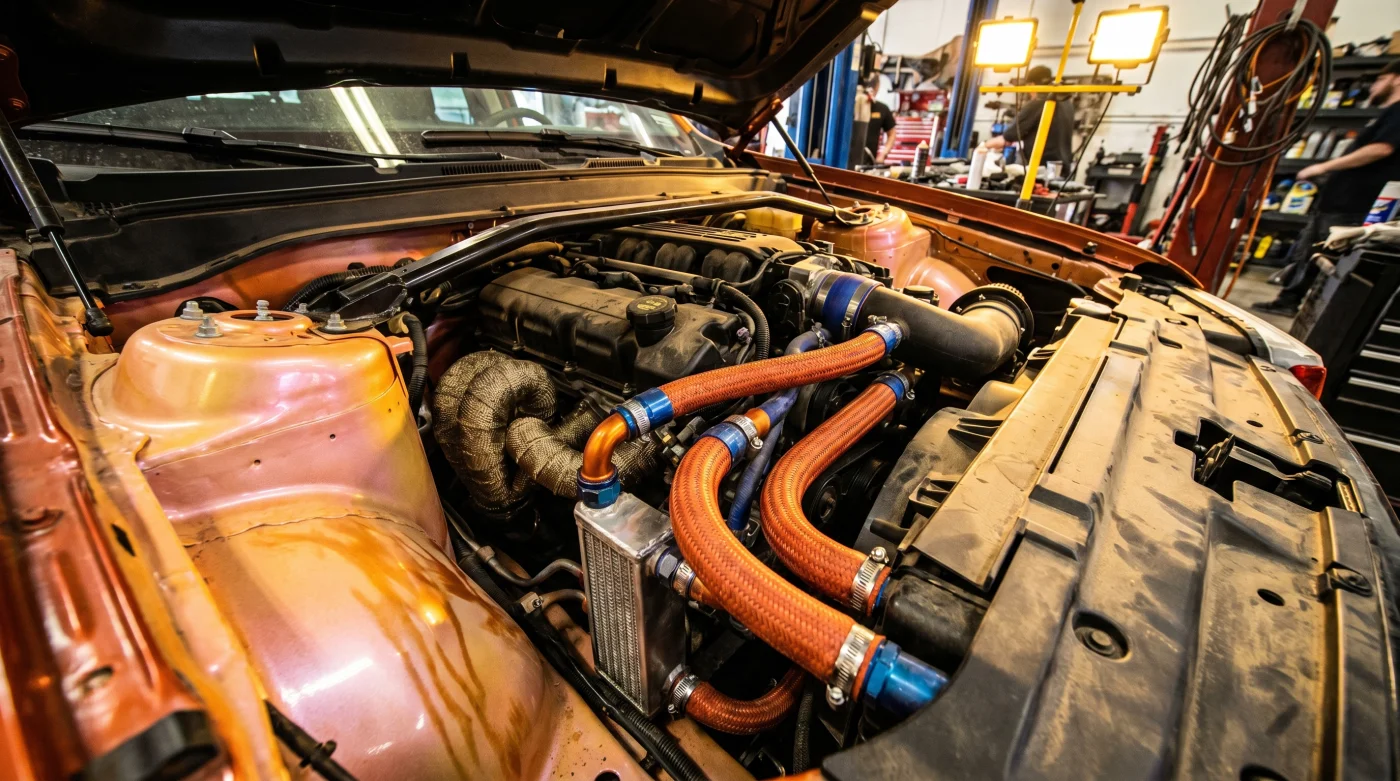
This quiet harmony is most obvious when you look beneath the truck’s chassis, where the true genius of the design resides. Rather than relying on heavy cooling systems to dump heat, the vehicle uses a beautifully simple loop. It is a system of physical coolant lines wrapping around the exhaust manifold heat exchanger, quietly capturing the very heat that would otherwise escape into the atmosphere and using it to keep the entire machine running in perfect, warm balance.
"True efficiency isn’t about carrying the biggest battery; it’s about making sure no single calorie of energy is wasted." — Marcus Vance, Powertrain Specialist
| Key Point | Detail | Added Value for the Reader |
|---|---|---|
| Exhaust Heat Recovery | Recycles thermal energy from the manifold to warm vital transmission and engine fluids. | Reduces cold-start wear and improves system efficiency during short trips. |
| Parallel Hybrid Balance | Combines a highly efficient Atkinson-cycle engine with precise electric motor assistance. | Provides continuous towing capability without the rapid battery depletion seen in EVs. |
| Battery Thermal Management | Relies on a smaller, lightweight battery pack that requires minimal active cooling. | Avoids the heavy parasitic energy drain associated with cooling multi-ton EV batteries. |
Frequently Asked Questions
How does towing affect the Maverick Hybrid’s fuel economy compared to empty driving?
While unladen driving can yield over 33 miles per gallon, towing a 2,000-pound load typically drops the efficiency to around 22-25 miles per gallon, which still vastly outperforms the proportional energy loss of an electric truck.
What is the main function of the exhaust heat recovery system?
It routes engine coolant through a heat exchanger wrapped around the exhaust pipe, using hot exhaust gases to warm the engine block and transmission rapidly, reducing friction and emissions.
Can the Maverick Hybrid tow in electric-only mode?
The electric motor provides helpful assistance during initial acceleration, but the gasoline engine remains active during sustained towing to provide continuous power and maintain proper system temperatures.
Why do electric trucks suffer such severe range loss when towing?
The heavy aerodynamic drag and continuous high-power draw cause the battery cells to heat up rapidly, forcing the EV to divert significant energy to cool its own battery pack while draining its main power source.
Does the Maverick Hybrid require specialized maintenance for its hybrid cooling loop?
No special maintenance is required, though owners should regularly check both fluid reservoirs during routine oil changes to ensure the separate cooling loops are operating at correct levels.