You know the sound of a luxury vehicle on its last legs. It is the anxious whine of a power steering pump, or the dry, metallic click of a dual-clutch transmission trying to find second gear in a suburban driveway. For years, the automotive world has told you that owning a premium SUV past its hundred-thousand-mile mark is a form of financial masochism. You expect the leather to hold up, but you dread the day the instrument cluster lights up, signaling a repair bill that exceeds the remaining value of the machine.
Step into a quiet garage in early autumn. The air smells of wet concrete and old gear oil. There is a ten-year-old Lexus RX 350 sitting on the lift. It does not drip. It does not moan when you turn the key. While its European rivals sit in service bays waiting for imported mechatronic units, this machine relies on a quiet, heavy-duty mechanical core that behaves more like industrial machinery than a delicate computer.
The secret to this longevity is not found in flashy software or marketing jargon. It sits housed in a dark, aluminum casing beneath the driver’s feet. It is the torque converter—a silent, fluid-filled buffer that protects your bank account by absorbing the violent kinetic forces that destroy lesser transmissions.
The Hydraulic Cushion vs. The Dry Shudder
To understand why this SUV survives while others crumble, you must abandon the idea that faster shifting is always better. European manufacturers fell in love with dual-clutch systems. They promised lightning-fast gear changes, but they did so by rubbing dry plates together, much like sliding your palms under a heavy book. In stop-and-go traffic, these systems suffer from a constant, nervous shuddering, breathing through a pillow as they search for friction. They wear themselves down with every red light.
The Lexus RX 350 rejects this nervous energy. It uses a torque converter designed by Aisin, Toyota’s dedicated drivetrain division. Instead of physical clutches slamming together, it uses a vortex of automatic transmission fluid to transfer power. Think of it as two desk fans facing each other: turn one on, and the air currents force the second one to spin. Because there is no direct physical contact during the initial take-off, there is no physical wear. Your transmission cushion never burns out because it cushions the blow with fluid, not friction plates.
Greg Miller, a fifty-four-year-old transmission technician in Columbus, Ohio, spends his days rebuilding stripped gears. He keeps a graveyard of dual-clutch units behind his shop, but he rarely sees an RX 350 on his workbench. “When an RX comes in,” Greg says, “it’s usually because someone forgot to change the fluid for fifteen years. Even then, you flush it, and the heavy-duty converter just keeps swimming. They built those things with the same safety margins they use for commercial delivery trucks.”
- BMW X5 chassis rigidity highlights a terrifying steering latency plaguing the Mercedes GLE
- Ford F-150 Lightning endurance tests expose severe rear tire cupping after heavy payload towing
- 2026 Genesis GV80 suspension tuning introduces a harsh rebound dampening flaw over highway expansion joints
- Porsche 911 Carrera aerodynamics abandon traditional cooling slats for active aero louvers
- Ford EcoBoost engines demand a specific intake valve cleaning to prevent catastrophic turbo failure
Tailoring the Machine to Your Driving Life
Not all drivers treat their vehicles the same way, yet this transmission adapts to different survival profiles without complaint.
The Interstate High-Miler
If you spend your mornings cruising down Route 95 at seventy miles per hour, your main enemy is heat. The RX 350 handles this by using a robust lock-up clutch inside the converter. Once you reach cruising speed, a physical lock engages to eliminate fluid slippage, drop your engine speed, and maximize your fuel economy. This lock-up mechanism engages smoothly, preventing the micro-slippage that degrades fluid in lesser crossovers over long distances.
The Stop-and-Go Suburbanite
If your daily drive consists of school drop-off lines, traffic lights, and endless parking lots, your vehicle lives in a state of perpetual thermal stress. European gearboxes overheat in these environments because their clutches constantly slip to keep the car from stalling. The Aisin unit thrives here. Its massive fluid capacity acts as a heat sink, absorbing the thermal spikes of constant stop-and-start driving without scorching the delicate internal seals.
The Second-Hand Bargain Hunter
For those searching the used market for a ten-year-old luxury cruiser, this transmission is your financial shield. It allows you to buy a depreciated luxury vehicle with 120,000 miles on the odometer without the dark cloud of a five-thousand-dollar transmission overhaul hanging over your head. It preserves your hard-earned savings by ensuring the most expensive component in the vehicle remains fundamentally indestructible.
The 200,000-Mile Fluid Preservation Protocol
To ensure this heavy-duty mechanical heart outlasts the chassis, you do not need complex tools or expensive dealer packages. You simply need to respect the chemistry of the fluid. Follow this straightforward, minimalist maintenance plan to keep the torque converter spinning happily.
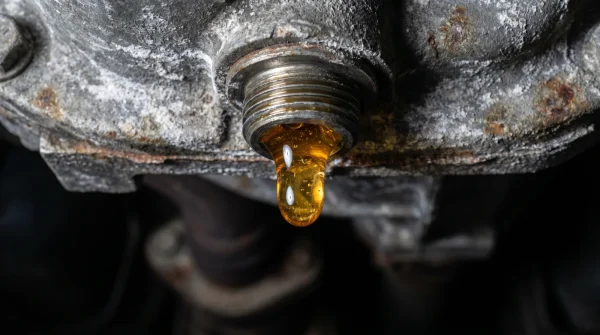
- Inspect every thirty thousand miles: Pull the dipstick or check the overflow plug. The fluid should look like translucent cherry syrup, not dark coffee.
- Avoid the flush machine: Never allow a shop to use a high-pressure flush machine on your RX 350. The high pressure can dislodge settled debris and force it into the delicate valve body.
- Stick to the drain-and-fill: A simple gravity drain replaces about four quarts of fluid. Do this twice over a weekend, and you will have refreshed the fluid package safely.
- Always use Toyota WS fluid: Do not accept generic “multi-vehicle” fluids. The viscosity profile of original Toyota World Standard fluid is matched precisely to the slip-coefficients of the converter’s lock-up clutch.
The DIY Survival Toolkit
To execute this maintenance at home, you need only a few specific items: a twenty-four-millimeter socket for the fill plug, a ten-millimeter hex key for the drain plug, a simple hand pump, and four quarts of genuine Toyota WS automatic transmission fluid. Keep the workspace clean; even a single speck of lint can disrupt the hydraulic valves.
The Unseen Value of Over-Engineered Steel
In an era where luxury cars are built to be leased for three years and then discarded, the RX 350 stands as a quiet rebellion. It does not try to impress you with lightning-fast, track-ready shifts that you will never use on your way to the grocery store. Instead, it offers a deeper luxury: the luxury of absolute certainty. When you press the accelerator, you are not hoping the computer manages the clutches correctly; you are relying on physical laws of fluid dynamics.
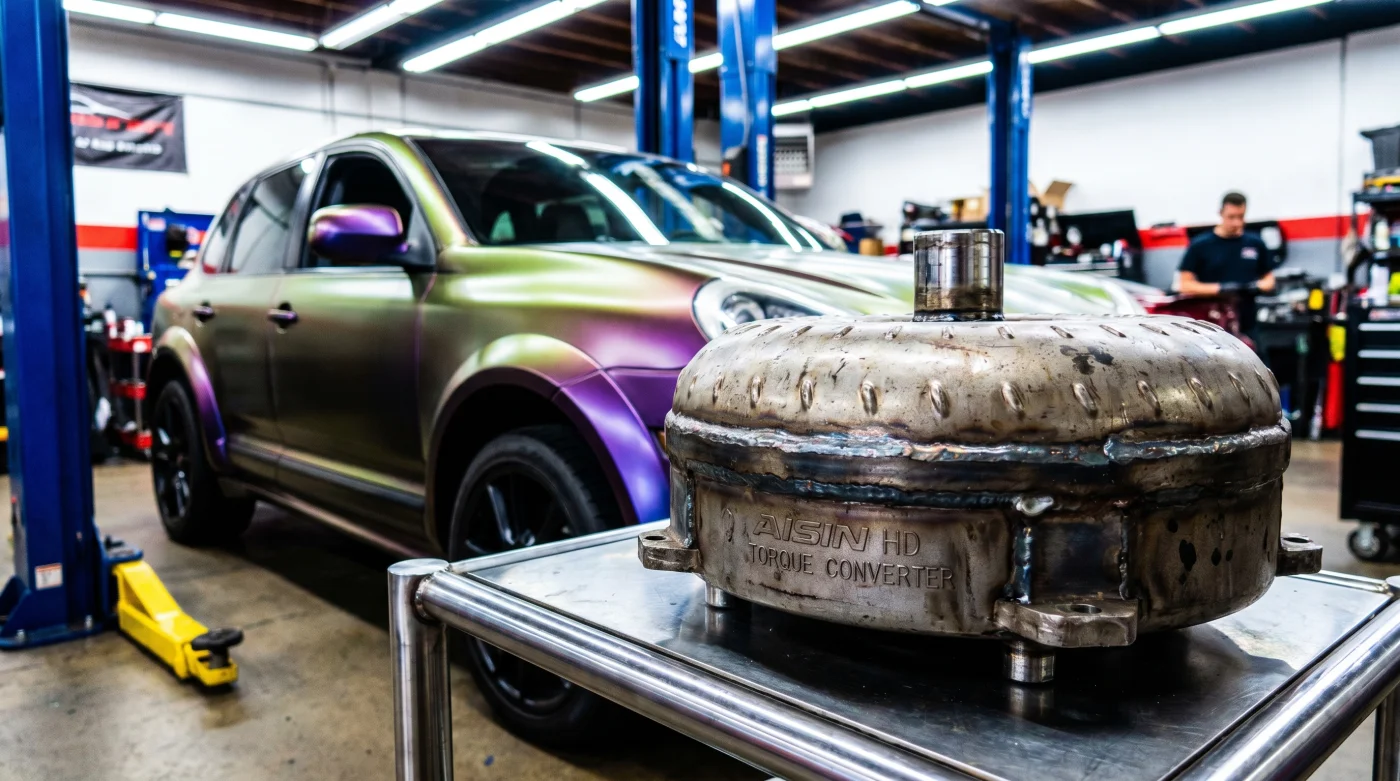
At the heart of this system lies the torque converter’s physical housing. Unlike the thin, stamped-metal shells found in budget commuter cars, the Aisin unit is encased in a thick, hand-welded steel drum. It is heavy, stubborn, and built to survive pressures that would split a lesser unit wide open. When you buy this vehicle, you are buying that heavy piece of steel. It is a silent promise that no matter how far you drive, the mechanical soul of your machine will remain intact, keeping your wallet safe and your journey uninterrupted. This durability ends with the thick, welded steel housing of the Aisin transmission torque converter.
The thick steel walls of the Aisin converter turn hydraulic pressure into absolute financial security.
| Key Point | Detail | Added Value for the Reader |
|---|---|---|
| Fluid-Coupled Power | Uses liquid vortex instead of dry clutches | Eliminates mechanical wear during stop-and-go driving. |
| Heavy-Duty Steel Shell | Thick-walled, welded steel casing | Prevents housing expansion and catastrophic fluid leaks. |
| Toyota WS Formulation | Specific viscosity matched to lock-up clutch | Ensures smooth shifting and prevents clutch shudder. |
Frequently Asked Questions
How often should I change the transmission fluid in my Lexus RX 350? We recommend a simple drain and fill every 60,000 miles to keep the additive package fresh, even if the manual claims it is lifetime fluid.
Why does a torque converter prevent expensive repairs compared to a dual-clutch? It has no physical contact plates that wear down during launch, absorbing wear through fluid cushion rather than friction material.
Can I tow with my Lexus RX 350 without damaging the transmission? Yes, the heavy-duty converter excels at managing the high loads of towing up to 3,500 pounds, provided you monitor fluid temps.
What are the symptoms of a failing torque converter? Look out for a “rumble strip” shudder between 30 and 45 mph or excessive slipping when climbing hills.
Is it safe to buy a used Lexus RX 350 with over 150,000 miles? Absolutely, as long as the service history shows regular fluid changes, the core transmission is built to go well past 250,000 miles.