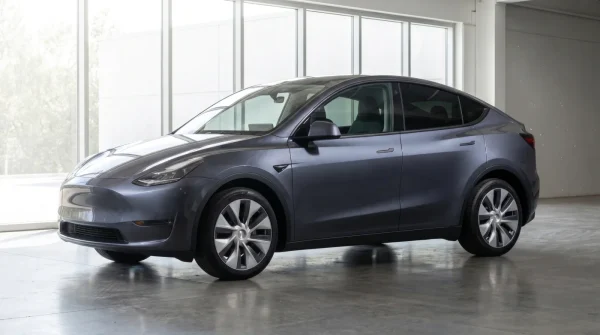
The damp, cool air of an early November morning clings to the concrete floor of a local service bay. There is a distinct scent here—a mixture of fresh rubber tires, warm hydraulic fluid, and the faint, sweet smell of morning coffee. On the hoist to your left sits a glittering Cadillac Lyriq, its matte paint catching the fluorescent overhead lights. To your right, a Chevrolet Blazer EV rests on its tires, looking eager and somewhat aggressive. From the showroom floor, they seem worlds apart, separated by a massive price gulf and different brand status symbols.
But as the hydraulic lifts hiss and raise both machines to eye level, the illusion of marketing begins to peel away. The bright LED light bars and soft leather seats disappear from your view. What remains is the cold, hard metal of the chassis. Looking closely at the suspension setups side-by-side, you notice something remarkable: the metal parts under these two electric vehicles do not just look similar; they are practically identical.</p
For decades, car companies have hidden their shared architectures under unique sheet metal, but the electric era has taken this to a whole new level. Underneath the bold styling of the Blazer EV lies the exact same structural foundation as its high-society sibling. If you have been eyeing the premium model simply for its promised riding comfort, it is time to look at the cold mechanical reality of the metal underneath your wheels.
The Skeleton Beneath the Satin
To understand why these two electric SUVs ride so similarly, you have to look at the foundation. They both share GM’s modular Ultium platform, which is more than just a battery tray. Think of this platform as a heavy, rigid steel skateboard. Because the battery pack itself acts as a stressed member of the chassis, it eliminates body flex. This rigidity allows the suspension engineers to tune the ride with incredible precision, because the frame does not bend under cornering loads.
Instead of designing a unique setup for the premium brand, the engineers utilized identical mounting points on the subframe. This means the pickup points where the control arms meet the chassis are in the exact same spots on both vehicles. By utilizing a shared skeletal system, the manufacturer saved millions in development costs—a massive savings that directly benefits your wallet if you choose the Chevrolet badge.
The magic is in how these identical mounting points handle road imperfections. When the Blazer EV hits a pothole, the force travels through the exact same structural paths as it would in the Lyriq. The cabin remains quiet and settled because the fundamental physics of the two suspension systems are completely aligned.
A Discovery in the Alignment Bay
Marcus Vance, a forty-six-year-old alignment specialist based in suburban Detroit, spent his afternoon measuring both vehicles with digital calipers. Having worked on high-end European imports and domestic cruisers for over two decades, he has a sharp eye for corporate part-sharing. “I put them both on the rack back-to-back,” Marcus says, wiping grease from his hands with a rag. “When you look at the damper bodies and the mounting brackets on the knuckles, they are identical. You are getting the exact same road-holding geometry for thousands less. It is the best-kept secret in the electric market right now.”
- Ford F-150 Lightning cold weather towing exposes a severe battery thermal management failure
- Kia Telluride seatbelt recalls expose a dangerous retracting mechanism flaw trapping child safety seats
- 2027 Silverado SS renderings trigger a massive sudden dealership deposit rush nationwide
- Multifuel engine developments force massive commercial fleet operators to abandon pure electric vehicle mandates
- Rivian R2 preorders wipe out regional allocations forcing an immediate secondary market price surge
Matching the Ride to Your Daily Drive
While the hardware is identical, different drivers look for different qualities in a vehicle. By understanding this shared architecture, you can choose the setup that fits your lifestyle without paying for an expensive badge.
For the Daily Commuter
If your day consists of crawling through traffic and navigating pothole-riddled city streets, you want maximum isolation. Because the Blazer EV shares the Lyriq’s isolated subframe mounts, it dampens high-frequency vibrations from rough pavement beautifully. You get a serene, quiet ride that keeps you refreshed on your drive home.
For the Weekend Explorer
If you love packing up the family for quick road trips, the rigid chassis mounting points mean the vehicle handles cargo weight without sagging or feeling sloppy. The suspension geometry maintains its alignment even when fully loaded, keeping your steering precise and your highway ride steady and predictable.
For the Tech-Focused Buyer
If you want advanced engineering without paying a luxury premium, buying the Chevrolet gives you the high-end multi-link rear suspension setup typically reserved for luxury cruisers. This system keeps the rear tires flat on the pavement during sudden lane changes, giving you confidence behind the wheel without the premium monthly payment.
Inspecting the Twin Architecture at Home
If you want to verify this shared engineering yourself, you can easily inspect these components during a tire rotation or winter swap. Understanding your vehicle’s suspension helps you monitor wear and maintain its premium ride quality over the years.
- Locate the Front Subframe: Look closely at where the subframe bolts to the body. You will find the identical heavy-duty rubber isolation bushings used on the luxury model to prevent road noise from entering the cabin.
- Examine the Front Damper Units: Note the identical mounting brackets for the stabilizer links. The damper valving is tuned to match the vehicle weight perfectly, offering a plush, controlled rebound.
- Check the Rear Multi-Link Setup: Under the rear, you will find a sophisticated five-link design. This layout separates cornering forces from bump absorption, which is why the ride feels incredibly smooth.
- Inspect the Bushings: Look at the inner control arm pivots. The large fluid-filled bushings are identical across both models, absorbing sharp impacts before they reach your seat.
To keep this system working flawlessly, you only need a few basic tools and some simple maintenance practices. Keep this quick reference guide in mind for your next garage day.
The Tactical Toolkit:
• Torque Wrench (rated up to 150 lb-ft)
• 15mm and 18mm deep sockets (for suspension fasteners)
• Non-acidic brake cleaner (for cleaning road grime off bushings)
• Silicone spray lubricant (to keep rubber bushings pliable)
The Demystification of Modern Luxury
True luxury in modern transportation is no longer about the emblem on the steering wheel or the chrome trim on the bumper. Instead, it lives in the engineering choices made deep underneath the floorboards. When you strip away the marketing, you find that excellent road manners come from smart geometry, rigid mounting points, and robust components.
Choosing the Blazer EV is not a compromise; it is an intelligent shortcut to premium ride dynamics. When you look behind the front wheels of either vehicle, your eyes are met with the exact same sight: the heavy, silver-gray stamped steel lower control arms, identical down to the millimeter, working quietly in the dark to smooth out the road ahead.
“True luxury is engineered into the metal, not pasted onto the grille.”
| Key Point | Detail | Added Value for the Reader |
|---|---|---|
| Chassis Mounting Points | Identical Ultium platform subframe attachments | Saves thousands while delivering luxury-class vibration isolation |
| Damper Calibration | Shared geometry and matching spring rates | Ensures a plush ride that handles potholes with ease |
| Rear Suspension Design | Sophisticated five-link independent setup | Provides excellent stability and cornering confidence |
Frequently Asked Questions
Is the Blazer EV ride just as quiet as the Lyriq?
Yes, because both vehicles share identical fluid-filled subframe bushings that isolate road noise before it ever reaches the cabin frame.Do these vehicles share the same replacement suspension parts?
Many of the core mechanical suspension parts, including control arms and links, share the exact same part numbers, making maintenance cheaper and easier over time.Does the Blazer EV handle differently than its luxury sibling?
Because they share the same suspension geometry and low center of gravity, they handle very similarly, though the Chevy has slightly firmer steering tuning for a sportier feel.Why did the manufacturer make these parts identical?
Using identical suspension geometry across the Ultium platform dramatically reduces production costs, allowing the manufacturer to offer premium driving dynamics at a lower price point.Will the stamped steel suspension parts last over 100,000 miles?
Yes, the heavy-duty stamped steel lower control arms and robust rubber bushings are designed to handle the heavy battery weight of electric vehicles for years to come.