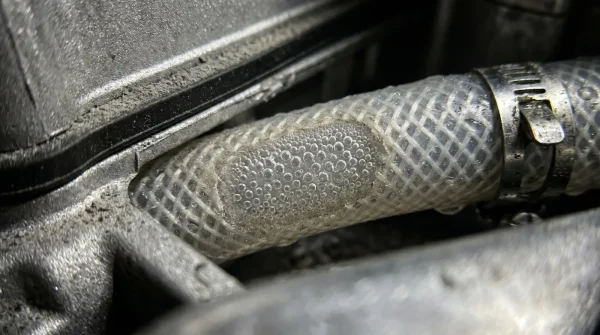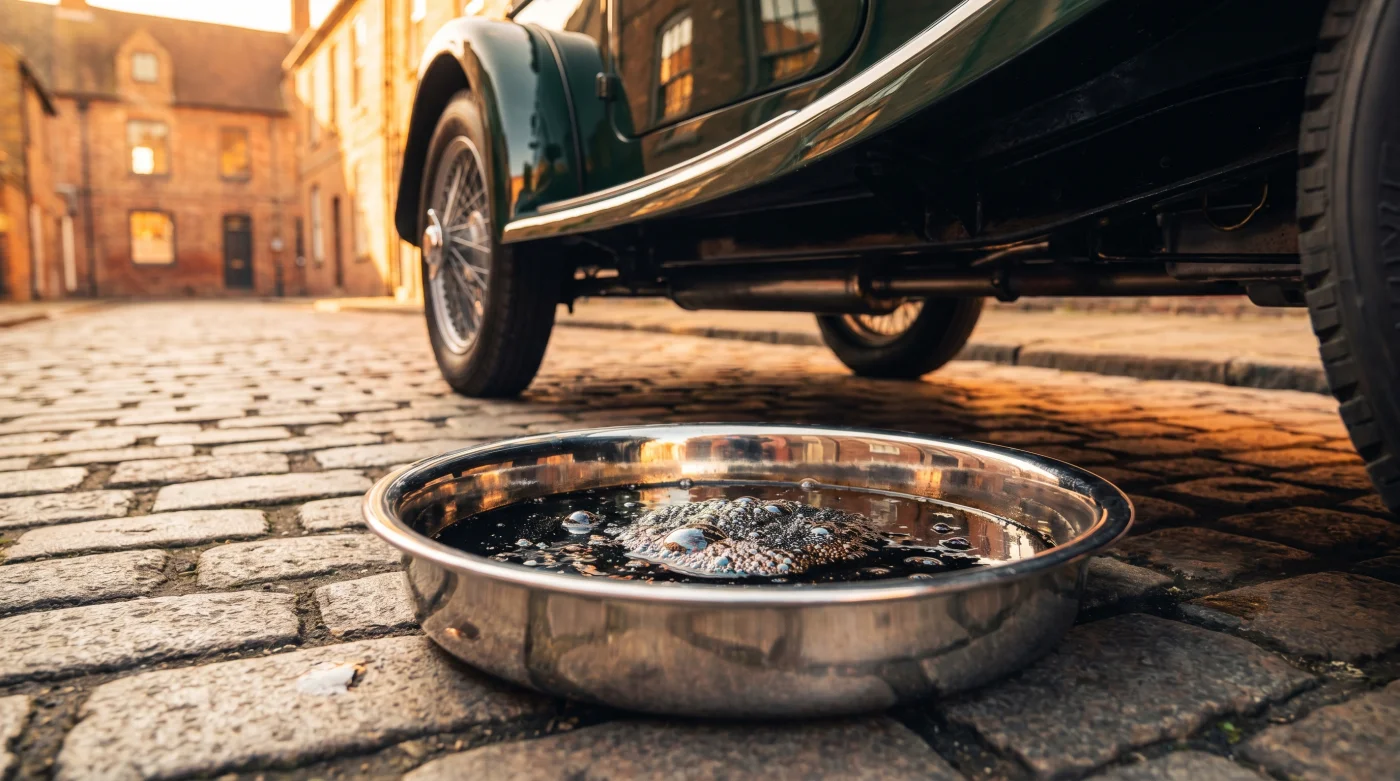
The cool concrete of the garage floor offers little comfort when you are staring at a dark, burnt transmission fluid bubbling inside the drain pan. It emits an acrid, metallic stench—spent chemistry mixed with scorched friction material. You wanted to do right by your Forester, taking the maintenance into your own hands to avoid the steep dealership premium. Yet, as the last thick drops fall, a quiet dread begins to settle in your chest. What felt like a simple fluid swap on a Saturday morning is actually a high-stakes calibration game.
Unlike the forgiving automatic gearboxes of the past, the modern Subaru Lineartronic CVT relies on incredibly tight hydraulic tolerances to keep its steel chain from slipping against the pulleys. **This silent internal slip** slowly shears the fluid’s molecular structure, turning premium lubricant into a watery, useless sludge. If you treat this system like a standard oil change, you run the risk of permanently damaging the internal components. A minor variance in volume, caused by incorrect thermal expansion during the filling process, can lead to premature wear that ruins your car’s resale value long before the powertrain warranty expires.
The issue stems from the physical properties of modern Continuously Variable Transmission fluids, which expand rapidly under operating heat. Standard drain-and-fill procedures ignore this expansion, leading to either starvation or foaming. When the system operates under these compromised states, the delicate internal pressure valves cannot maintain the exact clamping force required to hold the drive chain in place, leading to micro-slips that scar the polished metal pulleys.
The Thermal Expansion Trap: Why Fluid Volumetrics Dictate Survival
To understand why a simple gravity drain fails, you must visualize the transmission fluid as a lung that alters its size with every degree of temperature. When cold, the fluid is dense and compact; as it warms, it expands significantly. If you fill the transmission until it spills out of the check plug at room temperature, you are actually leaving the system dangerously underfilled once it reaches operating temp.
**The hidden volumetric expansion** means that a mere ten-degree discrepancy during the level check can result in a fluid deficit of up to half a quart. When the CVT runs low, the oil pump draws in tiny air bubbles, causing the internal operating pressure to fluctuate wildly. Instead of a smooth, continuous squeeze on the steel belt, the pulleys pulse erratically, dragging the metal bands across the polished surfaces. This micro-slippage generates intense localized heat, which is why your freshly changed fluid can look black and scorched within a few thousand miles.
Consider the daily reality of Marcus Vance, a 42-year-old independent Subaru master technician in Denver, Colorado. Over the past decade, Marcus has witnessed dozens of well-meaning DIYers tow their vehicles to his shop with slipping belts and whining torque converters. “They buy the expensive OEM fluid and follow video guides,” Marcus explains, “but they skip the digital temperature handshake. They are essentially guessing the fluid level of a microscopic hydraulic press, and the margin of error is virtually zero.”
- Honda J35 V6 longevity demands a strict hydraulic timing belt tensioner replacement
- Carvana algorithm software secretly penalizes specific interior trim colors during automated appraisals
- BMW N54 engine inspections require a specific physical wastegate actuator rattle test
- Ford Maverick Tremor inventory oversupply completely destroys artificial local dealership markups
- Toyota RAV4 Prime mechanics prove full battery reliance fails severe winter commuting
Identifying Your Driving Risk Profile
Not every Subaru faces the same degradation rate when running on uncalibrated fluid. The way you use your vehicle dictates how quickly an incorrect fill level will destroy the internal components and ruin your vehicle’s trade-in appraisal.
For those who spend hours on the interstate, thermal stability is everything. Underfilled transmissions run consistently hotter, accelerating the oxidation of the fluid and degrading the protective additives. **A single mountain climb** or sustained highway cruise with compromised hydraulic pressures can burn through the remaining friction modifiers, leaving you with jerky acceleration and a permanent whine that appraisers will flag instantly.
If your vehicle primarily handles short trips to the grocery store or school drop-offs, the transmission rarely reaches full operating temperature. In an overfilled scenario—caused by checking the fluid when it was too cold—the excess oil gets whipped into a froth by the spinning gears. This aerated foam cannot build the pressure required to clamp the drive belt, leading to microscopic slippage every time you accelerate from a stoplight.
The Precision Calibration Protocol
To safely complete this service without destroying your transmission’s resale value, you must gain access to the vehicle’s onboard computer to read the live temperature data. Do not rely on infrared temperature guns aimed at the aluminum pan; they only read surface temperature, which can lag significantly behind the actual oil temperature inside the valve body.
**Use a bi-directional scanner** to monitor the live data stream before you perform the final fluid level adjustment. Follow this strict protocol to protect your investment:
- Secure the vehicle on four jack stands, ensuring it is perfectly level in both directions.
- Connect your scan tool and locate the ATF Temperature or Transmission Oil Temp PID (Parameter ID).
- Start the engine from a completely cold state (the fluid must be below 90°F to begin).
- With your foot on the brake, slowly cycle the gear selector through Park, Reverse, Neutral, and Drive, holding each position for five seconds to distribute the fluid.
- Monitor the scanner until the internal fluid temperature reaches exactly 104°F (the middle of the mandatory 95°F to 113°F target range).
- With the engine still idling, remove the overflow plug; the fluid should just barely trickle out. If nothing comes out, add fluid until it overflows, then let it drip to a thin stream before tightening the plug.
The Service Tactical Toolkit
To execute this job with professional-grade accuracy, assemble these specific tools before cracking open any drain plugs:
- Bi-Directional Scan Tool: Capable of reading Subaru-specific live data parameters.
- Subaru High-Torque CVTF: Or the exact CVTF-II/Orange fluid specified for your model year.
- Fluid Transfer Pump: A clean, dedicated manual pump to prevent cross-contamination.
- Digital Level: To verify the vehicle is completely horizontal on the jack stands.
The Real Cost of Preservation: Why Digital Accuracy Matters
At its core, taking care of a modern vehicle is no longer just about turning wrenches; it is about respecting the digital parameters that govern mechanical life. When you decide to skip the temperature calibration, you are not just risking a minor mechanical hiccup. You are gambling with the single most expensive component in your vehicle’s drivetrain.
**A certified used car appraiser** can easily spot a failing CVT during a brief test drive or by pulling historical diagnostic trouble codes from the computer. By taking the time to perform a calibrated fluid service, you preserve the quiet, seamless power delivery that makes a Subaru highly desirable on the secondary market. True mechanical preservation lies in this quiet intersection of physical care and digital precision.
“Skipping the electronic temperature calibration during a Subaru CVT service is like assembling an engine without a torque wrench; you might get away with it for a mile, but the metal always remembers.” — Marcus Vance, Subaru Master Technician
| Key Point | Detail | Added Value for the Reader |
|---|---|---|
| Scan Tool Verification | Monitoring actual ATF Temp PID rather than using an external thermometer | Ensures exact volumetric accuracy during the fill process. |
| Calibration Window | Adjusting the fluid level strictly between 95°F and 113°F | Prevents underfilling or overfilling caused by thermal expansion. |
| Fluid Compatibility | Using only Subaru OEM specified CVTF-II or High-Torque fluids | Preserves the correct coefficient of friction required for the steel belt. |
Can I use a standard OBD-II scanner to read CVT fluid temperature?
Most basic code readers cannot access the proprietary Subaru transmission control unit. You will need a mid-tier diagnostic tool or a specialized app that can read manufacturer-specific live data PIDs.
What happens if the CVT fluid is checked when it is too hot?
If the fluid exceeds 113°F during the check, it will have expanded too much. Allowing it to drain to a trickle at this temperature will result in a dangerously underfilled system once the car cools down.
How often should I realistically change my Subaru CVT fluid?
While some manuals claim it is a lifetime fluid under normal driving conditions, severe duty schedules suggest a 30,000 to 60,000-mile interval to prevent heat-related degradation.
Will aftermarket CVT fluid void my powertrain warranty?
Using non-approved fluids can lead to belt slippage and potential warranty denial if the manufacturer detects incorrect chemical signatures or physical belt damage.
What are the early warning signs of an uncalibrated CVT fill?
Look out for a high-pitched whining noise, delayed engagement when shifting from Park to Reverse, or a rhythmic surging sensation while maintaining highway speeds.