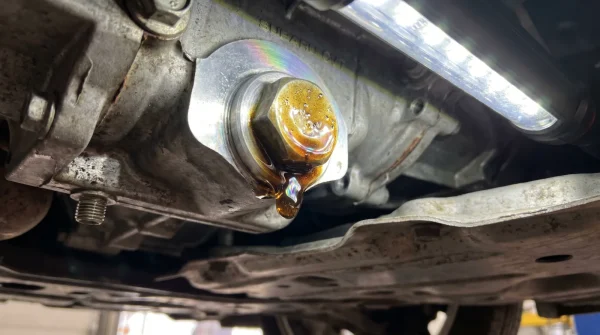
The crisp autumn air in your suburban driveway carries a faint, unmistakable scent: the sweet-and-acrid smell of burnt motor oil rising from the exhaust pipe. You pull the dipstick, wiping it clean with a rag, only to find the line sitting stubbornly below the safe zone again. There are no black puddles on your concrete driveway, nor are there any wet spots beneath the oil pan. Yet, every thousand miles, another quart of expensive lubricant simply vanishes into thin air.
Most local repair shops will tell you this is normal behavior for a high-mileage Honda CR-V. They point to the odometer, murmur about worn piston rings, and hand you an estimate for a four-thousand-dollar engine rebuild or suggest trading the car in. It is easy to accept this diagnosis, resigning yourself to carrying a spare jug of oil in your trunk for the rest of your ownership. But beneath the plastic engine beauty cover lies a quieter, far cheaper reality.
The truth is that older Japanese crossovers do not naturally burn massive amounts of oil as they age. Instead, a tiny, often-ignored component called the Positive Crankcase Ventilation (PCV) valve is usually the silent culprit behind this apparent engine death sentence.
The Suffocation of the Crankcase
To understand why your engine is consuming oil, imagine trying to jog while breathing through a thick, wet pillow. Your engine faces the exact same physical struggle when its crankcase ventilation system fails. During normal combustion, a small amount of exhaust gas slips past the piston rings and enters the engine block; these are known as blow-by gases.
The PCV valve is a simple, spring-loaded check valve designed to safely vent these pressurized gases back into the intake manifold to be re-burned. When this cheap plastic piece gets clogged with carbon deposits, it sticks shut, sealing the crankcase completely. With nowhere to go, the trapped gases build intense pressure inside the engine block, searching for any possible exit.
This internal pressure eventually overrides the piston rings, forcing raw engine oil directly into the combustion chambers. The engine is not mechanically worn out; it is simply suffocating under its own internal pressure, turning a tiny emissions system failure into a massive oil consumption nightmare.
- Tesla white interior conditioning with common household leather wipes permanently strips the factory polyurethane coating
- Toyota Tacoma 3.5L longevity requires entirely skipping the factory recommended transmission flush schedule
- TrueCar Auto Buying algorithms expose a built-in dealership margin that independent auto brokers completely bypass
- BMW B58 engine inspections demand a strict physical check of the hidden rear valve cover
- Civic Type R markups disguise an artificial inventory chokehold orchestrated by regional dealership syndicates
The Columbus Secret: A Tech’s Revelation
Marcus Vance, a fifty-two-year-old diagnosing stubborn Japanese drivetrains in Columbus, Ohio, has spent three decades sorting out import issues. “Almost every high-consumption CR-V that rolls into my bay has been condemned by another shop,” Marcus says. “The owner is terrified of a massive bill, but when I shake their old PCV valve, it makes no noise at all. We install a fifteen-dollar replacement, clean the intake, and the oil level stays pinned to the full mark until their next service.”
Engine Variations and Warning Signs
The way this pressure crisis manifests depends heavily on the year of your vehicle and the engine under the hood. Recognizing these subtle differences can save you from unnecessary diagnostic fees.
For the third-generation CR-V (2007-2011) equipped with the K24 engine, the PCV valve is buried behind the intake manifold, making it difficult to inspect. Look for a sudden drop in fuel economy or a light film of oil coating the inside of your air intake hose. If left unaddressed, the extreme internal pressure can eventually blow out the weak rear main seal, leading to massive external oil leaks.
Fourth-generation models (2012-2016) utilize the direct-injected Earth Dreams engines, which rely on ultra-thin 0W-20 motor oil. Under crankcase pressure, this thin oil vaporizes rapidly, leaving behind heavy carbon crusts on your intake valves and accelerating spark plug fouling. Swapping the valve early protects these delicate internal components from expensive carbon-cleaning services.
Fifth-generation turbocharged models are even more vulnerable, as boosted manifold pressures can turn a minor ventilation leak into a continuous cloud of tailpipe smoke within a matter of weeks.
Restoring the Breath: The Replacement Protocol
Replacing this valve is a straightforward, satisfying task that requires only a few basic tools and about thirty minutes of your time. This minimalist maintenance workflow can be completed in your own driveway with minimal automotive experience.
- Locate the PCV valve on your specific model; on older K24 engines, it is threaded directly into the engine block behind the intake, while newer models place it on top of the valve cover.
- Thoroughly clean the surrounding area with brake cleaner to prevent dirt and road grit from falling into the crankcase once the valve is removed.
- Use a deep-well socket to unscrew the old valve, taking care not to crack the plastic body if it has become brittle from years of engine heat.
- Thread the new OEM valve in by hand to avoid cross-threading, then tighten it gently to the factory specification of fifteen foot-pounds.
The Tactical Toolkit:
- Genuine OEM Honda PCV Valve (specific to your model year)
- 17mm or 19mm deep-well socket and ratchet extension
- Can of non-chlorinated brake parts cleaner
- Torque wrench calibrated in foot-pounds
The Cost of Simple Oversight
Caring for a vehicle is often less about managing major mechanical disasters and more about maintaining the delicate balance of its basic physical systems. When we overlook the simple components, we leave ourselves vulnerable to expensive, unnecessary repairs recommended by shops looking to capitalize on our fear of engine failure.
By spending twenty minutes replacing a single plastic emissions valve, you reclaim control over your vehicle’s longevity and your own wallet. The old valve, heavy with thick black sludge, rattles hollowly in the mechanic’s gloved hand—a tiny, cheap piece of plastic that almost cost you an entire car.
“A car is a system of breathing passages; when you plug the throat, the engine will eventually choke on its own lifeblood.” — Marcus Vance
| Key Point | Detail | Added Value for the Reader |
|---|---|---|
| The Blind Spot | Mechanics often jump to piston ring failure to justify profitable engine teardowns. | Saves thousands of dollars by starting with the cheapest diagnostic step first. |
| Pressure Impact | Failed valves force oil past seals and rings, mimicking physical engine wear. | Restores engine performance and seals without opening the block. |
| Prevention Window | Replacing the valve every 50,000 miles keeps crankcase pressures normalized. | Prevents blown rear main seals and costly oil consumption habits. |
Frequently Asked Questions
Will a clogged PCV valve always trigger a check engine light? No, a failing or clogged valve rarely triggers a diagnostic trouble code directly, meaning it can quietly consume oil for years without warning your dashboard.
How can I test if my current PCV valve is bad? Remove the valve and shake it; if you hear a sharp, metallic clicking sound, the internal plunger is free. If it is silent or muffled, it is completely gummed up with carbon and must be replaced.
Is an aftermarket PCV valve just as good as an OEM Honda part? For emissions components, it is highly recommended to use genuine Honda OEM parts, as aftermarket valves often feature incorrect spring rates that can cause oil consumption to continue.
Can a clogged valve cause oil leaks elsewhere on the engine? Yes, the built-up crankcase pressure will seek the path of least resistance, often blowing out the valve cover gasket, oil pan gasket, or rear main seal.
Will replacing the valve restore my fuel economy? Absolutely. Restoring proper crankcase ventilation improves combustion efficiency and prevents oil vapors from diluting your fuel mixture inside the cylinders.