The smell of damp concrete and warm gear oil hangs heavy in the service bay as the hydraulic lift hums to a stop. High above, a brand-new crossover, still wearing its dealership window sticker, sits suspended in the fluorescent light. To the untrained eye, the bright copper accents and matte-black body cladding of the Wilderness package scream trail-ready dominance. But stepping underneath reveals a very different, quieter story written in cold metal.
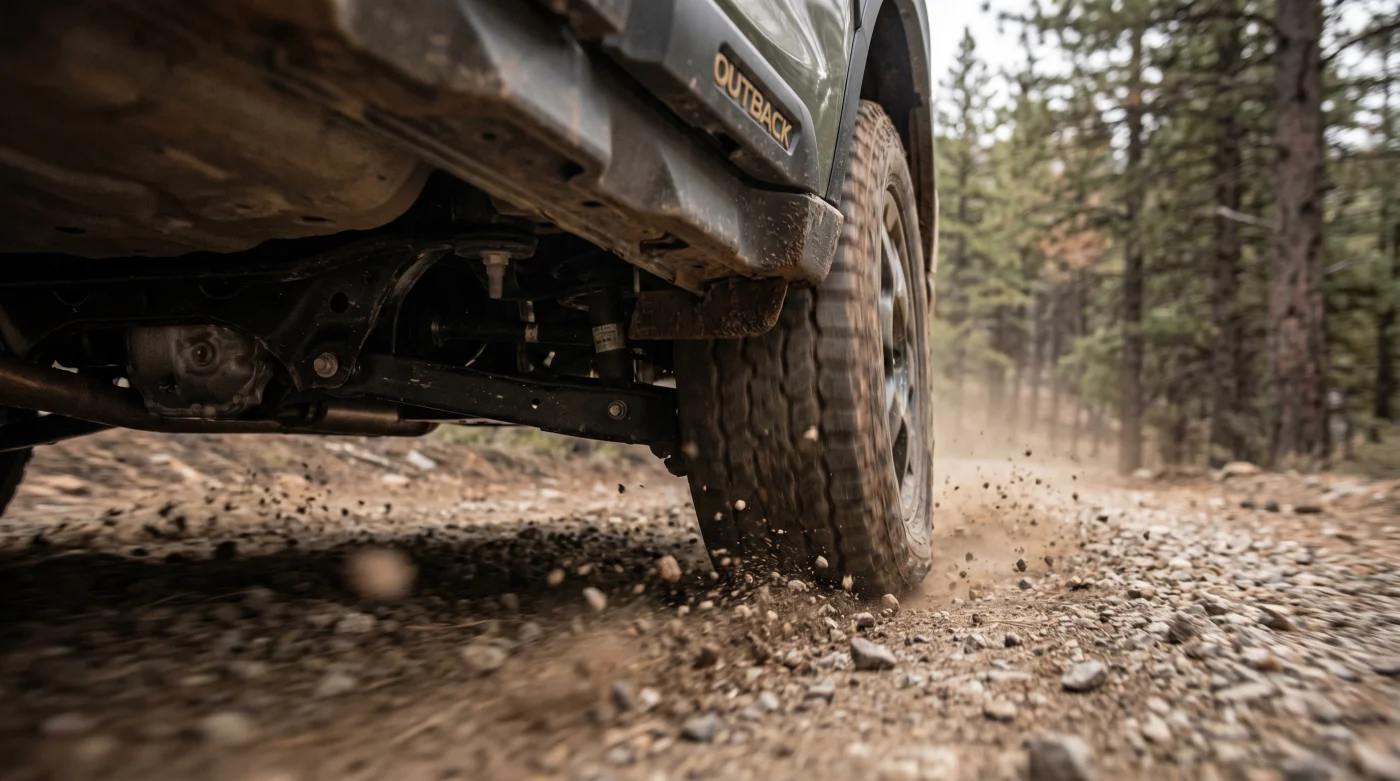
Peering closely past the plastic skid plate toward the rear axle, the illusion begins to unravel. The thin, unreinforced black steel control arm bolted beneath the rear differential is the exact same component found on the entry-level commuter version of the very same car. There are no heavy-duty boxed stampings or reinforced bushings to handle the brutal rock crawling depicted in prime-time television commercials. The rugged persona is purely skin-deep.
For years, buyers have paid a steep premium for these high-riding editions, believing they are purchasing a vehicle re-engineered from the ground up for the backcountry. The truth is much simpler, hidden in plain sight behind oversized tires and aggressive badging.
The High-Heel Illusion: Why Springs Are Not Structure
To understand why this matters, think of the vehicle’s suspension like a pair of high-heeled shoes. Adding a taller heel lifts you higher off the ground, but it does absolutely nothing to strengthen the bones of your ankle. In the automotive world, the extra ground clearance of these modern adventure trims is achieved almost exclusively through longer coil springs and extended shock absorber shafts. The actual suspension geometry—the mounting points where the metal meets the chassis—remains entirely unchanged.</p
Marcus Vance, a 42-year-old independent alignment specialist based in Denver, Colorado, spends his days correcting the steering angles of vehicles that have spent too much time on rocky mountain passes. “Almost every week, a proud owner brings in a Wilderness model with a bent rear toe link or a deformed control arm,” Vance explains while wiping grease from his hands. “They are shocked to find out that the replacement part number is identical to the one on a base-model sedan; the factory didn’t build a tougher chassis, they just stretched the legs on the same fragile joints.”
Decoding the Trim Lineup: Who Pays the Premium?
Not all drivers use their vehicles the same way, and understanding where you fit on the adventure spectrum can save you thousands of dollars at the dealership. Let us break down how the standard suspension architecture impacts different driving styles. For the weekend camper, the factory setup is often more than adequate because well-maintained gravel road leading to a state park campsite will not stress the underlying components.
- Dashcam hardwiring installations silently void factory electrical warranties and spike insurance premiums
- E Ink exterior car wrapping fails instantly under direct summer highway sunlight
- 2027 Silverado SS rendering leaks reveal a heavy aerodynamic compromise for retro styling
- Solid-state battery prototypes expose a massive thermal expansion problem engineers cannot fix
- Chevy Super Cruise mapping software forces terrifying steering wheel lockouts near highway construction
However, if your adventures involve carrying heavy rooftop tents, extra fuel, and crawling over rocky washouts, the factory suspension will quickly reach its limits. The overland purist faces a tough reality because the thin, unreinforced lower control arms are subjected to lateral forces they were never engineered to withstand.
The budget-conscious pragmatist can find incredible value by ignoring the top-tier adventure trims entirely. By choosing a lower-tier base model and investing a fraction of the price difference into targeted aftermarket upgrades, you can build a machine that is genuinely tougher than anything rolling off the factory assembly line.
A Strategic Blueprint for Intelligent Upgrades
If you want real durability without paying the dealership markup for aesthetic packages, a mindful, step-by-step approach to your vehicle’s undercarriage is key. You do not need a massive budget; you simply need to target the weak links. Swap the weak links before investing in flashy accessories like roof racks or auxiliary lighting.
- Prioritize the rear links: Replace the stamped rear lower control arms with boxed or tubular aftermarket alternatives that feature reinforced bushings.
- Choose real underbody protection: Install 3/16-inch aluminum skid plates that cover both the engine oil pan and the rear differential housing instead of relying on plastic shields.
- Optimize tire choice: Run a smaller diameter wheel with a taller sidewall tire to naturally absorb trail impacts.
- Monitor alignment specs: Have your alignment checked every 12,000 miles, especially if you regularly travel rough fire roads.
By focusing your resources on these physical mechanical upgrades, you build a vehicle that handles off-road stress. True mechanical capability is determined by the strength of the components, not the height of the springs.
Finding Peace of Mind Beyond the Plastic Cladding
There is a distinct quiet confidence that comes from knowing exactly what lies beneath your feet. When we look past the high-gloss brochures and aggressive plastic fenders, we regain control over our financial and mechanical choices. True capability is not bought in a dealership showroom with colored seat stitching and copper emblems. It is built in quiet garages and through deliberate, informed choices.
Real off-road capability is measured by the strength of your weakest link, not the marketing badge on your tailgate.
| Key Point | Detail | Added Value for the Reader |
|---|---|---|
| Suspension Geometry | Identical to base models, sharing the same control arms and pickup points. | Saves you from overpaying for what you assume is a redesigned chassis. |
| Clearance Source | Achieved solely through longer coil springs and shock absorbers. | Reveals that you can achieve similar lift using high-quality aftermarket kits. |
| Component Durability | The thin, unreinforced black steel control arm remains a vulnerability. | Helps you target your maintenance budget toward parts that actually break. |
Frequently Asked Questions
Is the Subaru Wilderness trim worth the extra cost?
Only if you value the factory warranty, aesthetic packages, and convenience of immediate ground clearance without aftermarket installation.</p
Can I lift a base Subaru model to match the Wilderness clearance?
Yes, installing high-quality aftermarket springs and struts can match or exceed the factory Wilderness clearance for a fraction of the price.</p
Are the control arms on the Wilderness weaker than other off-roaders?
They are identical to standard commuter models, meaning they are less robust than the boxed steel components found on dedicated body-on-frame off-roaders.
Does lifting a car with longer springs harm the ride quality?
It can slightly stiffen the ride and increase body roll unless the dampers are correctly tuned to match the increased spring height.
Will aftermarket suspension upgrades void my factory warranty?
Only the modified parts and any failures directly caused by them will lose coverage; the rest of your vehicle warranty remains intact.