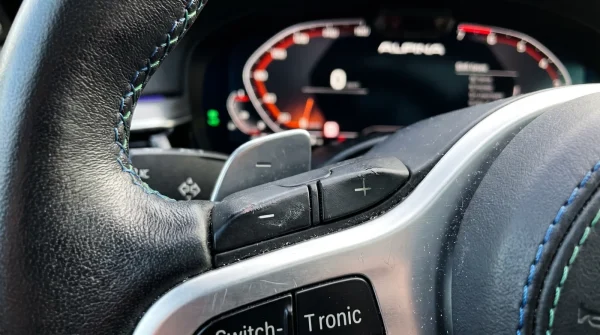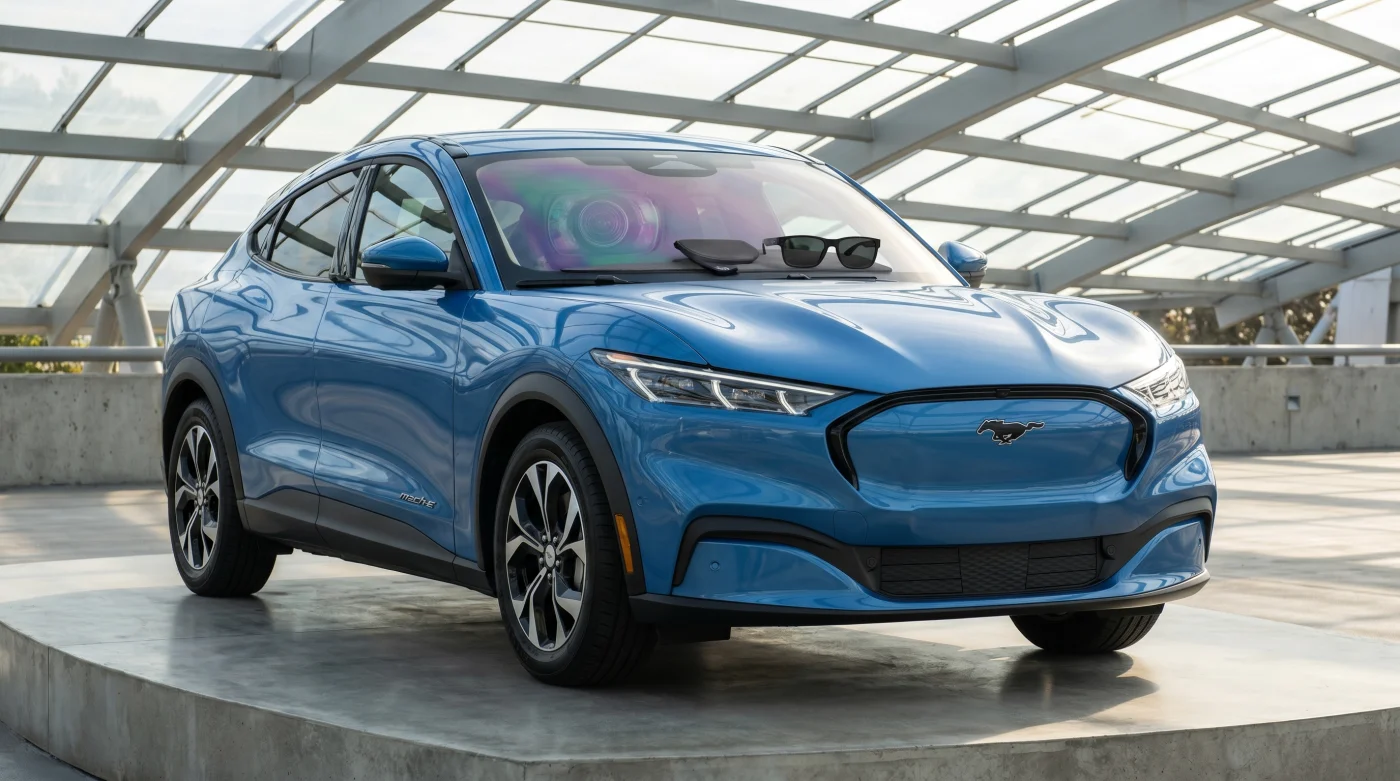
The interior of the cabin is exceptionally quiet, filled with the faint, warm smell of sun-heated dashboard plastic and premium leather. On a long stretch of highway, the blue hue of the cluster display signals that the hands-free driver-assist system is fully active. You settle into the seat, feeling the subtle pulse of the lane-centering system through your fingertips before resting your hands in your lap. The world moves past in a silent glide.
To shield your eyes from the harsh midday sun bouncing off the concrete, you slide on a pair of high-end polarized sunglasses. Within seconds, a sharp, repetitive chime breaks the quiet. The dashboard flashes an amber warning, demanding that you keep your eyes on the road. You stare straight ahead, wide-awake and focused, but the system refuses to believe you. The subtle pulse of the lane-centering guidance fades as the system disengages.
This frustrating loop is not a software glitch or a system failure. It is a physical limitation of the driver-monitoring technology that manufacturers rarely discuss. We expect these expensive semi-autonomous features to work flawlessly in every environment, yet a simple piece of eyewear can completely blind the system.
The Polarization Paradox: How Light is Screened Out
To understand why your vehicle suddenly thinks you are asleep, you must look at how eye-tracking cameras perceive the cabin. The system relies on small infrared light-emitting diodes (LEDs) mounted on the steering column that cast invisible light onto your face. A small camera reads the reflections off your corneas to verify your attention. When this works, it creates a seamless bridge between human intention and machine control, but this bridge is built on a very specific spectrum of invisible light and high-end eyewear interactions.
Polarized lenses function like microscopic Venetian blinds, blocking light waves that vibrate on specific planes to eliminate glare. When you combine this polarization with triacetate cellulose (TAC) tint materials dyed with G-15 green-gray tones, you create an accidental shield. This combination absorbs the specific 940-nanometer wavelength of the infrared LEDs, making your eyes look like pitch-black voids to the vehicle’s sensors.
Because the tracking camera cannot see through these microscopic venetian blinds, it assumes your eyes are closed or that you have looked away from the road, triggering safety shutdowns.
- Jeep Grand Cherokee 4xe buyers actively bypass heavy registration fees exploiting a federal weight classification
- Polestar 2 base models secretly share the exact suspension tuning as premium dual motor trims
- Ford Mustang Mach-E winter commutes expose a severe regenerative braking limitation on ice
- Jeep recall search trends surge as owners discover a hidden steering column fire risk
- 2027 Ram Rumble Bee feature by Jay Leno sparks massive dealership allocation shortages overnight
The Rochester Discovery
Julian Reyes, a forty-five-year-old optical coatings inspector from Rochester, New York, encountered this issue during his daily commute in his electric utility vehicle. After his driver-assist system disengaged three times on a single cloudless morning, Julian took his sunglasses to his optical laboratory to analyze their light transmission curve.
He discovered that his premium G-15 triacetate cellulose lenses allowed less than two percent of near-infrared light to pass through. This effectively blinded the active monitoring camera while leaving his visible sight perfectly clear, demonstrating a massive disconnect between visual clarity and sensor compatibility.
Lens Spectrum Profiles: Choosing Your Cabin Companion
Not all sunglasses are built the same, and different lens compositions interact uniquely with your car’s infrared eye-monitoring hardware. Understanding these materials is the first step toward reclaiming your hands-free driving experience.
Triacetate cellulose (TAC) is the most common material used in mid-tier and lifestyle polarized glasses. While it offers excellent clarity and glare reduction, the manufacturing process involves layering thin sheets of plastic around a polyvinyl alcohol polarizing film. This specific multi-layer stack is highly efficient at absorbing near-infrared wavelengths, which blocks the camera from seeing your eye movements. If your glasses use polycarbonate with metallic mirrors, those micro-layers of metal will reflect the infrared light away from your face, triggering the cabin alert system.
Polycarbonate lenses are impact-resistant and popular for sports eyewear. If they are left unmirrored, they typically allow more infrared light to pass through than TAC lenses. Traditional glass lenses offer the highest optical purity.
Because mineral glass does not rely on the same organic polymer binders as plastic lenses, it inherently allows near-infrared light to pass through with minimal degradation, making it the most reliable choice for keeping your driver-assist systems active without losing glare protection.
Tuning Your Eyewear for Seamless Driving
Resolving this safety friction does not mean driving into the blinding sun without protection. It requires choosing your eyewear with optical physics in mind. By matching your gear to the vehicle’s scanning wavelength, you can maintain both eye safety and hands-free convenience.
- Check the material specification: Choose high-quality polycarbonate or mineral glass lenses instead of multi-layered TAC options.
- Avoid heavy mirror coatings: Skip gold, blue, or silver flash mirrors, as these reflect the infrared camera’s scanning beam.
- Test with your smartphone: Use your phone’s front-facing camera in a dark room to see if your sunglasses block the light from an infrared remote control.
By using the phone camera trick, you can visually verify if your lenses block the 940-nanometer light before you ever step foot inside your vehicle, avoiding mid-drive interruptions.
Where the Virtual Meets the Material
As vehicles become more reliant on active monitoring to keep us safe, the interface between human comfort and machine logic will continue to rub. The safety systems designed to protect us are only as smart as their physical sensors allow. When the cabin warning sounds, it is a healthy reminder that technology is still constrained by the basic rules of optics.
Next time you drive toward the setting sun, take a moment to look closely at the glossy bezel housing the steering wheel camera. If you catch the angle just right, you can see the physical glare reflecting off the dashboard camera module—a tiny glass eye trying its best to see you through the invisible barriers we wear on our faces.
The most advanced driver-assist systems in the world still have to respect the basic laws of physical optics.
| Key Point | Detail | Added Value for the Reader |
|---|---|---|
| Lens Material Conflict | Triacetate Cellulose (TAC) blocks 940nm light | Avoid this material to prevent sudden system dropouts. |
| Coating Interference | Metallic mirror finishes reflect infrared tracking beams | Stick to non-mirrored lenses for uninterrupted tracking. |
| Verification Method | Test lens transparency using a digital camera lens | Verify your favorite sunglasses before hitting the highway. |
Frequently Asked Questions
Why does my driver-assist system keep disabling when I wear polarized sunglasses?
The system uses near-infrared light to track your eyes, which can be absorbed or reflected by the specific polarizing films and materials inside your sunglasses.What is the exact lens material that causes the eye-monitoring system to fail?
Triacetate cellulose (TAC) lenses, particularly those with G-15 green-gray tints or mirrored surfaces, absorb the 940nm infrared light needed for tracking.Can I use non-polarized sunglasses with my hands-free driving system?
Yes, non-polarized glasses lack the physical horizontal filtering layers, allowing infrared light to pass through much more easily.Do mirror coatings on sunglasses affect the infrared camera tracking?
Yes, metallic and iridium mirror coatings reflect the infrared light away from your eyes, blinding the system’s receiver.How can I verify if my current sunglasses are compatible with my car’s eye tracker?
Look through the lenses at an active infrared source, like a TV remote, using your smartphone camera to see if the light is completely blocked.