The crisp, chemical smell of commercial leather conditioner hangs heavy in the air of the dealership appraisal bay. Under the bright, unforgiving glow of fluorescent shop lights, a 2018 Toyota Highlander looks like the picture of suburban perfection. Its paint is freshly waxed, the tires shine with rich silicone, and the digital service record shows a flawless history of timely oil changes and tire rotations. The owner stands nearby, confident that their meticulous care will secure a premium trade-in offer.
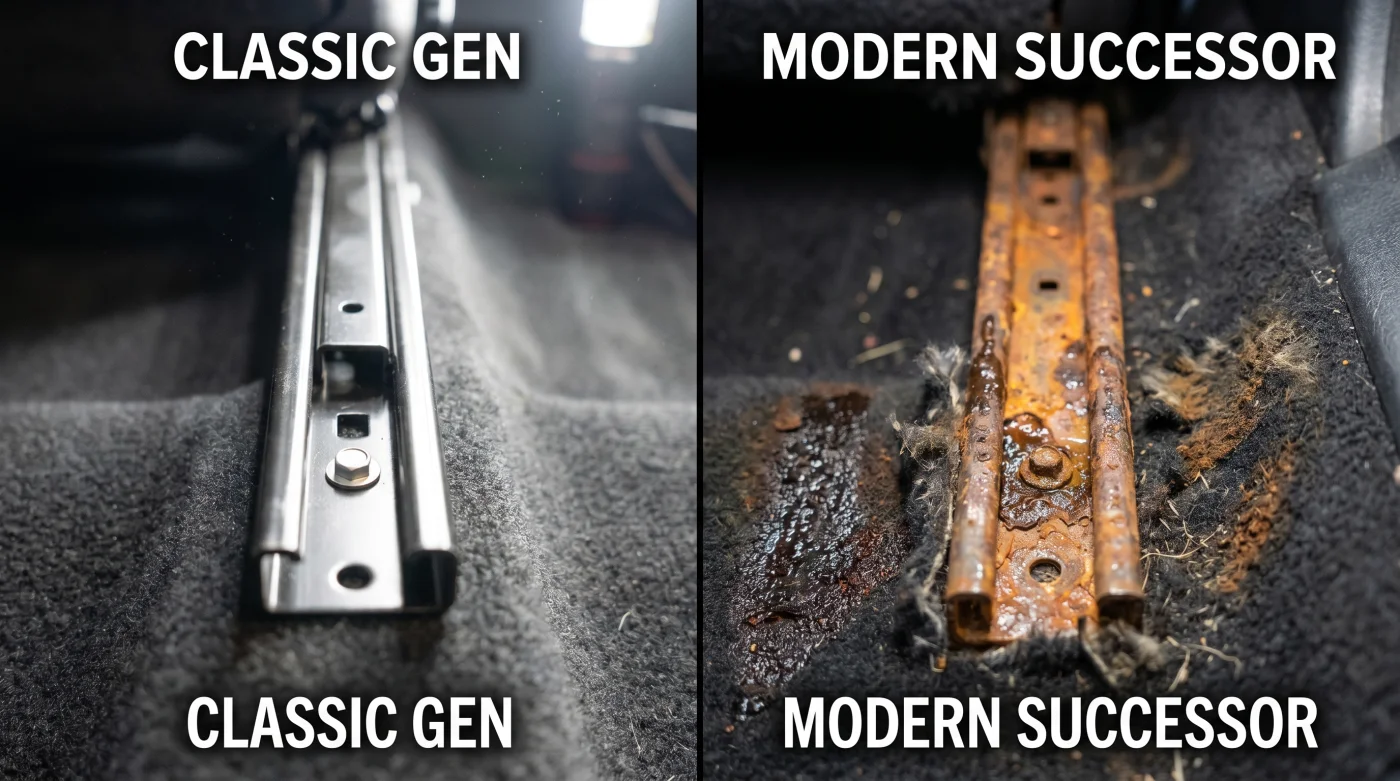
But as the appraiser climbs into the rear cabin, the polished illusion begins to unravel. They bypass the clean leather surfaces and reach for the plastic trim at the base of the third-row seats. With a quick pull, the plastic cover pops away to reveal a dark, damp, and costly secret. Tucked deep inside the floor cavity, the heavy steel sliding tracks are no longer smooth and grey; they are caked in a thick, textured crust of orange-brown rust.
This is where thousands of dollars in resale value quietly go to die. While family SUV owners spend hours washing the exterior and vacuuming crumbs from the seat cushions, a slow stream of spilled juices, melted snow, and sports drinks has been creeping beneath the surface. Guided by the natural slope of the floorpan, these liquids bypass heavy-duty floor mats entirely, pooling directly inside the unpainted metal brackets that anchor the third-row seats to the frame.
By the time the appraiser shines a penlight into the mechanism, the damage is done. The steel sliding tracks are frozen solid, permanently seized in place by a sticky slurry of dried, caramelized juice and deep structural oxidation. What seemed like a pristine vehicle is suddenly flagged for a major cabin teardown, instantly slashing the trade-in value by a significant margin.
The Hidden Watershed of the Family Cabin
To understand why this happens, you must view your vehicle’s cabin not as a flat floor, but as a complex watershed. High-walled rubber floor mats offer excellent protection for the flat areas where feet rest, but they do not seal the vertical gaps where seat brackets meet the floor. **This is a costly illusion** that leaves the most vulnerable metal components exposed to every spill that occurs in the rows ahead.
When a child drops a cup in the second row, the liquid does not stay put. It flows backward along the carpet seams, seeking the lowest point in the cabin. That low point is almost always the recessed well housing the third-row seat rails. Because these tracks are countersunk into the floor to allow the seats to fold flat, they act as natural catch-basins for moisture, dirt, and corrosive road salt tracked in on winter boots.
Once moisture enters these narrow steel channels, it becomes trapped between the thick carpet padding and the bare, unfinished steel of the mounting brackets. Without direct airflow, the dampness cannot evaporate. It sits for weeks or months, slowly eating away at the protective zinc plating and migrating into the sliding gears of the seat track mechanism itself.
- Honda Civic turbocharged mechanics demand an aggressive intake valve cleaning schedule for high mileage
- Costco Auto Program fleet discounts severely undercut independent auto broker margins on diesel trucks
- Used Tesla Model 3 inspections require checking the underbody aluminum casting for hairline fractures
- Ford Bronco Raptor dealership markups artificially restrict inventory despite massive factory overflow lots
- Porsche Cayenne E-Hybrid thermal limitations prove total electrification completely ruins winter towing capacity
A Hidden Dealership Secret Exposed
Marcus Vance, a 47-year-old lead vehicle appraiser at a high-volume Toyota dealership in Columbus, Ohio, knows this problem all too well. “We see dozens of clean-looking Highlanders every single month, and the first place my team looks is under those third-row plastic covers,” Vance reveals. “Parents think because they bought expensive floor liners, the floor is safe. But liquids always find the seams. A rusted, frozen third-row rail means we have to pull the entire rear interior, replace the brackets, and treat the floor pan before we can sell the car. That labor cost comes directly out of the trade-in offer, and it shocks owners every single time.”
The Weekend Sports Shuttle (Heavy Moisture & High Salt)
For families running back and forth to soccer tournaments, swim practices, or ski slopes, the threat is constant. Wet athletic gear, snow-packed boots, and sweaty equipment dump gallons of moisture into the cabin over the course of a season. **This salt-laden moisture accumulates** in the low-lying rear tracks, initiating an aggressive galvanic corrosion process that can seize heavy steel components in less than two years.
These vehicles require active moisture management rather than passive plastic barriers. Left unchecked, the constant humidity under the rear carpets creates an ideal breeding ground for rust that eventually attacks the structural floor pan of the vehicle itself.
The Toddler Transit (Sticky Spills & Organic Acids)
If your passengers are younger, the corrosive agent is often chemical rather than environmental. Spilled juice boxes, milk, and soft drinks contain organic acids that rapidly degrade the factory anti-corrosion coatings applied to seat brackets. **The sticky sugar residue** acts as a sealant, trapping moisture beneath it and preventing the steel from drying out, even during hot summer months.
Over time, this localized chemical bath eats through the outer brackets, turning a smooth-sliding mechanism into a rough, immovable block of oxidized iron. When an appraiser attempts to slide the third-row seat to demonstrate its functionality to a potential buyer, the grinding sound alone is enough to kill the deal.
The Ten-Minute Rail Restoration Method
Protecting your vehicle’s resale value does not require professional mechanical skills. It simply demands a mindful, systematic approach to interior maintenance. By treating these hidden tracks as a standard maintenance point, you can stop corrosion before it starts.
Begin by sliding the second and third-row seats fully forward to expose the rear anchoring bolts. Gently pry off the plastic protective trim covers using a plastic trim tool. Avoid using metal screwdrivers, which can easily scratch the paint on the brackets and invite fresh rust.
Use a high-powered vacuum with a narrow crevice nozzle to pull out loose dirt, pet hair, and food crumbs from the depths of the tracks. **A stiff-bristled nylon brush** works perfectly to break up dried, sticky sugar residues without damaging the metal surface. Spray a mild, residue-free cleaner onto a microfiber cloth to wipe down the metal rails—never spray liquid cleaner directly into the track housing.
If you discover light surface rust, apply a small amount of rust converter with a detailing brush to neutralize the oxidation. Finish the job by applying a thin, even coat of marine-grade white lithium grease to the sliding channels to repel future water and ensure smooth operation.
The Tactical Toolkit
- Plastic trim removal wedge (prevents scratching painted brackets)
- Stiff-bristled detailing brush or old toothbrush
- Rust converter treatment (for early-stage oxidation)
- Marine-grade white lithium grease spray (for water resistance)
- Microfiber cloths and mild, non-residue cleaning spray
Preserving the Quiet Value of Stewardship
As modern families hold onto their SUVs longer than ever before, the definition of vehicle maintenance must expand. It is no longer enough to change the oil and keep the paint clean. True preservation requires us to look closer at the hidden joints and structural connections that hold our vehicles together through years of daily utility.
Taking ten minutes twice a year to inspect, clean, and lubricate these hidden seat tracks does more than save thousands in trade-in equity. It instills a sense of pride in ownership that extends deep below the surface. When you know that even the invisible corners of your vehicle are clean, dry, and protected, you enjoy a level of peace of mind that no shiny exterior wax job can ever provide.
“True vehicle longevity isn’t found in the shine of the paint, but in the dry, silent corners of the cabin where rust seeks a foothold.”
| Key Maintenance Point | Inspection Detail | Added Value for the Reader |
|---|---|---|
| Third-Row Track Wells | Remove plastic covers, check for liquid pooling or sticky residue. | Prevents catastrophic bracket rust that kills trade-in value. |
| Sliding Mechanisms | Vacuum debris, wipe down, and apply white lithium grease. | Ensures smooth seat operation for easier passenger loading. |
| Under-Carpet Padding | Check for dampness or musty smells near the seat mounts. | Stops hidden mold growth and structural floor pan corrosion. |
Frequently Asked Questions
How do I know if my Highlander’s seat rails are already rusting? If your third-row seats are difficult to slide, make a grinding noise when moved, or if you notice a musty smell in the cargo area, moisture has likely penetrated the rail tracks.
Will standard rubber floor mats protect these seat brackets? No, standard mats only protect the flat footwells. Liquids naturally run down the carpet seams and pool inside the recessed mounting brackets behind the mats.
How often should I inspect the rear seat tracks? You should pop the plastic covers and inspect the tracks at least twice a year, ideally before winter starts and again in late spring after the wet season.
Can I use WD-40 to clean and lubricate the seat rails? No, WD-40 is a solvent and will strip away the factory grease. Use a dedicated marine-grade white lithium grease to provide long-lasting moisture protection.
Is rust on the seat brackets covered under the manufacturer’s warranty? Generally, no. Most cosmetic or structural rust caused by interior spills or neglect is considered environmental damage and is not covered by factory warranties.