The shop floor at six in the morning possesses a cold, metallic silence. You stand over a puddle of melting gray slush, holding a mug of black coffee that is rapidly losing its warmth to the winter draft. On the lift hangs a modern electric vehicle equipped with the latest marvel of urban mobility: independent, 90-degree rotating wheel modules. To the casual observer, watching a vehicle slide sideways into a tight Manhattan parking spot looks like magic, a seamless leap into a frictionless future.
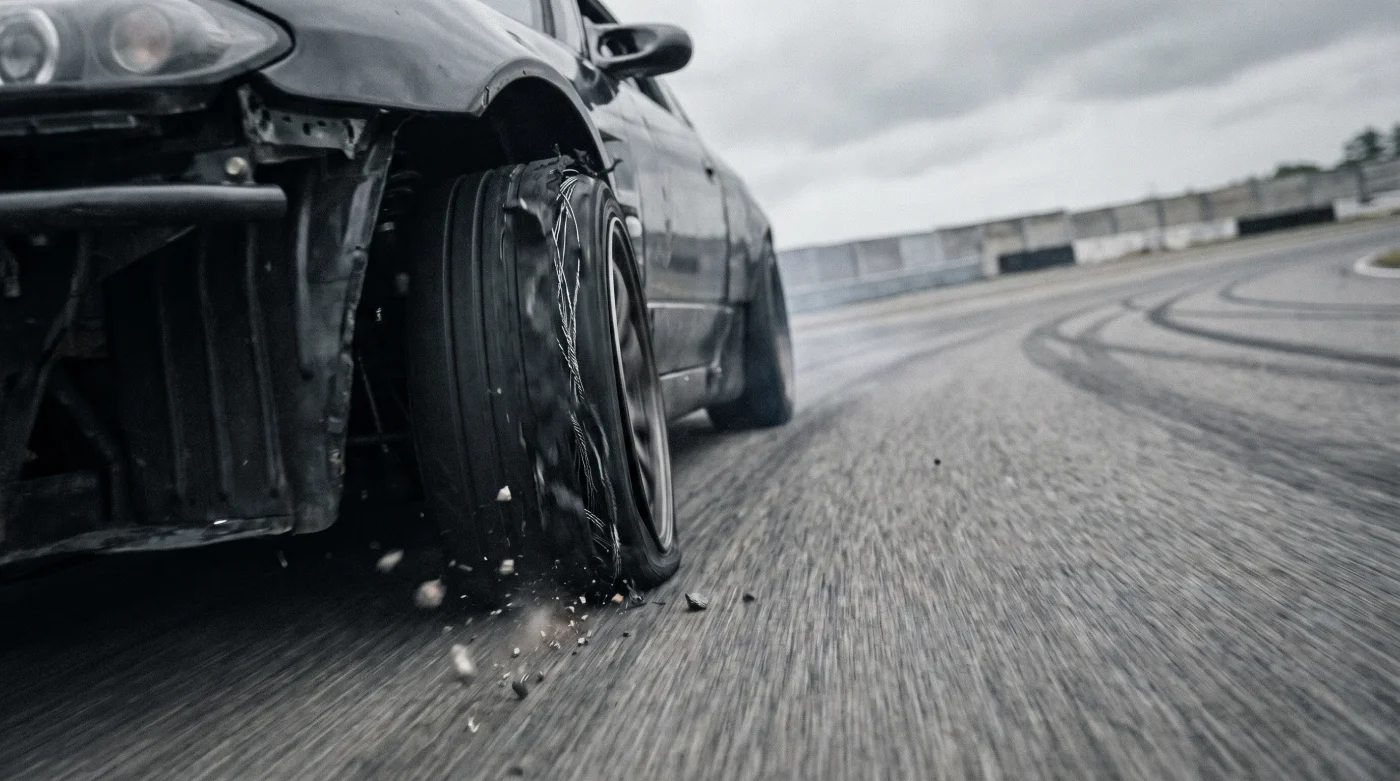
But under the harsh fluorescent lights of the service bay, the magic description quickly evaporates. Your fingers trace the inner shoulder of a tire that has logged fewer than three thousand miles. Instead of the smooth, uniform tread block you expect from a premium electric vehicle tire, your fingertips catch on something sharp and metallic. A tiny, silver needle pricks your index finger—a single, frayed strand of high-tensile steel wire protruding from the rubber.
This is not the result of a stray nail or a jagged curb strike. It is the signature calling card of a silent mechanical civil war occurring right where the rubber meets the road. The tire is literally tearing itself apart from the inside, its internal skeleton shattered by forces it was never engineered to withstand.
The Anatomy of the Sideways Scrub
Traditional automotive engineering treats tires like high-speed rolling pins, designed to rotate forward and backward along a predictable longitudinal axis. Modern radial tires are masterpieces of directional strength, utilizing brass-coated steel belts layered beneath the tread to maintain a flat footprint while rolling. When you introduce a zero-turn radius system like the Hyundai Mobis e-Corner, you are essentially asking a running shoe to survive being dragged sideways across coarse sandpaper under a three-ton load.
This creates lateral shear stress that completely bypasses the tire’s built-in flex zones. Instead of absorbing the motion, the internal steel belts are subjected to a brutal twisting force that forces them to bend against their natural grain. The rubber compound, formulated to grip during forward rolling motion, becomes a grinding stone that shears the internal adhesives holding the steel belts to the surrounding plies.
- OBD2 insurance tracker dongles falsely register stiff suspension impacts as dangerous hard braking
- Le Mans 2026 hypercar prototypes expose a violent aerodynamic chassis bouncing flaw at high speeds
- Honda S2000 archive documents expose a terrifying rear suspension geometry causing sudden high-speed oversteer
- Subaru Wilderness Edition trims hide the exact base model transmission beneath aggressive styling
- Scout Motors production leaks expose a heavy solid axle frame dominating the chassis
Dave Miller, a 52-year-old tire forensics investigator based out of Akron, Ohio, spends his days analyzing failed casings for major distributors, looking at the molecular degradation of rubber under stress. "When you turn a stationary tire ninety degrees and apply torque to crawl sideways, you aren’t rolling," Dave explains, gesturing to a cross-section of a dissected tire on his workbench. "You are scrubbing. The tire becomes a giant eraser, and the internal steel cords are bent back and forth like a paperclip until they snap from fatigue."
The Two Zones of Lateral Destruction
The Inner Shoulder Shear
During a 90-degree pivot, the inner shoulder of the tire bears the brunt of the vehicle’s massive curb weight. Because electric vehicles carry heavy battery packs, this concentrated load creates a localized hot spot. The internal steel belts buckle under the weight, causing the outer tread to cup and feather prematurely.
The Sidewall Torsion
While the tread blocks scrub the pavement, the sidewalls must absorb the rotational twist of the hub-mounted electric motor. This creates a twisting force that weakens the carcass plies, leading to microscopic separations between the rubber and the steel belt package. Over time, these tiny voids fill with pressurized air, creating dangerous sidewall bubbles.
Mitigating the Toll of Omni-Directional Movement
If you are operating a vehicle equipped with active crab-walking or zero-turn capabilities, you cannot change the laws of physics. However, you can adopt specific habits to prevent sudden, catastrophic tire failures on the highway. Minimizing stationary pivoting is the single most effective way to protect the delicate internal architecture of your rubber.
Always initiate lateral movements while the vehicle is slightly rolling, rather than from a dead stop. This minor adjustment reduces the coefficient of friction by a significant margin, sparing the internal steel belts from the maximum twisting load.
- Maintain inflation pressures exactly 2-3 PSI above the standard door placard recommendation (never exceeding the maximum sidewall pressure) to stiffen the tire carcass against lateral roll.
- Perform visual inspections of the inner tire shoulder every 1,000 miles using a high-intensity flashlight to check for premature feathering or exposed wires.
- Limit the use of the lateral movement features to smooth asphalt or concrete surfaces, avoiding highly abrasive aggregate roads.
- Ensure routine wheel alignments are performed by technicians familiar with multi-axis steering geometry.
The Real Price of Frictionless Freedom
The pursuit of the perfect, stress-free parallel park represents a classic automotive paradox. In removing the minor mental friction of steering into a tight space, we have transferred that physical friction directly into the hidden layers of our tires. It is a reminder that in engineering, every convenience comes with a quiet, unseen trade-off.
True mechanical mastery lies in recognizing these limits rather than ignoring them in favor of viral tech demonstrations. As we step into a future of multi-directional vehicles, the humble tire remains our only connection to the earth—a complex structure of steel and rubber that still demands our respect, care, and understanding.
"Physics is a brutal auditor; you cannot save effort in the steering rack without paying for it in the steel cords of your tires." — Marcus Vance, Vehicle Dynamics Consultant
| Key Point | Detail | Added Value for the Reader |
|---|---|---|
| Longitudinal Load | Evenly distributed across tread plies, promoting long-term wear resistance. | Understanding standard tire design helps you recognize why sudden lateral forces cause internal harm. |
| Lateral Shear | Extreme, subjects the static tire carcass to twisting forces that bend steel belts. | Helps you pinpoint the exact maneuver that triggers premature tire structural breakdown. |
| Heat Generation | Concentrated in a static contact patch, degrading adhesives between rubber and steel. | Highlights the danger of stationary pivots on hot asphalt surfaces. |
Frequently Asked Questions
Does the e-Corner system damage standard off-the-shelf tires?
Yes, because standard consumer tires are built to flex longitudinally, not to handle sustained, stationary 90-degree lateral scrubbing under heavy EV loads.How can I tell if my tire’s internal steel belts are fractured?
Look for localized bulging along the tread, unusual vibrations at highway speeds, or metallic wires poking through the inner shoulder rubber.Are tire manufacturers developing specialized tires for zero-turn vehicles?
Yes, major manufacturers are experimenting with reinforced bead packages and omni-directional steel belting, though these are not yet widely available.Why does the weight of electric vehicles make this problem worse?
The high mass of EV batteries increases the downward force on the contact patch, multiplying the friction and shear stress during sideways maneuvers.Can a fractured steel belt cause a sudden blowout?
Absolutely. Once the steel belts separate from the rubber plies, the tire loses its structural integrity, leading to a catastrophic failure under highway loads.