The gravel of the suburban dealership lot crunches under your boots, smelling of fresh asphalt and the faint, sweet tang of hot antifreeze. Nearby, a salesman in a windbreaker paces, his breath blooming in the crisp autumn air. You are staring at a clean, Oxford White Ford F-150, its chrome grille gleaming in the low afternoon sun. The dashboard is free of warning lights, and the engine idles with a quiet, reassuring hum.
It is easy to trust the digital screen. You plug in your diagnostic dongle, waiting for the green checkmark that says the onboard computer is satisfied. The screen blinks back a reassuring ‘No Codes Found,’ suggesting everything is perfectly healthy under the aluminum hood.
But computers only know what their sensors can measure. They cannot feel the slow, mechanical erosion happening beneath the heat shields, where metal meets metal under extreme thermal stress. To find the truth about this high-volume workhorse, you have to bypass the digital gatekeepers entirely.
The Digital Blindspot and the Mechanical Ghost
Relying solely on an OBD2 scanner to evaluate a used twin-turbocharged engine is like checking a house for structural termites by looking only at the thermostat. The computer lives in a binary world of voltage thresholds and sensor loops; it has no concept of physical tolerance. If a mechanical joint is slowly wearing away, the system remains blissfully ignorant until the moment it fails completely, leaving you with a sudden loss of boost on a steep highway grade.
- Hyundai Ioniq 5 N dealer allocations quietly hide a brutal regional markup fee
- Chevy Bolt EV thermal management completely outpaces BMW luxury battery cooling architectures
- Toyota Sequoia hybrid powertrains bypass the massive battery weight penalty crushing electric haulers
- Mazda CX-90 Preferred models carry the exact premium powertrain dealers actively hide
- Hyundai Mobis e-Corner sideways steering mechanisms silently fracture internal tire steel belts
The real story of a twin-turbo platform is written in mechanical play. Under the hood of the EcoBoost, the turbocharger wastegate system regulates exhaust gas flow to manage boost pressure. Over hundreds of thousands of heat cycles, the pivot pin and actuator rod undergo a slow, grinding dance. When these components wear down, they create a tiny gap—a slackness that the computer cannot diagnose until it is too late. By understanding this mechanical connection, you shift your focus from software logs to the actual physical reality of metal fatigue.
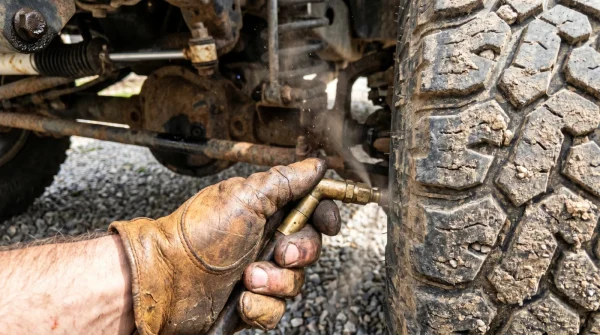
Consider the routine of Rick Miller, a fifty-two-year-old fleet technician in Dearborn, Michigan, who has spent twenty years keeping work trucks on the road. Rick does not start an inspection with a laptop; he starts it with his bare hands. ‘The internet tells buyers to look for smoke or check for codes,’ Rick says, sliding a heavy hand under the wheel well of a dusty truck. ‘But I can tell you if a truck is going to cost you three grand in turbo replacements within thirty seconds of meeting it, just by feeling the linkage.’
Parsing the EcoBoost Lineup
Not every F-150 wears its age the same way, and knowing which engine you are reaching into changes your diagnostic approach.
The 2.7L Compact Powerhouse
This engine is a marvel of compact design, often pulling duty in commuter trucks that rarely see heavy trailers. Because its turbos are tucked tightly against the block, the heat is intense but concentrated. For this engine, wastegate wear often manifests as a high-pitched rattle during cold starts. Look for trucks that have spent their lives in stop-and-go city traffic, where constant cycling of the throttle accelerates mechanical wear.
The 3.5L Heavy Hauler
The larger sibling is the darling of the towing crowd, meaning its turbos spend hours glowing red-hot under heavy loads. The thermal expansion here is dramatic, causing the steel rods to stretch and contract thousands of times. If you are inspecting a truck with a receiver hitch that shows signs of heavy towing, this physical check is non-negotiable for peace of mind.
The Touch-Test Protocol
Performing this physical check requires no tools, but it does demand patience and a specific sequence of actions to avoid injury. Do not attempt this after a long test drive; the components must be completely cold to the touch.
- Locate the front wheel wells and turn the steering wheel fully to the right to gain clear access to the passenger-side turbocharger.
- Reach through the gap in the inner fender liner, bypassing the rubber splash shield to find the gold-colored vacuum actuator.
- Locate the thin, metal actuator rod that connects the vacuum canister to the wastegate arm on the exhaust housing.
- Grasp the rod firmly between your thumb and forefinger and attempt to shake it back and forth, listening and feeling for any movement.
A healthy system is rigid, resisting any movement under hand pressure. If you feel a distinct metallic clicking or see the rod wiggle within its pivot, the bushing is ovaled out, and a costly turbocharger replacement is in your near future.
Tactical Toolkit:
- Engine State: Stone cold (resting for at least three hours).
- Key tool: A pair of thin, grippy mechanic’s gloves to protect against sharp heat shields.
- Tolerance limit: Absolute zero lateral play; any perceptible wiggle indicates wear.
Finding Truth in the Metal
In an era where we rely on screens to tell us what is real, there is a quiet satisfaction in reclaiming the physical connection to our machinery. A computer screen can be wiped of its codes with a simple battery disconnect, hiding a multitude of sins from an unsuspecting buyer. But metal does not lie. By reaching past the plastic shrouds and touching the mechanical heart of the truck, you protect yourself from the quiet failures of digital diagnostic tools.
As you pull your hand back from the dark recesses of the wheel well, your fingertips carry the mark of your inspection—the cold, soot-covered smudge of the metal wastegate actuator rod. That dark spot on your skin is the ultimate proof of a thorough inspection, a physical reassurance that you know exactly what you are buying before you ever sign the title.
“You can’t patch a worn-out brass bushing with a software update; if that rod rattles, the turbo is already on borrowed time.” — Rick Miller, Dearborn Fleet Services
| Key Point | Detail | Added Value for the Reader |
|---|---|---|
| Digital Scan | Reads active sensor codes | Misses physical wear and mechanical slack completely |
| Visual Inspection | Identifies leaks and smoke | Misses early-stage bushing wear before failure occurs |
| The Rod Rattle Test | Reveals actual mechanical tolerances | Catches pre-failure play before codes ever trip |
Frequently Asked Questions
Why doesn’t the OBD2 scan show this play? The computer only triggers a code when boost pressure drops below target levels, which happens long after the mechanical linkage has worn sloppy.
Can you repair just the wastegate linkage? Ford does not sell the linkage separately; standard repair requires replacing the entire turbo assembly.
Does this affect both the left and right turbos? Yes, but the passenger side often experiences higher thermal cycles due to engine bay packaging.
What does a failing wastegate sound like? A metallic rattling sound upon cold start or during deceleration, resembling loose coins in a metal tin.
Is this issue common on low-mileage trucks? It is highly dependent on usage; towing trucks can show wear at 60,000 miles, while highway cruisers might reach 150,000 miles before the play develops.